Companion Planting That Actually Works: A UK Gardener’s Guide
Companion planting has a credibility problem. For every gardener who swears marigolds saved their tomatoes, there is a sceptic pointing out that half the traditional pairings have never survived a proper scientific trial. The folklore — carrots love tomatoes, never plant fennel near anything — gets repeated endlessly, but which of it actually works in a British back garden?
The honest answer: some companion planting is solid science, some is harmless tradition, and some is wishful thinking. This guide separates the three, focusing on combinations with real evidence behind them and practical layouts for UK vegetable plots and allotments.
What Companion Planting Can Realistically Do
Strip away the mystique and companion planting works through four genuine mechanisms. Pest confusion: strongly scented plants (onions, basil, marigolds) mask the smell of target crops from pests like carrot fly and aphids. Trap cropping: sacrificial plants (nasturtiums for blackfly) lure pests away from the main crop. Beneficial insect habitat: flowers like calendula and borage feed hoverflies and parasitic wasps whose larvae devour aphids. Resource sharing: legumes fix nitrogen that heavy feeders like brassicas then use; tall plants shade heat-sensitive ones.
What it cannot do is replace the fundamentals. No companion scheme rescues starved soil, chronic overwatering, or planting sun-lovers in shade. Think of companions as a 10–15% boost on top of good basics — worthwhile, but not magic. The Garden Organic charity publishes some of the best UK-tested guidance on the subject.
Pairings With Real Evidence Behind Them
Alliums with carrots and brassicas
The strongest evidence in UK trials supports onions, garlic and chives grown among carrots to confuse carrot fly, the allotment holder’s nemesis. Interplanting rows — rather than block-planting — works best, because the scent barrier needs to be continuous. Garlic chives under roses similarly reduce aphid pressure in ornamental borders. This is the one pairing to adopt if you adopt only one.
French marigolds with tomatoes
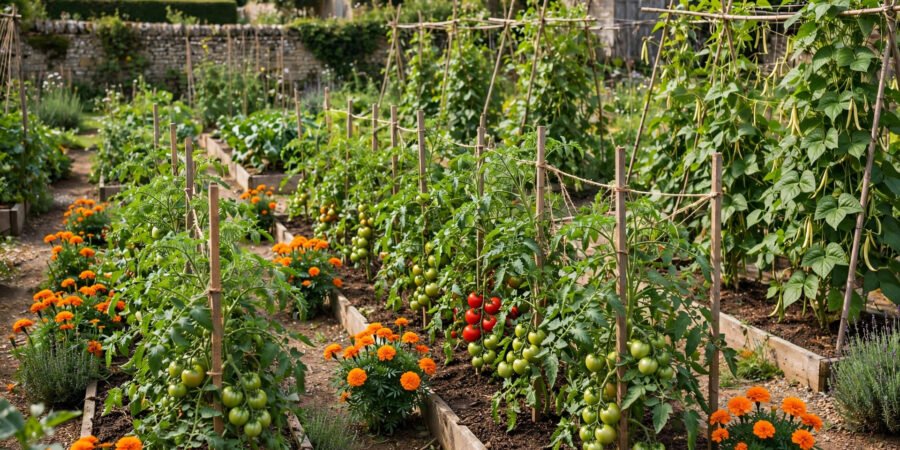
Tagetes patula (French marigolds, not the African bedding type) exude compounds from their roots that suppress root-knot nematodes, and their flowers attract hoverflies. UK polytunnel trials show measurable whitefly reduction on tomatoes grown with marigolds. Plant them as an edging row, not dotted singly — density matters.
Nasturtiums as a trap crop
Nasturtiums are aphid magnets, and that is their virtue: planted at the ends of bean and brassica rows, they draw blackfly away from the crop. The trick is to leave the infested nasturtiums in place as the sacrifice — pulling them up just sends the aphids back to your beans. Bonus: the flowers and leaves are edible and peppery in salads.
Borage and calendula for pollinators and predators
Both are bee and hoverfly magnets that flower for months in UK summers. A border of borage beside the veg patch measurably increases pollinator visits to nearby courgettes and runner beans, improving fruit set. Allow some to self-seed for a permanent beneficial-insect station.
Combinations to Treat With Scepticism
“Carrots love tomatoes”: charming, evidence-free. They coexist fine, but there is no measured benefit. Fennel as a universal bad neighbour: fennel does inhibit some seedlings (allelopathy is real), but the “never plant near anything” rule is overstated — just give it its own corner. Basil making tomatoes taste better: no credible mechanism; plant basil with tomatoes because they harvest together beautifully, not for flavour chemistry. Three Sisters (maize, beans, squash): brilliant in its native North American context, but UK summers are often too short and cool for sweetcorn to tower usefully — dwarf French beans and squash work, the maize rarely earns its space north of the Midlands.
The pattern: traditional pairings from other climates do not always translate. Trust UK-specific sources — the RHS advice on companion planting is refreshingly evidence-based — over generic internet lists.
Designing a Companion-Planted Bed (A Practical Layout)
Take a standard 1.2 × 2.4 m raised bed. Along the north edge: a row of runner beans on canes (nitrogen fixers, tall but shading only their own footprint). In front: carrots interplanted with spring onions in alternating rows (carrot fly confusion). Middle: calabrese or kale underplanted with calendula (hoverfly habitat for caterpillar parasites). South edge: French marigolds as a flowering border with a nasturtium at each corner as aphid traps. That single bed now confuses two major pests, feeds pollinators, fixes nitrogen, and looks like a cottage garden.
Rotate the whole scheme yearly — companions do not exempt you from rotation, especially for brassicas (clubroot) and potatoes (blight). And keep records: a simple notebook of what you interplanted and how the crop fared beats any generic chart, because your soil and microclimate are unique. For more on planning productive plots, see our guide to wildlife-friendly gardening, which dovetails neatly with insect-friendly companion schemes.
Herbs: The Easiest Entry Point
If full bed redesign feels ambitious, start with herbs — the lowest-effort companion planting there is. Basil beside tomatoes and peppers; chives dotted through rose and apple beds against aphids; rosemary and sage near brassicas to confuse cabbage white butterflies; dill and fennel (in their own pots) as hoverfly stations; mint — always in a buried pot to contain its thuggish roots — near peas to deter pea moth. Herbs earn their space twice over: pest management plus the kitchen. For the ornamental edges of the veg plot, our guide to low-maintenance UK garden plants suggests flowering perennials that double as permanent beneficial-insect habitat.
Companion Planting in Containers and Small Spaces
No allotment? The same principles scale down to pots and window boxes. A 40cm container can hold a tomato with basil and French marigolds around its base — the classic trio in miniature, with the marigolds deterring whitefly and the basil ready for harvest alongside the tomatoes. Salad bowls interplanted with chives suffer fewer aphids, and a pot of nasturtiums on the patio draws blackfly away from everything else while looking spectacular spilling over the edges.
Container companions need slightly different management: pots dry faster, so mulch the surface with grit or composted bark to hold moisture, and feed regularly since companions compete for limited nutrients. But the pest-confusion and pollinator benefits work identically at small scale — a balcony of well-planned pots can be as ecologically functional as a full vegetable bed, and it puts the whole system within arm’s reach of the kitchen.
Conclusion
Companion planting that actually works is less about mystical plant friendships and more about applied ecology: confuse pests with scent, trap them with sacrifices, and feed the predators that eat them. Start with the proven trio — alliums with carrots, marigolds with tomatoes, nasturtiums as traps — design one bed around them, and let your own notebook become the authority. The folklore is fun; the hoverflies are better.
Frequently Asked Questions
Does companion planting really work?
Some of it, yes. Scent-based pest confusion (alliums with carrots), trap cropping (nasturtiums for aphids), and beneficial-insect habitat (borage, calendula) have genuine evidence. Many traditional pairings, like basil improving tomato flavour, do not.
What should I plant next to carrots to stop carrot fly?
Interplant rows of onions, garlic or chives among the carrots. The strong allium scent masks the carrots from carrot fly. Growing carrots under fine insect mesh is even more reliable.
Do marigolds keep pests away from tomatoes?
French marigolds (Tagetes patula) suppress root nematodes and attract hoverflies that eat aphids and whitefly. Plant them as a dense edging row for measurable benefit.
What is a trap crop?
A sacrificial plant that pests prefer over your main crop — nasturtiums for blackfly is the classic UK example. Plant them nearby and leave infested plants in place so pests stay put.
Can companion planting replace crop rotation?
No. Rotation remains essential for preventing soil-borne diseases like clubroot and potato blight. Use companions within a proper rotation plan, not instead of one.