Grow Sunflowers With Kids: The Fun UK Family Guide 2026
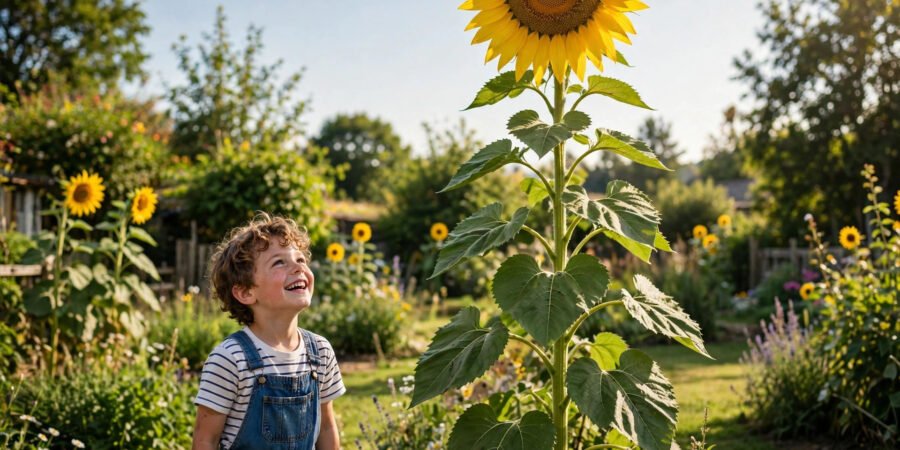
There are few better introductions to gardening than a sunflower. The seeds are big enough for small fingers, germination is fast enough for short attention spans, growth is dramatic enough to feel like magic, and the finale — a flower taller than the child who planted it — is pure triumph. Growing sunflowers with kids is not really about horticulture. It is about wonder, responsibility and the occasional sunflower-height competition.
This guide makes sunflower growing with children foolproof and fun in the UK: the best varieties for kids, the timeline that keeps them engaged, games and projects along the way, and what to do with the giant results.
Why Sunflowers Are the Perfect Kids’ Plant
Big seeds: easy for toddlers to handle and plant — no tweezers, no tears. Fast germination: 7–10 days, quick enough that children do not lose interest. Visible daily growth: in peak summer, sunflowers grow several centimetres a day — children can literally measure progress with a ruler, which turns into sneaky maths. Dramatic payoff: a 2–3 metre flower with a dinner-plate head is unforgettable. Forgiving: sunflowers tolerate imperfect watering, mediocre soil and general child-level chaos. Wildlife bonus: bees love the flowers, birds love the seeds — the plant keeps giving after blooming.
Beyond the plant itself, gardening with children builds patience, responsibility, basic science understanding and — not incidentally — time outdoors away from screens. Our guide to getting kids off screens covers the wider battle; a sunflower project is one of the most effective weapons in it.
Choose the Right Variety
For maximum height (the classic): ‘Russian Giant’ or ‘Giant Single’ — reliably 2.5–3.5m, huge heads, the full wow factor. Perfect for height competitions. For smaller spaces/pots: dwarf varieties like ‘Teddy Bear’ (fluffy double flowers, ~60cm) or ‘Pacino’ (~30–40cm) — ideal for balconies, windowsills and container growing. For colour interest: ‘Velvet Queen’ (deep red-bronze), ‘Lemon Queen’ (pale yellow), or ‘Autumn Beauty’ mix — because sunflowers are not only yellow. For seed harvest: ‘Russian Giant’ again — big seeds, easy to harvest and roast.
Let children choose their own variety from the seed rack — ownership of the choice increases ownership of the project. A packet costs £2–£3 and contains enough seeds for the whole street.
The Timeline: Sowing to Sunflower
Late April–May: sow. In most of the UK, sow directly where they are to grow from late April (after frost risk), 2cm deep, or start in pots indoors in April for a head start. Direct sowing is simpler and avoids transplant shock — sunflowers resent root disturbance. Space giants 45cm apart; dwarfs 20–30cm. Water in well and mark the spot (children forget where they planted things).
May–June: the exciting phase. Seedlings emerge in 7–10 days. Thin to the strongest seedling per spot (a hard lesson in itself). Stake tall varieties early — a cane and soft string tie before they need it prevents wind damage later. Water in dry spells; sunflowers are thirsty teenagers.
July–August: the magic. Buds form, then — seemingly overnight — the flowers open. This is peak engagement: daily measuring, photographing, showing grandparents. Deadhead spent side blooms on branching varieties to extend flowering; leave the main head to develop seeds.
September: harvest. When the back of the flower head turns yellow-brown and the seeds are plump, cut the head, hang it somewhere dry for two weeks, then rub out the seeds. Roast with a little oil and salt for the ultimate “we grew this” snack — or save some for the birds and some for next year’s sowing.
Games and Projects Along the Way
The height competition: each child grows their own — weekly measuring, a chart on the fridge, a prize for the tallest (and a consolation prize for the bushiest). The sunflower diary: drawings, measurements, weather notes — sneaky science and literacy. Photography project: same angle, once a week — the time-lapse effect at the end is stunning. Pollinator watch: count the bees visiting the flower in five minutes — real citizen science; submit sightings to wildlife schemes. Seed maths: estimate seeds per head (count a square centimetre, multiply by head area) — genuinely impressive numbers that make multiplication meaningful. The den: plant giants in a circle with a gap for a door — by August, children have a living sunflower house.
Troubleshooting (Kids Ask Good Questions)
“Why is it drooping?” — Usually thirst (water deeply) or transplant shock (avoid by direct sowing). “Something ate the leaves!” — Slugs love seedlings; protect with copper tape, wool pellets or nightly torch-and-bucket patrols (children love slug patrol). “It’s not as tall as my friend’s!” — Variety, sowing date and sun exposure all matter; reframe as a lesson in variables, not failure. “The flower is facing the wrong way!” — Young sunflowers track the sun (heliotropism); mature heads settle facing east. It is not wrong — it is botany. “Can we grow them again?” — Save seeds from this year’s heads for next year: the full cycle, completed. The RHS sunflower growing guide covers varieties and troubleshooting in detail.
Sunflowers pair beautifully with a wildlife-friendly approach — our guides to wildlife gardening on a budget and low-maintenance plants extend the project beyond a single summer, and the Gardeners’ World website has month-by-month advice for keeping the whole garden thriving.
Extending the Project Beyond Summer
Do not let the project end with the harvest. Press a flower head in a heavy book for autumn art projects. Save seeds in labelled envelopes for next year’s sowing — and for gifts; a packet of “our sunflowers” is a lovely present. Leave one spent head standing over winter for the birds, and let children watch goldfinches work it — the garden keeps teaching after the growing stops. You can even try succession sowing: a second sowing in late June gives September flowers, extending the season and the excitement. Each year’s saved seeds adapt slightly to your garden, so the project genuinely improves with repetition.
Conclusion
Growing sunflowers with kids is the rare activity that is genuinely fun, secretly educational and almost impossible to get wrong: big seeds, fast results, dramatic growth, and a finale worth celebrating. Sow in late April or May, water and stake, measure obsessively, harvest in September — and let the children take the credit. The sunflower is just the excuse. The real crop is the gardener.
Frequently Asked Questions
When should I sow sunflowers in the UK?
Late April to May, once frost risk has passed — direct sow where they are to grow, 2cm deep. You can start them in pots indoors in April for earlier flowers, but they dislike root disturbance, so direct sowing is simplest.
How tall do sunflowers grow?
Giant varieties (‘Russian Giant’) reach 2.5–3.5m in good conditions; dwarf varieties stay under 60cm. Height depends on variety, sowing date, sunlight and watering — later sowing means shorter plants.
Can you grow sunflowers in pots?
Yes — dwarf varieties thrive in 20–30cm pots; giants need very large containers (40cm+) and staking, and will be shorter than in the ground. Pots are perfect for balconies and small spaces.
Do sunflowers come back every year?
Most garden sunflowers are annuals — they flower, set seed and die in one season. But saved seeds sow next year’s crop free, and self-sown seedlings often appear where heads dropped seed.
Are sunflower seeds safe for children to eat?
Yes — home-grown sunflower seeds are perfectly edible once dried. Roast hulled seeds with a little oil and salt. Ensure seeds are fully dry before storing to prevent mould.