How Cricket Scoring Works: A Complete Beginner’s Guide for UK Readers
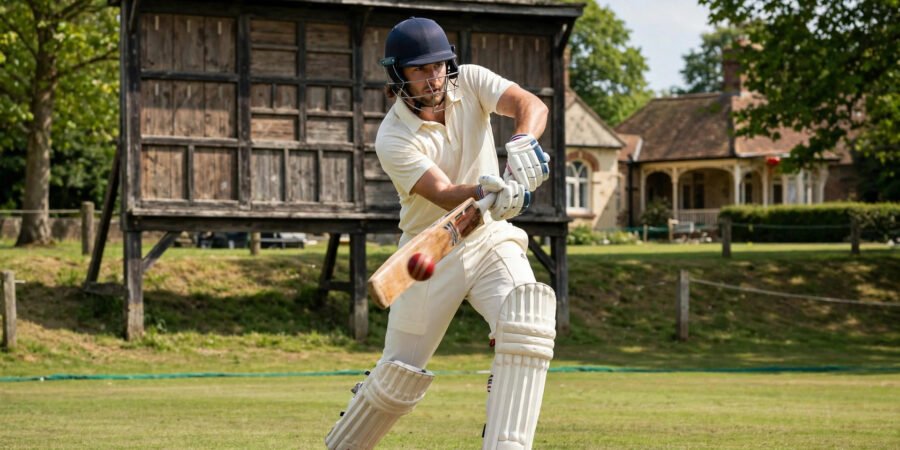
Cricket has a reputation for being incomprehensible — matches that last five days, scores that look like algebra, and commentators who say things like “lovely late cut for four” as if that explains anything. But cricket scoring is built from a handful of simple ideas, and once you grasp them, the whole game opens up. Whether it is an Ashes Test, a T20 blast, or village cricket on a Sunday, the scoreboard tells the same story.
This guide explains cricket scoring for complete beginners with no background knowledge: how runs are scored, what wickets mean, how overs work, and how to read a scoreboard without feeling like you need a mathematics degree.
Runs: The Currency of Cricket
The batting team’s job is to score runs; the bowling team’s job is to stop them and take wickets (dismiss batters). Runs are scored in four main ways. Batters run between the wickets — each completed run is one run, and they keep going until the fielding side retrieves the ball. If the ball reaches the boundary rope along the ground, that is automatically four runs; if it clears the rope without bouncing, that is a six — the biggest single hit in the game.
Extra runs come from the bowler’s mistakes: wides (a ball too far from the batter to hit), no-balls (an illegal delivery, usually overstepping the crease), byes and leg-byes (the ball beats everyone and the batters run anyway). Each adds runs without the batter doing anything — which is why disciplined bowling matters so much. The ECB’s guide to getting into cricket is a friendly starting point for the absolute basics.
Wickets: How Batters Get Out
A batter’s innings ends when they are dismissed — “out” — and the common methods are worth learning because commentators reference them constantly. Bowled: the ball hits the stumps. Caught: a fielder catches the ball before it bounces. LBW (leg before wicket): the ball would have hit the stumps but the batter’s body blocked it — the most argued-about dismissal in cricket. Run out: the fielding side breaks the stumps while the batters are mid-run. Stumped: the wicketkeeper does the same when the batter wanders out of their crease.
Each team has 11 players but only 10 wickets — because batters bat in pairs, the innings ends when 10 are out (the last batter has no partner). This is why a score of “250 all out” means the team scored 250 runs and lost all 10 wickets. The ICC’s official rules define every dismissal in full, but these five cover 95% of what you will see.
Overs: How the Game Is Structured
Bowling happens in overs — sets of six legal deliveries from one bowler. After each over, a different bowler bowls from the other end, and the batters swap ends. This rotation is why cricket fields seem to constantly reorganise themselves.
The format determines how many overs each team faces. A T20 gives each side 20 overs (about three hours — fast, loud, designed for evenings). A One Day International gives 50 overs per side (around eight hours). A Test match has no over limit — each team bats twice (“two innings”), and the match can last up to five days. This is why the same sport produces both a three-hour fireworks show and a five-day strategic epic. If you are new, start with T20: the scoring is aggressive, the rules are identical, and you will understand the fundamentals by the second match.
Reading a Scoreboard: 187–4 (23.4 overs)
A cricket scoreboard shows something like England 187–4 (23.4 overs). Read it as: England have scored 187 runs and lost 4 wickets, in 23.4 overs. The “.4” means 23 complete overs plus 4 balls of the 24th — overs are counted in balls, six to an over. So “23.4” is not 23.4 decimal; it is 23 overs and 4 balls.
You will also see the run rate — runs per over, here about 7.8. In limited-overs cricket this is the key number: it tells you the scoring pace and, for the chasing team, the required run rate to win. “Need 45 off 30 balls” is cricket’s version of a countdown clock, and it creates extraordinary finishes. The individual batter’s score appears as “Root 68 (52)” — 68 runs off 52 balls faced. A strike rate above 100 (more runs than balls) is aggressive; in Tests, patience matters more than pace.
How Matches Are Won (and Drawn)
In limited-overs cricket, the team with more runs wins — simple. If scores are tied, a Super Over (one over per side) decides it, as in the unforgettable 2019 World Cup final at Lord’s. In Test cricket, a team must both outscore the opposition and take all their wickets twice within five days. If time runs out first, the match is a draw — not a tie, a draw, and a perfectly respectable result that can feel like a victory for the side that survived.
This is the thing traditionalists love and newcomers find baffling: Test cricket can end without a winner and still be magnificent. A team batting all day to save a draw, nine wickets down, the last pair surviving the final overs — it is sport as siege warfare. BBC Sport’s cricket coverage is excellent for following all three formats.
Conclusion
Cricket scoring for beginners comes down to this: runs are scored by running, boundaries (four along the ground, six over it) and the bowler’s errors; wickets fall ten per innings via bowled, caught, LBW, run out and stumped; overs are six-ball units that structure everything; and the scoreboard reads runs–wickets (overs). Learn those, watch a T20, and the “incomprehensible” game becomes one of the most readable sports there is. To catch matches without overpaying, see how to watch sport without an expensive subscription and watching live sport at the pub legally — and a cheap fitness tracker will show you what an afternoon in the field does to your step count. Keep this guide handy for your first few matches — within a week of watching, the scoreboard will feel like old news, and you will be the one explaining LBW to your friends.
Frequently Asked Questions
What does 187–4 mean in cricket?
The team has scored 187 runs and lost 4 wickets. A team has 10 wickets per innings, so 187–4 means six wickets still in hand.
How many balls are in an over?
Six legal deliveries. Wides and no-balls do not count toward the six, so an over with extras can contain more than six balls.
What is the difference between Test, ODI and T20 cricket?
T20: 20 overs per side, ~3 hours. ODI: 50 overs per side, ~8 hours. Test: two innings per side with no over limit, up to five days.
What is LBW in cricket?
Leg before wicket: the batter is out if the ball would have hit the stumps but was blocked by their body (and it pitched in line, among other conditions). It is the most debated dismissal.
Can a cricket match end in a draw?
Yes — in Test cricket, if five days pass without both teams completing two innings, the match is drawn. Limited-overs games use a Super Over to break ties.