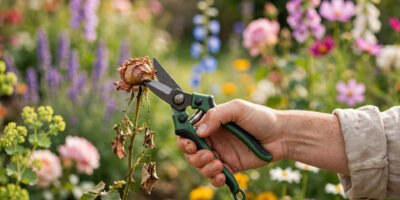
Deadheading Flowers Properly: A Simple UK Gardener’s Guide

Deadheading — snipping off spent flowers — is the single highest-return gardening chore. Ten minutes with secateurs can double a plant’s flowering season, keep borders looking sharp, and cost nothing. Yet it is also one of the most misunderstood tasks: done wrong, it achieves nothing; done at the wrong time, it can even reduce next year’s display. The good news is that proper deadheading is simple once you understand why it works.
This guide explains deadheading for UK gardeners from first principles: the biology in plain English, which flowers need it (and which do not), the correct technique, timing through the season, and the mistakes that waste your effort.
Why Deadheading Works
A flower’s biological purpose is reproduction: bloom, get pollinated, set seed, die. Once a plant has set seed, its job is done — hormones signal it to stop producing new flowers and redirect energy into ripening those seeds. Deadheading hacks this cycle: by removing the spent flower before seeds form, you trick the plant into thinking reproduction failed, so it produces more flowers in another attempt. It is botanical persuasion, not plant cruelty.
The results are tangible: roses, dahlias, cosmos, and sweet peas all flower dramatically longer with regular deadheading — often from June to the first frosts instead of a few midsummer weeks. It also keeps plants tidy (rotting petals invite fungal disease) and prevents unwanted self-seeding (a blessing with prolific seeders like aquilegia, unless you want the seedlings).
Which Flowers Need Deadheading (and Which Do Not)
Deadhead regularly: roses, dahlias, cosmos, sweet peas, marigolds, zinnias, geraniums (pelargoniums), petunias, antirrhinums, delphiniums (for a second flush), lupins, and most bedding plants.
Do not deadhead (or deadhead selectively): plants grown for seed heads or autumn interest — honesty, teasels, echinacea (goldfinches love the seeds), sedums, ornamental grasses. Lavender: deadhead lightly after flowering for tidiness, but the second flush is modest. Bulbs (daffodils, tulips): remove the spent flower head but leave the foliage for six weeks — the leaves feed next year’s bulb, and cutting them is the classic bulb-killing mistake.
Special cases: hydrangeas — leave the faded flower heads through winter (they protect new buds from frost) and deadhead in spring. Fuchsias: deadhead for continuous flowering, but the developing berries are edible and ornamental — your choice. The RHS (Royal Horticultural Society) maintains detailed deadheading guidance per plant, worth bookmarking.
The Correct Technique
- Use clean, sharp tools. Secateurs for woody stems (roses), scissors or snips for soft stems, or simply finger-and-thumb for soft-stemmed plants like petunias. Clean blades between plants if disease is present.
- Cut to the right point. Follow the spent flower’s stem down to the first set of healthy leaves or an outward-facing bud, and cut just above it. Cutting too high leaves ugly stubs; cutting into old wood on some shrubs prevents regrowth.
- For roses: cut to an outward-facing bud eye (the small bump on the stem) at a 45-degree angle — this directs new growth outward for an open, healthy bush.
- For sweet peas and cosmos: pick relentlessly — these are “cut-and-come-again” flowers where harvesting is deadheading. The more you pick, the more they produce.
- Remove the whole spent head, not just petals. Pulling petals while leaving the seed pod defeats the purpose — the plant still thinks it has set seed.
Timing Through the UK Season
Little and often beats occasional blitzes. A five-minute deadhead patrol every few days (combine it with watering) keeps plants in continuous production. Waiting until borders look ragged means the plants have already diverted energy to seed.
Stop at the right time. From late summer, allow some flowers to set seed deliberately: for wildlife (finches on teasels and echinacea), for next year’s self-sown seedlings, and because late-season growth from deadheading may not harden before frost. The autumn garden has its own beauty — our guide to wildlife-friendly gardening on a budget covers the seed heads birds depend on through winter.
Know your plant’s cycle. Repeat-flowering roses and dahlias: deadhead all season. Once-flowering old roses: deadheading is tidiness only — they will not rebloom regardless. Delphiniums: cut the main spike after flowering for a smaller second flush in autumn.
Common Mistakes
- Deadheading bulbs’ foliage. Removing daffodil leaves after flowering starves next year’s bulb. Tie or braid the foliage if it offends you — never cut it green.
- Removing hydrangea heads in autumn. Those papery heads protect buds through winter. Spring deadheading only.
- Using blunt tools. Crushed stems invite disease; sharp cuts heal fast.
- Deadheading everything. A garden stripped of every seed head is a desert for wildlife. Leave the echinacea, teasels, and grasses standing — winter structure plus bird food.
- Composting diseased material. Rose leaves with blackspot or mildewed stems go in the council green bin, not your compost — home compost rarely gets hot enough to kill pathogens.
For plant choices that reduce the workload in the first place, our guide to low-maintenance UK garden plants is the strategic companion — and our rental garden guide shows how renters can deadhead and tend without permanent changes. BBC Gardeners’ World offers seasonal reminders throughout the year.
Deadheading vs Cutting for the Vase
Here is the pleasant overlap: cutting flowers for indoor arrangements is deadheading, provided you cut properly — down to healthy leaves, not just the bloom. Sweet peas, cosmos, dahlias, and zinnias all produce more the more you harvest. The vase on your kitchen table and the extended flowering season are the same mechanism. Gardeners who “do not have time to deadhead” but pick posies weekly are deadheading without knowing it — the prettiest chore there is.
The Bottom Line
Deadheading properly means: removing spent flowers before seeds set (cutting to the first healthy leaves or outward bud), doing it little and often through the season, knowing which plants to leave (bulbs’ foliage, hydrangea winter heads, wildlife seed heads), and stopping in late summer to let nature take its course. Ten minutes with secateurs, a few times a week, is the cheapest way to double your flowering season. The plants are trying to reproduce; you are persuading them to try again — and everybody wins.
Frequently Asked Questions
What happens if I never deadhead?
Most repeat-flowering plants will produce one good flush, set seed, and stop — giving you weeks of flowers instead of months. The garden still functions; you just get far less of it. Some plants (once-flowering roses, spring bulbs) are unaffected either way.
Can I deadhead with my fingers?
For soft-stemmed plants like petunias, marigolds, and cosmos — yes, finger-and-thumb pinching is traditional and effective. For woody stems (roses, shrubs), use secateurs: tearing woody stems damages the plant and invites disease.
Should I deadhead in the rain?
Better to wait for dry conditions — wet cuts are more vulnerable to fungal infection, and handling wet plants spreads disease. A dry morning after rain is ideal.
Do I need to deadhead wildflower meadows?
No — wildflower areas work on the opposite principle: you want seed set for self-sustaining displays. Mow or scythe once a year in late summer after seeds have dropped, and leave the cuttings a few days for seeds to fall before removing.
Why aren’t my roses reblooming after deadheading?
Either they are once-flowering varieties (old roses bloom once regardless), or they need more than deadheading — roses are hungry plants. Feed after the first flush, ensure adequate water, and check for disease stress. Deadheading enables reblooming; it cannot create it alone.