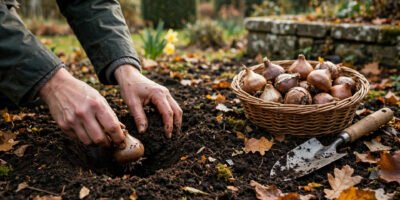
When to Plant Bulbs for Spring: A UK Gardener’s Guide
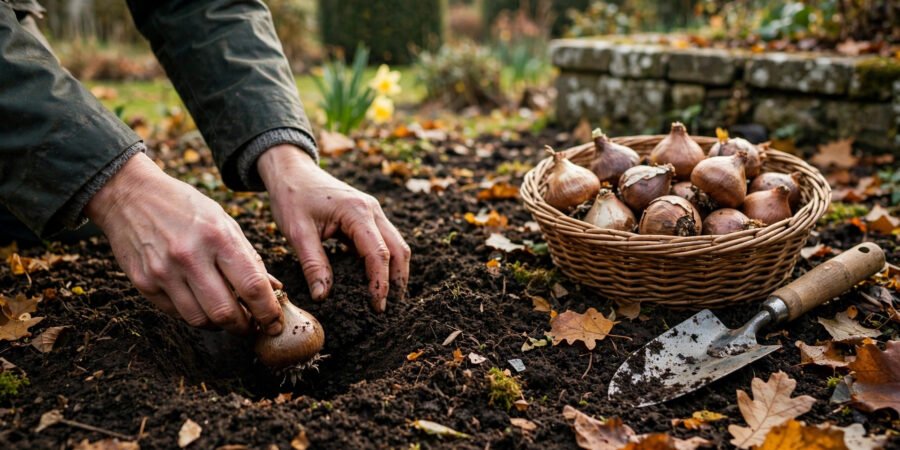
Every October, garden centres fill with nets of brown papery bulbs and a quiet panic: am I planting these at the right time, or am I about to bury £40 worth of daffodils for nothing? Bulb timing confuses beginners because the answer is not one date but a sequence — different bulbs, different months — and getting it wrong is the single biggest reason spring displays disappoint.
This guide gives you the definitive UK calendar for spring-flowering bulbs, explains the science of why timing matters, and covers the mistakes that waste money every autumn.
Why Timing Matters: The Chilling Requirement
Spring bulbs are not seeds; they are pre-packed flower factories. Inside each bulb sits a miniature flower, formed during summer dormancy, waiting for a sequence of cold then warmth to trigger growth. This vernalisation — typically 12–16 weeks below about 9°C — is non-negotiable. Plant too late and the bulb gets insufficient chill, producing blind shoots (leaves, no flowers) or stunted blooms. Plant far too early in warm soil and bulbs can sprout prematurely, then get hammered by the first hard frost.
Britain’s climate is actually ideal for this: reliably cold winters without the deep freezes that kill bulbs in continental climates. That is why naturalised daffodils thrive in the Lake District and snowdrops carpet Scottish woodlands. Your job is simply to get bulbs into the ground in the window where soil is cool but workable — roughly September to December depending on the bulb.
The UK Bulb Calendar, Month by Month
September: the early birds
Daffodils (Narcissus) go in first — September to early October is the gold standard. They need the longest root-establishment period before winter, and early planting measurably improves flowering. Autumn-flowering colchicums and sternbergia also go in now for flowers within weeks.
October: the main event
Tulips are the famous exception to early planting: wait until November if you can. Late planting in cold soil dramatically reduces tulip fire (a fungal disease) and the bulbs catch up fast. October is peak time for crocus, hyacinths, alliums (ornamental onions), fritillaries, and iris reticulata. As a rule of thumb: daffodils early, tulips late, everything else in the middle.
November–December: the last chance saloon
Tulips planted in November often outperform October-planted ones. You can keep planting any bulbs while the soil is still workable — even into December in mild southern winters. Supermarket “leftover” bulbs in December are bargains, not write-offs: get them in the ground rather than the bin. The RHS bulb planting calendar is the authority to bookmark for exact timings by species.
How Deep, How Far Apart, Which Way Up
The classic rule — plant three times as deep as the bulb is tall — works for nearly everything: daffodils about 10–15 cm, tulips 10–15 cm, crocus 8–10 cm, snowdrops 8–10 cm. Deeper planting protects from frost and deters squirrels; shallow planting risks frost damage and floppy stems. Spacing: roughly two bulb-widths apart for drifts, closer (almost touching) for containers. Pointy end up — though honestly, bulbs planted sideways usually right themselves, so do not agonise.
Soil preparation matters more than precision. Bulbs rot in waterlogged ground, the great killer in wet Welsh and western Scottish gardens. On heavy clay, plant on a 2–3 cm bed of grit for drainage, or stick to raised beds and containers. A handful of bone meal or bulb fertiliser in the planting hole feeds next year’s flower bud as it forms. For container displays, layer bulbs “lasagne style” — late tulips deepest, daffodils middle, crocus on top — for months of succession from one pot.
After Planting: The Care Most People Skip
Bulbs are low-maintenance, not no-maintenance. Water after planting if autumn is dry (increasingly common), then leave winter rain to it. In spring, the critical job is deadheading: snap off spent daffodil and tulip heads so energy goes to the bulb, not seeds. But — and this is the mistake that kills future displays — leave the foliage for six weeks after flowering. Those yellowing leaves are photosynthesising next year’s flower. Tying or braiding daffodil leaves looks tidy but starves the bulb; let them flop naturally.
Feeding: a liquid tomato feed or balanced fertiliser as foliage emerges boosts the following year. Lifting and dividing overcrowded snowdrops and daffodils every 3–4 years (“in the green”, just after flowering for snowdrops) rejuvenates clumps. Our guide to low-maintenance UK garden plants pairs well with bulbs for year-round structure with minimal effort.
Common Bulb Failures (and How to Avoid Them)
Blind daffodils (leaves, no flowers): usually shallow planting, premature foliage removal last year, or overcrowding — replant deeper and feed. Rotting bulbs: waterlogged soil; improve drainage or move to containers. Disappearing crocus: mice and squirrels; plant deeper or in wire mesh baskets. Tulips that dwindle after year one: normal for many modern hybrids — treat tulips as annuals in borders, or choose perennial species tulips and Darwin hybrids for repeat flowering. Bulbs sprouting in the bag: plant immediately; a sprouted bulb in soil beats a perfect bulb on a shelf.
Buying tips: choose firm, heavy bulbs with no mould or soft spots — weight is the best quality indicator. Bigger bulbs generally mean bigger flowers, so size-graded “top size” daffodils are worth the premium. And for wildlife value, early crocus and snowdrops are lifelines for emerging bumblebee queens; our article on wildlife-friendly gardening on a budget explains how to build on that.
Forcing Bulbs Indoors: Winter Colour Without a Garden
No garden? You can still enjoy spring bulbs months early by forcing them indoors. Plant hyacinths, paperwhite narcissi, or prepared tulips in bowls of bulb fibre (or simply suspended over water in a forcing vase) in September–October, keep them cool and dark for 8–10 weeks while roots develop, then bring them into indirect light. The result: fragrant flowers in December and January, when the garden offers nothing. Prepared hyacinths are heat-treated to need less chilling, making them the most foolproof choice for beginners. After flowering, forced bulbs are spent — compost them rather than planting out, as they rarely recover. Gardeners’ World publishes excellent step-by-step forcing guides each autumn if you want to try it.
A related trick for small spaces: bulb lasagne in containers works on balconies and patios just as well as in borders. A 30cm pot layered with tulips at the bottom, daffodils in the middle, and crocus on top delivers three months of succession colour from a single container by the front door — arguably the highest floral return per square foot in all of gardening.
Conclusion
Understanding when to plant bulbs for spring boils down to one calendar burned into memory: daffodils in September, most bulbs in October, tulips in November, all three-times-deep in well-drained soil. Respect the chilling requirement, leave the foliage alone for six weeks, and your autumn afternoon’s work returns as the first colour of the year — the best-value gardening transaction there is.
Frequently Asked Questions
When should I plant daffodil bulbs in the UK?
September to early October is ideal. Daffodils need the longest establishment period before winter, and early planting gives noticeably better flowering than November planting.
Is it too late to plant tulip bulbs in December?
No — tulips actually prefer late planting. November into December in cold soil reduces disease, and tulips catch up quickly in spring. Plant while the ground is still workable.
How deep should I plant spring bulbs?
Three times the bulb’s height: roughly 10–15 cm for daffodils and tulips, 8–10 cm for crocus and snowdrops. Deeper planting protects against frost and squirrels.
Why did my daffodils produce leaves but no flowers?
“Blind” daffodils are usually caused by shallow planting, foliage being cut back too soon the previous year, or overcrowded clumps. Replant deeper, leave leaves for six weeks, and divide congested clumps.
Should I remove dead bulb foliage?
Deadhead spent flowers, but leave foliage for at least six weeks after flowering so the bulb can store energy for next year. Never tie or braid the leaves.