How to Choose the Right Lawnmower for a Small UK Garden
Walk into any garden centre in spring and the lawnmower aisle is a wall of confusion: petrol beasts, battery systems, robot mowers that look like tortoises, and hand-push mowers your grandfather would recognise. If your garden is a modest British plot — the typical 50–100 square metres of lawn behind a terrace or semi — most of that machinery is wildly overpowered for your needs. Choosing well saves you hundreds of pounds and a lot of shed space.
This beginner’s guide cuts through the noise: which mower types actually suit small UK gardens, what specifications matter (and which are marketing fluff), and how to buy once and buy right.
Start With Your Lawn, Not the Mower
Before comparing models, measure your lawn properly. Pace it out or use a phone measuring app — most “small” UK gardens have 40–120 m² of actual grass once beds, patios and the shed are subtracted. Under about 100 m², you are firmly in electric or manual territory; petrol only starts making sense above 200 m² or on steep, rough ground. Note your obstacles too: narrow side passages, steps, and tight corners all argue for a lighter, smaller-deck machine you can lift and manoeuvre.
Also be honest about your grass. A fine ornamental lawn wants a cylinder mower’s scissor cut; a family lawn that doubles as a football pitch is happier with a rotary’s rough-and-ready approach. And if your garden is mostly shaded or mossy — common in northern England and Scotland — cutting height matters more than the mower’s badge, as our look at garden landscaping costs for small UK gardens touches on when budgeting for a full garden refresh.
The Four Types, Honestly Compared
Manual cylinder mowers — the underrated classic
A push cylinder mower (£60–£120) has no engine, no cable, and no battery to degrade. For lawns under 50 m² it is genuinely the easiest option: silent, light, zero running costs, and it gives the cleanest cut of all. The catch? It struggles with long or wet grass, so you must mow little and often — fine if you enjoy the ritual, annoying if you travel.
Mains electric — cheap and cheerful
Rotary mowers with a power cable (£70–£150) are the default choice for small gardens and with good reason: light, quiet enough, and powerful for the price. The cable is the compromise — you will dance around it, and it limits range to about 30 metres from a socket. For a small garden this is rarely a real problem. Safety note: always use an RCD-protected socket outdoors, and mow away from the cable, never towards it.
Battery (cordless) — the sweet spot for most
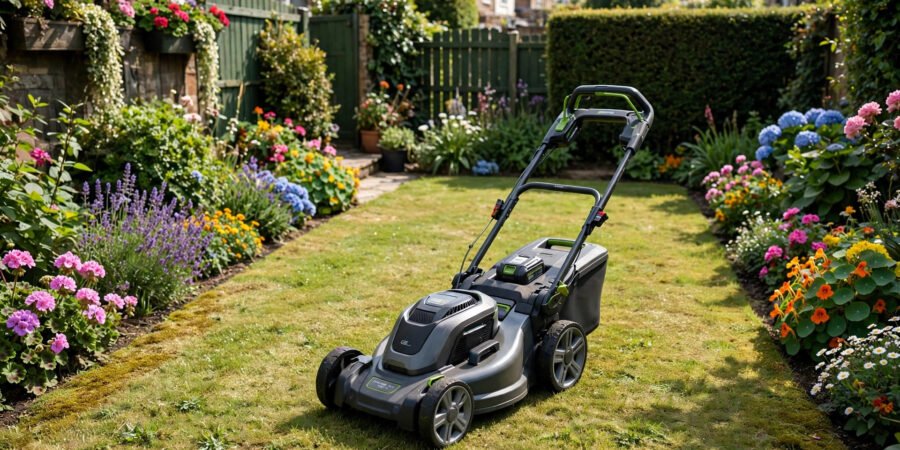
Battery mowers (£150–£350) are now the best choice for most small UK gardens. No cable, low noise (neighbour-friendly for early Sunday cuts), and modern 36V+ systems cut a 100 m² lawn on one charge. The real value is the battery platform: brands like Bosch, Makita, Ryobi and Stihl share batteries across strimmers, hedge trimmers and leaf blowers, so one or two batteries power your whole toolkit. Check the amp-hour rating (4Ah minimum for mowers) and whether the battery is included — bare tools look cheap until you add £80 for the power pack.
Petrol — almost certainly overkill
Petrol mowers (£200+) are heavier, noisier, smellier, and need annual servicing, oil changes and winter fuel stabiliser. For a small garden they are a liability: harder to store, harder to start, and banned from the quiet Sunday morning slot by sheer noise. Skip petrol unless your “small garden” is on a serious slope or you are cutting a meadow.
Specifications That Actually Matter
Cutting width: 30–34 cm is ideal for small gardens — narrower decks turn tighter around beds. A 40 cm deck on a small lawn just means more wrestling. Cutting heights: look for 20–60 mm range with easy lever adjustment (not individual wheel fiddling). For UK lawns, never scalp below 25 mm — longer grass outcompetes moss and survives dry spells. Grass box size: 30–40 litres means fewer trips to the compost heap; check the box is easy to detach with one hand. Weight: under 12 kg for battery models you will lift over steps or into a shed. Mulching plug: a genuinely useful extra — finely chopped clippings feed the lawn, halving the need for spring fertiliser.
Ignore “cutting area per charge” claims measured on bowling-green grass; real-world UK lawns with a week’s growth cut those figures by a third. The Which? lawnmower reviews test on realistic grass and are worth checking before you buy, as is the RHS advice on lawn care — because mowing height and frequency matter more to your lawn’s health than the mower’s badge.
Robot Mowers: Worth It for Small Gardens?
Robot mowers (£300–£800+) have dropped in price and suit small, simple lawns well — they mow a little every day, which is actually the healthiest regime for grass. But they need boundary wire installation (or pricier GPS models), they struggle with complex shapes and narrow passages, and they mulch rather than collect, which can thatch mossy lawns. They also raise the theft question in front gardens. Verdict: lovely for a simple rectangular back lawn if the budget allows; unnecessary for most.
Buying Smart: New, Second-Hand, and Timing
Mower prices peak in April–May. Buy in late summer or autumn for 20–30% discounts as retailers clear stock, or go second-hand: battery mowers depreciate fast, and a two-year-old quality machine on eBay or Facebook Marketplace often sells for half its new price. Check battery health on used cordless models (ask for a runtime demo) and inspect the blade — a blunt or bent blade ruins the cut whatever the motor. Budget £10–£15 a year for a replacement blade or annual sharpening; a sharp blade is the cheapest lawn upgrade there is.
Storage matters more than people think. Mowers live longest in a dry shed — damp kills electrics and rusts decks. Our guide to building a garden shed base is worth a read if your mower is currently rusting under a tarpaulin.
Conclusion
For a small UK garden, the easiest choice is also the best one: a battery rotary mower with a 32 cm deck from a brand whose batteries fit other garden tools, bought in autumn or second-hand. Keep the blade sharp, never scalp the lawn, and mow little and often. Do that, and the mower aisle will never confuse you again — you will walk past the petrol monsters with the quiet confidence of someone who bought exactly the right machine.
Frequently Asked Questions
What size lawnmower do I need for a small garden?
A 30–34 cm cutting width suits lawns up to about 100 m². Narrower decks manoeuvre around beds and through side gates far more easily than wide ones.
Are battery lawnmowers powerful enough?
Yes, for small gardens. Modern 36V systems with 4Ah+ batteries handle a typical UK lawn on one charge. They struggle only with very long, wet grass — mow regularly and it is a non-issue.
Is a petrol or electric mower better for a small UK garden?
Electric (mains or battery) wins for small gardens: lighter, quieter, cheaper to run, and no servicing. Petrol only makes sense for large lawns over 200 m² or steep, rough terrain.
When is the cheapest time to buy a lawnmower in the UK?
Late summer and autumn, when retailers discount stock by 20–30%. Second-hand quality machines are also plentiful and cheap on eBay and Facebook Marketplace year-round.
How often should I sharpen my lawnmower blade?
At least once a year, ideally at the start of the mowing season. A blunt blade tears grass rather than cutting it, leaving brown tips and inviting disease.