How to Start Boxing Training as a Complete Beginner in London (Safely)
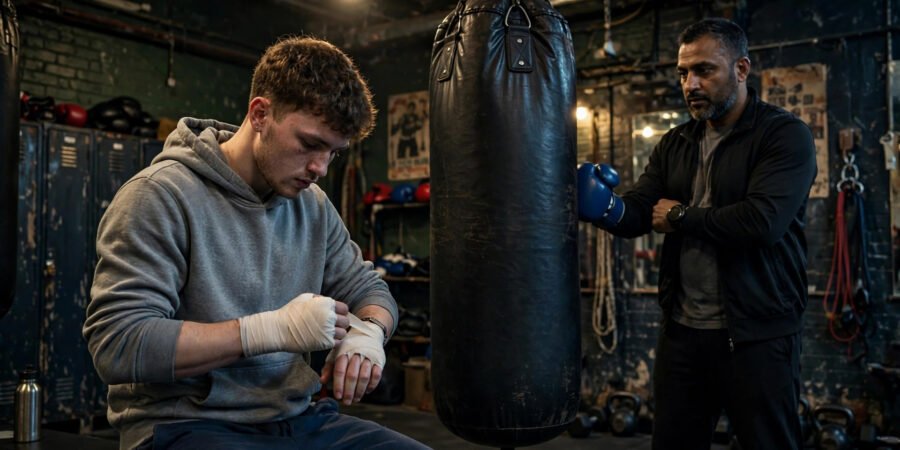
Boxing looks violent from the outside — two people hitting each other in a ring. But step inside a London boxing gym as a beginner and you will discover something unexpected: it is one of the most welcoming, methodical and beginner-friendly workouts in the city. Nobody is throwing you into a fight on day one. In fact, most people who take up boxing never spar at all.
This guide covers the easiest way to start boxing training as a complete beginner in London without getting hurt: what actually happens in a beginner session, how to pick the right gym, the kit you need (and don’t), and the safety rules that keep boxing one of the smartest fitness choices you can make.
What Beginner Boxing Training Actually Looks Like
Forget the films. A beginner boxing session in London is roughly 60–90 minutes and looks like this: a 10-minute warm-up of skipping, jogging and dynamic stretches; 15 minutes of shadowboxing (punching the air in front of a mirror while your coach corrects your stance); 20 minutes on the heavy bags and pads, learning the six basic punches — jab, cross, lead hook, rear hook, lead uppercut, rear uppercut; then 15 minutes of conditioning (bodyweight circuits, core work, more skipping); and a cool-down with stretching.
Notice what is missing: nobody punching you in the face. Reputable gyms follow England Boxing’s coaching standards, which keep beginners on technique and fitness for weeks or months before any contact is introduced — and contact is always optional. “White-collar” and “boxercise” classes across London skip sparring entirely by design.
Choosing the Right London Gym (This Matters More Than Anything)
London has hundreds of boxing options, from century-old East End clubs like Repton to glossy boutique studios in Shoreditch. For a beginner, the brand does not matter — the coaching does. Look for three things: England Boxing affiliation or coaches with recognised qualifications, a dedicated beginners’ class or fundamentals course (not just “all levels” sessions where you will be lost), and a trial session or pay-as-you-go option before you commit to a membership.
Red flags: a gym that pushes you toward sparring in your first month, coaches who cannot explain why a technique works, or prices that require a 12-month contract upfront. Good beginner gyms in London typically charge £10–£20 per session or £60–£120 a month — expensive areas like Kensington cost more, while community clubs in Hackney, Peckham and Tottenham are often cheaper and superbly coached. BBC Sport’s boxing section is worth following to understand the sport’s culture before you walk in.
Kit: What You Actually Need on Day One
Almost nothing. Every decent beginner gym lends you gloves and headguards for free or a small hire fee. For your first month you need: comfortable workout clothes, trainers with decent ankle support (boxing involves constant pivoting), a water bottle, and hand wraps (£5–£10 — buy your own for hygiene; your coach will teach you to wrap).
Do not buy expensive gloves until you know you are sticking with it. When you do, 14oz or 16oz gloves are standard for training — heavier gloves protect your hands and your partners. A mouthguard (£5 for boil-and-bite, £40+ for custom) becomes essential the moment any sparring enters the picture. Skip the designer boxing brands at first; Decathlon and Sports Direct sell perfectly good starter kit. If you want to build general fitness alongside boxing, our guide to creating a personalised beginner workout plan pairs well with two boxing sessions a week.
The Safety Rules That Keep You Injury-Free
Boxing’s injury reputation comes from competition, not training. Studies of recreational boxing consistently show that technique-focused training without hard sparring carries injury rates comparable to other gym sports. The rules that keep it that way: wrap your hands every single session — most boxing hand injuries are wrist sprains from unwrapped hands on heavy bags, not from sparring. Learn defence before offence — a good coach teaches head movement, blocking and footwork in your first weeks. Never spar hard as a beginner — light technical sparring (touch contact, controlled) is how you learn; anyone going hard on a novice is a bully, tell the coach. Listen to your shoulders and wrists — boxing is repetitive; aching joints mean your technique needs adjusting, not that you need to push through.
The NHS exercise guidelines recommend 150 minutes of moderate activity weekly — two boxing sessions plus a run or walk comfortably covers it, and boxing’s mix of cardio, strength and coordination is one of the most complete workouts available.
Your First Four Weeks: A Realistic Plan
Week one: two beginner classes, focus purely on stance and the jab-cross. You will be uncoordinated and exhausted — everyone is. Week two: add the hooks, start skipping properly, and your shoulders will ache in a good way. Week three: pad work with a partner, first taste of combinations, conditioning circuits feel less like dying. Week four: you can throw a basic six-punch combination without thinking, your fitness has visibly jumped, and you understand why boxers are obsessed with footwork. Most London gyms run beginner courses in exactly this shape — often marketed as “fundamentals” or “intro to boxing” blocks of 4–6 weeks.
Track your progress and you will stay motivated: a cheap fitness tracker shows your resting heart rate dropping and your session calorie burn climbing, which is addictive in the best way.
Eating and Recovery: The Beginner’s Fuel Plan
Boxing burns 600–800 calories an hour, so fuelling matters more than beginners expect. You do not need a fighter’s diet — just eat a proper meal with protein and carbohydrates two to three hours before training (porridge with peanut butter, or chicken and rice, are gym classics), and have something with protein within a couple of hours after. Hydration is the quiet performance killer: boxers lose over a litre of sweat per session, so drink water before, during and after, and consider an electrolyte drink for sessions over an hour.
Recovery is where beginners go wrong, training five days straight and burning out by week three. Two to three sessions a week is the sweet spot for your first two months. Sleep is your real coach — most adaptation happens overnight — and the NHS sleep guidance is worth following if evening sessions leave you wired. Sore shoulders and forearms are normal; sharp joint pain is not, and means technique needs a coach’s eye.
Conclusion
The easiest way to start boxing training as a complete beginner in London without getting hurt is simple: pick an England Boxing-affiliated gym with a real beginners’ class, show up with wraps and an open mind, learn technique before power, and treat sparring as a distant optional extra — not the point. Do that and boxing becomes what it is for most Londoners who train: the best hour of their week, a full-body workout disguised as a skill, and a community that will surprise you with its warmth.
Frequently Asked Questions
Do I have to spar as a beginner boxer?
No. Most beginner programmes in London involve zero sparring, and many people train for years without ever sparring. It is always optional at reputable gyms.
How fit do I need to be to start boxing?
Not fit at all. Beginner classes are designed for complete novices — the fitness comes from the training itself. If you can walk briskly for 30 minutes, you can start.
What should I wear to my first boxing session?
Normal gym clothes and supportive trainers. The gym provides gloves; buy your own hand wraps (£5–£10) for hygiene.
Is boxing dangerous for beginners?
Technique-focused training without hard sparring has injury rates similar to other gym sports. Hand wraps, qualified coaching and sensible progression keep it safe.
How much does boxing training cost in London?
Typically £10–£20 per session or £60–£120 a month. Community clubs in areas like Hackney and Peckham are often cheaper than central London studios.