Stop Your Dog Pulling on the Lead: The Beginner’s UK Guide
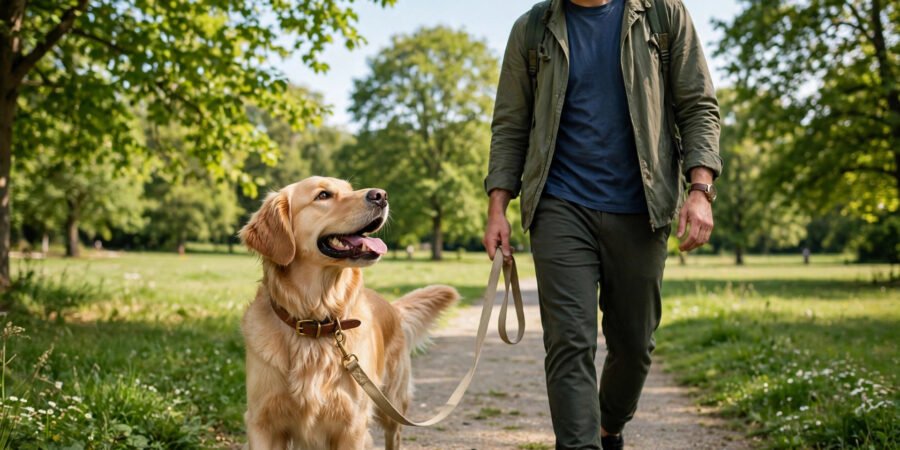
The walk was supposed to be relaxing. Instead, your shoulder aches, your dog is choking itself at the end of a taut lead, and a jogger just gave you the look. Lead pulling is the number-one complaint of UK dog owners — and the number-one reason walks stop being fun. The good news: pulling is not dominance, stubbornness or a “bad dog”. It is physics plus enthusiasm, and it is entirely trainable.
This beginner’s guide explains why dogs pull, the equipment that helps (and the kind to avoid), and a step-by-step loose-lead training method that works for real dogs with real distractions — no punishment, no gimmicks, just consistent technique.
Why Dogs Pull (It Is Not What You Think)
Dogs pull for simple reasons: they walk faster than us — a healthy dog’s natural pace is roughly twice a human’s amble, so pulling is just… walking normally, from the dog’s perspective. Pulling works — every time the dog pulls and you follow, the dog learns that pulling gets them where they want to go. You have been training the pulling with every step. The world is exciting — smells, squirrels, other dogs; the lead is the only thing between the dog and everything interesting. Opposition reflex — dogs (like humans) instinctively push against pressure, so yanking the lead back often makes pulling worse.
Understanding this reframes the task: you are not fighting your dog’s character. You are reteaching the economics of the lead — making loose-lead walking more rewarding than pulling. That is a training problem, and training problems have training solutions.
Equipment: What Helps and What Harms
Use: a well-fitted front-clip harness (the lead attaches at the chest — when the dog pulls, it gently turns them toward you instead of giving them a sled-dog bracing position). This is the single most effective equipment change for pullers. A standard flat collar is fine for dogs that already walk well; for pullers, collars concentrate force on the trachea — vets see real throat injuries from chronic collar-pulling. A fixed-length lead (1.2–1.8m) gives clearer communication than extendable leads, which actively teach pulling by rewarding every forward surge with more line.
Avoid: choke chains, prong collars and slip leads used as corrections — the RSPCA opposes them, and they risk physical injury and behavioural fallout (fear, aggression) without teaching the dog anything about walking nicely. Extendable leads for training — they are pulling-teaching machines. Head collars (like Haltis) can help as a management tool for strong dogs alongside training, but fitted badly they risk neck injury — get a professional fitting, and never yank on one.
The Kennel Club recommends positive, reward-based training methods — which is exactly what the method below uses.
The Method: Stop-and-Go Loose-Lead Training
The core principle is beautifully simple: pulling never works; loose lead always works. Every walk becomes the lesson.
Step 1 — Set up for success. Start in a boring environment (your garden or a quiet street), not the exciting park. A tired-ish dog learns better than a bursting one — a quick play session before training walks helps enormously. Load your pocket with high-value treats (cheese, chicken — kibble will not cut it against squirrel-level distraction).
Step 2 — Reward position. With the dog beside you and the lead loose, mark and treat (“yes!” + treat) every few steps. You are building a reinforcement history for the position you want — the dog learns that staying close pays wages.
Step 3 — Be a tree. The instant the lead goes taut, stop dead. No yanking, no shouting — just stop. Wait for any slack (even a glance back at you counts at first), mark it, treat, and move on. The dog learns: pulling stops the walk; slack restarts it. This is tedious for the first week. It works.
Step 4 — Change direction. For enthusiastic pullers, add penalty turns: when the dog surges ahead, calmly turn 180° and walk the other way. The dog learns that forging ahead achieves the opposite of what it wanted. Combine with stop-and-go, not instead of it.
Step 5 — Raise criteria gradually. Once the garden is easy, move to the quiet street, then the busier street, then near the park — one distraction level at a time. Expect regression at each new level; that is normal learning, not failure. Train in 5–10 minute sessions within longer walks — full-walk training exhausts both of you.
Troubleshooting Common Problems
“My dog only pulls toward other dogs.” That is over-arousal, not general pulling — work at distances where your dog notices but can still think (below threshold), rewarding calm, and gradually decrease distance over sessions. “Treats do not work — my dog ignores them outside.” You are either too close to the distraction (increase distance) or the treats are too boring (upgrade to real meat/cheese). “It worked for a week then stopped.” Usually inconsistency — someone in the household is still letting pulling work, or criteria were raised too fast. Dogs do what works; make sure loose-lead is the only thing that works, with everyone. “My dog is too strong for me to stop-and-go safely.” Use a front-clip harness plus head collar (professionally fitted) as management while you train — and consider a few sessions with an APBC-registered behaviourist for large, powerful pullers.
Remember that good walks need good destinations — once lead manners improve, reward yourselves with somewhere worth walking. Our guide to Devon’s best coastal walks for beginners is perfect inspiration, and if you travel with your dog, check the real cost of a UK dog holiday before you book.
How Long Does It Take?
Honest answer: 2–6 weeks of consistent daily practice for noticeable improvement in low-distraction environments; 2–4 months for reliable loose-lead walking past real-world distractions. Puppies learn faster (fewer ingrained habits); adult rescue dogs with years of pulling practice take longer but absolutely get there. The variable that matters most is consistency across the household — one person allowing pulling un-trains a week of everyone else’s work. Brief the whole family on the method.
And manage your expectations about perfection: a dog that walks on a loose lead 90% of the time and surges toward the occasional squirrel is a trained dog having a moment, not a failure. Aim for enjoyable walks, not obedience competitions.
Conclusion
Stopping lead pulling comes down to equipment that helps (front-clip harness, fixed lead), a method based on simple economics (pulling stops the walk; slack restarts it), gradual distraction-building, and whole-household consistency. No punishment, no gadgets, no dominance theory — just the patient rewiring of what the lead means. In a few months, the walk becomes what it was supposed to be: the best part of both your days.
Frequently Asked Questions
What is the best harness to stop a dog pulling?
A front-clip harness (lead attaches at the chest) is the most effective and humane option — it redirects pulling sideways instead of letting the dog brace forward. Pair it with training; no harness alone teaches loose-lead walking.
Should I use a choke chain for a pulling dog?
No. Choke chains, prong collars and similar aversives risk tracheal injury and behavioural harm, and are opposed by the RSPCA and veterinary behaviourists. They suppress pulling through pain without teaching the dog what to do instead.
How do I stop my dog pulling toward other dogs?
Work below your dog’s excitement threshold — at a distance where they notice the other dog but can still respond to you — rewarding calm behaviour, and gradually decrease distance over sessions. This is desensitisation, and rushing it backfires.
Are extendable leads bad for pulling?
For training, yes — they teach the dog that pulling forward earns more line, which is the exact opposite of loose-lead lessons. Use a fixed-length lead (1.2–1.8m) while training; extendables are for safe open spaces with trained dogs.
Can an old dog learn to stop pulling?
Absolutely — dogs learn at any age. Older dogs with years of pulling habit take longer (more ingrained reinforcement history), but the same methods work. Rule out pain first: arthritic dogs sometimes pull to avoid certain gaits.

