Why Cats Knead With Their Paws: The Science Explained
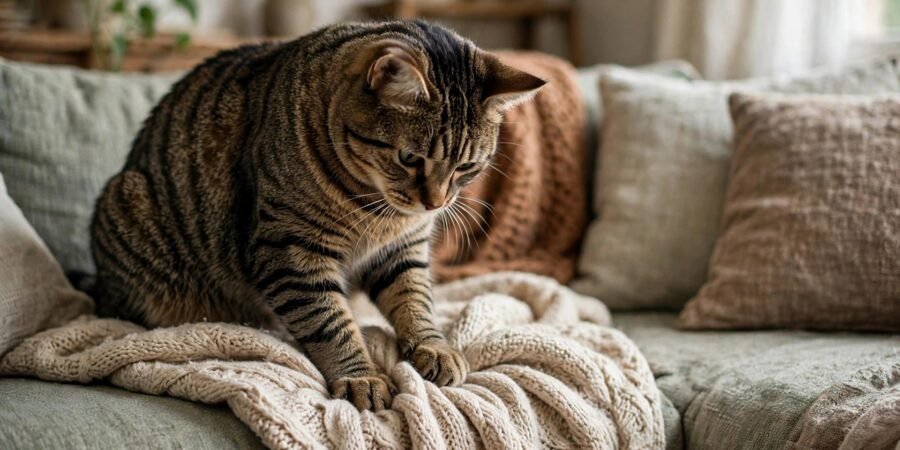
There is a particular rhythm to it — push, pull, push, pull — paws working a blanket, your lap, or occasionally your stomach at 6am with the dedication of a baker kneading dough. Cats knead. Kittens knead, seniors knead, rescues and pedigrees alike. It looks bizarre, it can hurt (those claws are not decorative), and nobody taught them to do it. So why do cats knead with their paws, and what is actually going on in that furry head? The answer reaches back to the first days of life, touches on comfort, territory and affection, and reveals more about your cat’s emotional world than almost any other behaviour.
The kittenhood origin: milk, warmth and survival
Kneading begins at the milk bar. Newborn kittens knead their mother’s belly to stimulate milk let-down — the rhythmic pressing triggers oxytocin release in the queen and milk flow for the kitten. It is one of the first purposeful motor patterns a cat ever learns, hardwired alongside suckling in the earliest neural pathways. Like many infant behaviours in mammals, it never fully switches off; it gets repurposed. Adult kneading is widely understood by behaviourists as a neotenic comfort behaviour — a kittenhood pattern retained because it became associated with safety, warmth and contentment.
This explains the blissed-out expression cats wear while kneading: half-closed eyes, purring, sometimes drooling slightly. The cat is not confused about their age. They are deliberately revisiting the most secure feeling they know. The Cats Protection behaviour resources describe kneading as one of the clearest indicators of a relaxed, contented cat — it is, in effect, a visible happiness signal.
The four theories (and why they are all partly true)
1. Comfort and self-soothing. The dominant explanation: kneading recreates kittenhood security, so cats do it when settling to sleep, during stroking sessions, or when anxious. Stressed cats knead more — it is a coping mechanism, like a human hugging a pillow.
2. Territorial marking. Cats have scent glands between their toes. Kneading deposits the cat’s personal scent signature on the blanket, the sofa, or you. Your cat is not just getting comfortable; they are labelling you as theirs. This is also why cats often knead then curl up exactly on the kneaded spot — they have prepared and claimed their bed.
3. Nesting instinct. Wild feline ancestors patted down grass and leaves to make a safe sleeping hollow. Domestic cats kneading blankets before sleep are running ancestral software — testing and softening the “nest” before committing to it.
4. Affection and bonding. Kneading directed at a human, especially combined with purring and head-bunting, is social. In multi-cat households, cats that knead each other are typically bonded pairs revisiting allogrooming-era intimacy. When your cat kneads your lap, you have been promoted to family.
None of these cancels the others. A single kneading session can be comfort, marking and affection simultaneously — behaviour is rarely single-purpose, and the Blue Cross cat behaviour guides emphasise reading the whole context (body language, situation, history) rather than hunting for one “real” reason.
Why some cats knead with claws out (and what to do)
Claws emerge during kneading because the behaviour is genuinely vigorous — the cat is not trying to hurt you. Punishing it suppresses a happiness behaviour and damages trust. Instead: keep claws trimmed (ask your vet to demonstrate safe trimming), keep a thick blanket on your lap as a designated kneading pad, and gently redirect to the blanket if they start on bare skin. Never declaw — it is mutilation, illegal in the UK, and causes chronic pain.
Do cats knead more at certain ages or times?
Kneading peaks in two life phases. Kittens and young cats knead exuberantly and often — the behaviour is fresh and the associations are strong. It then typically settles into a calmer adult pattern: kneading before sleep, during favourite stroking sessions, on the treasured blanket. In senior cats, kneading sometimes increases again, and this is worth watching with affectionate attention rather than worry: older cats often find comfort in familiar rituals as their senses dull and their joints stiffen, and a fifteen-year-old kneading your lap is usually a picture of contentment. What matters at any age is change — a cat that never kneaded suddenly starting, or a lifelong kneader abruptly stopping, is telling you something shifted. Note it, consider the context (new home, new pet, recent vet visit), and mention it at the next check-up if it persists. Otherwise, enjoy every life stage of the behaviour for what it is: a small, rhythmic declaration of trust.
When kneading signals something worth noticing
Normal kneading is rhythmic, accompanied by relaxation signals, and the cat can be gently interrupted. Pay attention if kneading becomes compulsive (incessant, hard to interrupt, paired with wool-sucking or over-grooming), appears suddenly in an older cat alongside other behaviour changes (possible cognitive or medical issues — worth a vet mention), or is directed exclusively at one texture with frantic intensity (occasionally linked to early weaning). Context is everything: a rescue cat that kneads constantly in its first weeks is self-soothing through the stress of rehoming — normal, and it typically settles as security grows.
Kneading also features in the social lives of multi-pet households. If your kneader shares space with a dog, the scent-marking aspect means the dog’s bedding may become a kneading target too — one more reason to understand the dynamics when animals share a home. (And if you are weighing up the logistics of travelling with multiple pets, our breakdown of the cost of taking a dog on a UK holiday covers the practical side.) Outdoor cats, meanwhile, often knead favourite garden spots — soft soil, warm decking — before settling; a cat-safe outdoor space matters, and our guide to making your garden wildlife-friendly on a budget includes planting that suits lounging cats as well as visiting wildlife.
Conclusion
Cats knead with their paws because the behaviour is woven into their earliest experience of safety — a kittenhood milk-stimulating rhythm repurposed into adult life as comfort, territory-marking, nesting and affection all at once. It is one of the most honest behaviours a cat has: you cannot fake the drooling, purring bliss of a committed knead. So protect your lap with a thick blanket, keep those claws trimmed, and take it as the compliment it is. When a cat kneads you, they are telling you that you feel like home.
Frequently Asked Questions
How do I understand why cats knead with their paws?
Kneading originates in kittenhood, where kittens press their mother’s belly to stimulate milk flow. Adults retain it as a comfort behaviour expressing contentment, and it also deposits scent from glands between the toes — marking you or the blanket as theirs.
Why does my cat knead me and not the sofa?
Kneading directed at a person is social bonding — the cat associates you with kittenhood security and is marking you with their scent. Cats typically knead the humans they are most attached to, often while purring.
Should I stop my cat from kneading with claws?
Do not punish it — redirect instead. Keep claws trimmed, place a thick blanket on your lap as a kneading pad, and gently move the cat to it. Declawing is illegal in the UK and causes lasting harm.
Is excessive kneading a sign of anxiety?
It can be. Kneading increases under stress as a self-soothing behaviour. If it becomes compulsive, hard to interrupt, or is paired with wool-sucking or over-grooming, discuss it with your vet or a qualified behaviourist.

