Rabbit Diet Beyond Carrots: What Bunnies Should Really Eat
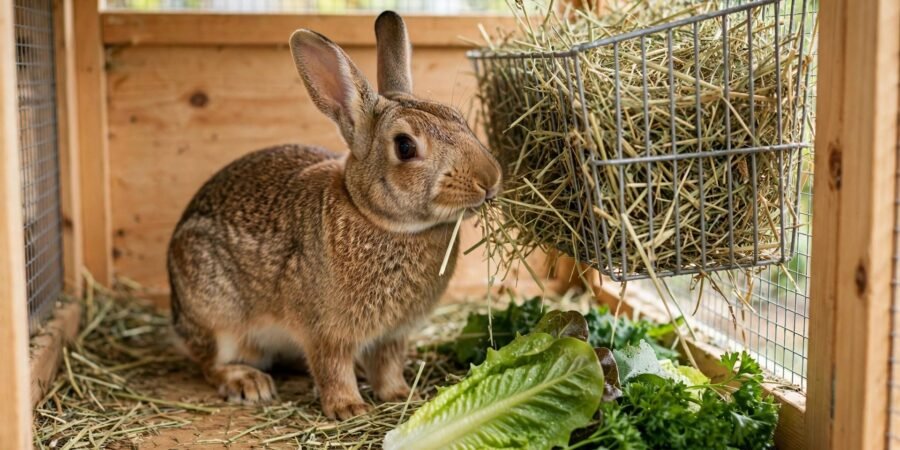
Bugs Bunny lied to you. Carrots — fed as the dietary cornerstone — are to rabbits roughly what chips are to humans: a sugary treat that causes real harm when mistaken for a food group. Yet the carrot myth persists so stubbornly that many rabbit owners build entire diets around it, then wonder why their bunny has dental disease, obesity and chronic digestive trouble. Understanding rabbit diet beyond carrots is genuinely difficult because it contradicts decades of cartoons, pet-shop labelling and well-meaning grandparents. So why is it so hard — and what should rabbits actually eat? The answer is simpler than the confusion suggests, and it starts with hay.
Why the carrot myth refuses to die
The myth has three powerful parents. Popular culture: generations of cartoons cemented the rabbit-carrot association before most owners ever read a care guide. Pet shops: colourful muesli mixes studded with carrot flakes and peas look appetising to humans and sell well, despite being nutritionally disastrous — rabbits selectively eat the sugary bits and leave the fibre, a feeding pattern vets call “selective feeding”. Outdated advice: care guidance from decades ago genuinely recommended mixed diets; the science has moved on, but the internet has not finished catching up. The RSPCA’s rabbit diet guidance now states the modern consensus plainly, but it competes for attention with ten thousand cheerful blog posts showing bunnies “enjoying” carrot piles.
There is also a psychological trap: carrots produce visible joy. A rabbit crunching a carrot looks happy, and owners mistake enthusiasm for nutritional endorsement. Children do backflips for ice cream; it is not health food. Rabbits are enthusiastic about many things that harm them — the owner’s job is nutrition, not applause.
The actual diet: hay, hay, and more hay
The correct rabbit diet is almost comically simple: 85–90% good-quality hay (timothy, meadow or oat hay — not straw, which is bedding, not food), fed in unlimited quantities. Hay does three critical jobs simultaneously: it provides the fibre that keeps the rabbit gut moving (gut stasis, the slowing or stopping of the digestive tract, is a leading killer of pet rabbits and is directly linked to low-fibre diets); it wears down teeth, which grow continuously and develop lethal spurs without constant grinding; and it provides the behavioural enrichment of foraging.
The remaining 10–15% is: a small daily portion of leafy greens (kale, spring greens, herbs like parsley and coriander, dandelion leaves — introduce new greens gradually), and a small measured amount of high-fibre pellets (an egg-cupful per day for an average rabbit — most owners feed five times too much). Carrots, fruit and commercial treats? Occasional tiny treats only — a thin coin of carrot a few times a week, not a daily staple. Fresh water always, ideally in a bowl (bottles are harder to drink from and harder to clean).
The muesli-mix problem
If you are still feeding a colourful muesli-style mix, switching to hay-plus-pellets is the single highest-impact change you can make for your rabbit’s health. Transition over two to three weeks, gradually reducing the mix while increasing hay. Expect suspicion — rabbits neophobic about new food is normal. Persist: the Blue Cross rabbit diet advice reports that most rabbits convert fully within a month, and owners typically notice better droppings (yes, you will become a person who monitors droppings — welcome to rabbit ownership) within days.
Why getting it wrong is so costly
This is not fussy optimisation; the stakes are veterinary. Dental disease from insufficient hay wear affects a huge proportion of pet rabbits and requires repeated dentals under anaesthesia at £150–£300 a time. Gut stasis can kill within 24 hours and is frequently diet-related. Obesity — overwhelmingly caused by overfed pellets and treats — compounds everything, from sore hocks to flystrike, the horrific summer condition where flies lay eggs on soiled fur. A rabbit fed correctly on unlimited hay is dramatically cheaper to keep than one fed on pet-shop mixes, because you are not funding the dental work the wrong diet causes.
Forage adds joy as well as nutrition. Safe garden weeds — dandelions, plantain, chickweed, bramble leaves — are free, fibre-rich and enriching to gather. If you are making your outdoor space rabbit-friendly, our guide to making your garden wildlife-friendly on a budget covers pesticide-free planting that benefits rabbits and wildlife alike. And the vegetable trimmings question comes up constantly: our piece on reducing food waste in the kitchen pairs naturally here — safe veg prep scraps can supplement your rabbit’s greens (never onion, garlic, or potato peelings).
Reading the droppings: your rabbit’s fibre report card
Rabbit owners quickly learn that droppings are a diagnostic tool. Healthy droppings are plentiful, round, and roughly pea-sized — a rabbit on unlimited hay produces hundreds a day. Small, misshapen or infrequent droppings signal insufficient fibre and a gut slowing down: increase hay immediately, cut pellets back, and monitor closely. True diarrhoea (watery, unformed) is an emergency, but what looks like diarrhoea is often uneaten caecotrophs — the soft nutrient-rich droppings rabbits normally re-ingest — caused by too rich a diet. Strings of droppings linked by fur are common during moulting and usually pass with extra hay and grooming, but a rabbit that stops producing droppings entirely for twelve hours needs a vet urgently, as this can indicate gut stasis. Nobody dreams of becoming a droppings analyst, but this humble habit catches problems days before they become crises.
Conclusion
Rabbit diet is hard to understand beyond carrots because myth, marketing and nostalgia all point the wrong way — but the truth is beautifully boring: unlimited hay, a handful of leafy greens, an egg-cup of pellets, water, and carrots as the occasional treat they always should have been. Make that switch and you sidestep the dental bills, the gut scares and the obesity that plague so many pet rabbits — and you will spend less on vet fees than on the premium mixes that cause the problems. Bugs Bunny can keep his carrot. Your rabbit will be too busy eating hay to notice.
Frequently Asked Questions
Why is it so hard to understand rabbit diet beyond carrots?
Decades of cartoons, misleading pet-shop marketing of sugary muesli mixes, and outdated care advice all reinforce the carrot myth. Modern veterinary guidance is clear — hay should be 85–90% of the diet — but it struggles against deeply entrenched cultural imagery.
Can rabbits eat carrots at all?
Yes, as an occasional treat — a thin slice a few times a week. Carrots are high in sugar for rabbits, so they should never be a dietary staple. Leafy greens like kale, spring greens and herbs are far better daily vegetables.
How much hay should a rabbit eat daily?
Unlimited — literally as much as they want, available 24 hours a day. A rabbit should eat roughly their own body size in hay every day. If your rabbit is not eating much hay, reduce pellets gradually to encourage it, and try different hay varieties.
What vegetables are safe for rabbits?
Kale, spring greens, parsley, coriander, basil, dandelion leaves, plantain and small amounts of broccoli are all good. Avoid iceberg lettuce (low nutrition, can cause diarrhoea), onions, garlic, potatoes and rhubarb. Introduce any new vegetable gradually over several days.

