Why Your Dog Follows You Everywhere: A One-Week Guide
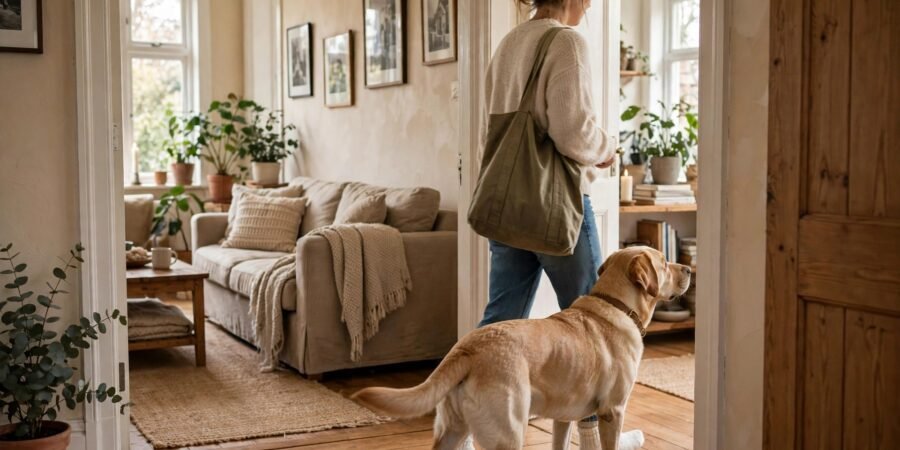
You stand up to make tea. Your dog stands up. You go to the bathroom; your dog waits outside the door like a tiny furry security guard. You change rooms; there is a soft padding of paws behind you, every single time. Congratulations: you own a Velcro dog. It is flattering for about a week, then mildly inconvenient, then — when you cannot shower without an audience — genuinely worth understanding. So how long does it take to really understand why your dog follows you everywhere? The quick answer is one focused week of observation. The deeper answer — the difference between normal devotion and a problem brewing — takes a little longer and is worth every minute.
The five real reasons dogs shadow their humans
1. You are the centre of their universe. Dogs are social animals selectively bred over thousands of years to attend to humans. Following you is, at baseline, simply what dogs do — you are the source of food, walks, play and affection, so proximity to you is the highest-value real estate in the house.
2. Reinforcement history. Every time you have absent-mindedly stroked the dog that followed you into the kitchen, you paid them for following. Dogs repeat what works. If shadowing has ever produced a treat, a walk or a game, the behaviour is on salary.
3. Breed wiring. Velcro tendencies are strongest in breeds developed for close human partnership: Labradors, golden retrievers, border collies, Vizslas (nicknamed “Velcro Vizslas” for a reason), and most toy breeds. If you own one of these, following is factory-fitted.
4. Boredom. A dog with nothing to do follows the most interesting thing in the house — you. Under-exercised, under-enriched dogs shadow relentlessly because you are the entertainment.
5. Anxiety. This is the one that matters. A dog that follows and panics when you leave — drooling, destructive, vocal, house-soiling — may have separation-related distress. The following is then a symptom, not a quirk. Learning to spot the difference is the whole game, and our guide to recognising when anxiety needs professional help explains the human parallel: persistent distress that disrupts daily life is a health issue, not a personality trait.
The one-week observation method
Understanding your specific dog takes seven days of deliberate watching. Keep a simple log: each time the dog follows you, note the time, what you were doing, and the dog’s body language (relaxed and waggy? tense? whining?). Patterns emerge fast. The dog that follows you to the kitchen at 6pm daily is running a food schedule. The dog that follows room to room but settles happily when you sit is showing healthy attachment. The dog that cannot settle, paces, and escalates to distress when a door closes between you is showing you something that needs addressing.
Also note when it started. Lifelong shadowing in a Vizsla is breed-typical. Sudden-onset clinginess in a previously independent eight-year-old is a vet visit — pain, cognitive decline, vision or hearing loss all drive dogs to stick close to their trusted human. The Blue Cross behaviour resources have a useful checklist for distinguishing normal attachment from anxiety-driven following.
The 30-second body-language test
Stand up and walk to another room. Does your dog follow with a loose body and soft eyes, then flop down with a sigh? Healthy. Do they scramble after you, whining, unable to settle even once they arrive? That is distress, and it deserves a training plan, not just tolerance.
When following is fine (most of the time)
For the majority of Velcro dogs, the answer is management, not correction. Give the behaviour a job: teach a solid “settle on your mat” so following becomes optional rather than compulsive. Enrich the environment so you are not the only entertainment — puzzle feeders, snuffle mats, a frozen Kong before you sit down to work. And build independence gradually with tiny separations: step behind a closed door for ten seconds, return before the dog frets, and stretch the intervals. You are teaching the dog that your departures are boring and your returns are guaranteed.
Never punish following. Shouting at a dog for wanting to be near you damages trust without teaching anything — the dog cannot understand which part of “being near you” was wrong. If the behaviour genuinely disrupts your life (tripping hazards, no personal space ever), a certified behaviourist can design a desensitisation plan in a single session or two. The RSPCA’s dog advice pages include practical steps for building a dog’s confidence when left alone, without ever resorting to punishment.
The five-minute mat game
Here is the fastest independence-builder most owners never try. Place a mat or towel on the floor, and reward your dog with a treat every time they step on it — then only when they sit on it, then only when they lie down on it. Within a few short sessions, most dogs offer the mat unprompted. Now practise sending them to it while you move around the room, gradually increasing your distance and the duration before the reward. The mat becomes a portable “home base” that travels to cafes, friends’ houses and holiday cottages. Dogs that have a job (go to your mat) follow less, because lying on the mat pays better than shadowing you to the kettle. Ten minutes of mat training is worth more than an hour of wishing your dog would settle.
Travelling with a Velcro dog
Shadow-dogs are often the best holiday companions — they are never happier than when the whole pack relocates together. If you are considering it, our breakdown of the cost of taking a dog on a UK holiday covers what to budget. The caveat: a dog with genuine separation distress may struggle in an unfamiliar cottage, so trial a night or two with a sitter first, and bring the mat, the puzzle feeders and the familiar smells that make new places feel safe.
Conclusion
Really understanding why your dog follows you everywhere takes about a week of structured observation — logging when, where and how they shadow you, and reading the body language honestly. For most dogs the answer is some happy mixture of love, habit, breed and boredom, easily managed with enrichment and mat training. For a few, the following is anxiety wearing a devotion costume, and spotting that early is the kindest thing you can do. Either way, the dog at your heels is telling you something. Now you know how to listen.
Frequently Asked Questions
How long does it take to really understand why your dog follows you everywhere?
About a week of deliberate observation. Log when your dog follows you, what you were doing, and their body language — patterns distinguishing healthy attachment from anxiety or boredom emerge within seven days.
Is it bad if my dog follows me everywhere?
Usually not — it is normal canine social behaviour, especially in Velcro breeds. It becomes a concern only if the dog shows distress when separated from you (panting, drooling, destruction, vocalising), which suggests separation-related anxiety needing a training plan.
How do I get my dog to stop following me constantly?
Do not punish it. Instead, teach an alternative: reward settling on a mat, increase mental enrichment (puzzle feeders, snuffle mats), and practise tiny graduated separations. Most dogs reduce shadowing significantly within two to three weeks.
Why has my older dog suddenly become clingy?
Sudden clinginess in a senior dog warrants a vet check — pain, arthritis, vision or hearing loss, and cognitive dysfunction all commonly cause dogs to stick close to their owners. Rule out medical causes before assuming it is behavioural.

