Pet Microchipping Rules in the UK: What Owners Must Know
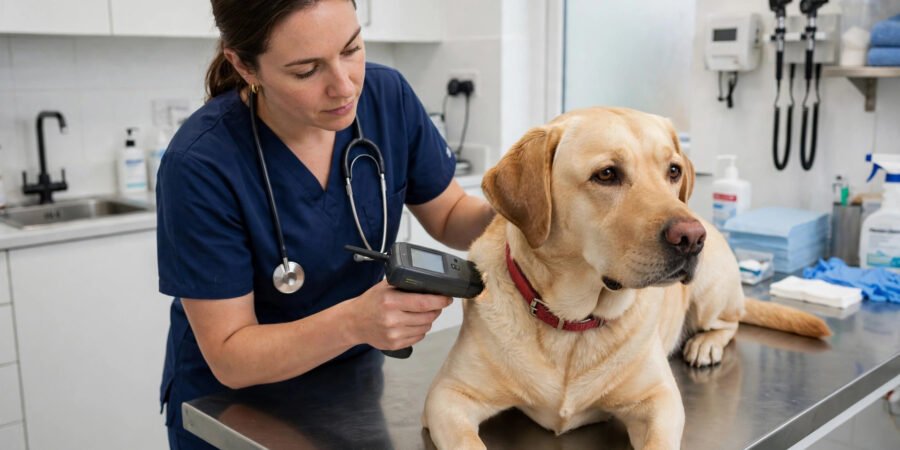
Microchipping is one of those things every pet owner has heard of, few fully understand, and a surprising number get wrong — with fines of up to £500 as the consequence. Since June 2024, the rules cover cats as well as dogs in England, and the requirements go beyond the chip itself: the database details must be current, or the chip is legally useless.
This guide explains UK pet microchipping rules from scratch: what the law requires for dogs and cats, what it costs, how the databases work, the update rules owners break most often, and what happens when things go wrong.
The Law: Dogs and Cats
Dogs: microchipping has been compulsory in England, Scotland and Wales since 2016. All dogs must be chipped by 8 weeks old, and keepers must keep database details current. Failure can mean a £500 fine, and local authorities and police can serve notices requiring compliance within 21 days. Northern Ireland has its own dog licensing system with microchipping requirements via the licence.
Cats: since 10 June 2024, all pet cats in England must be microchipped by 20 weeks old, with details kept current on a compliant database — the same £500 fine applies. Scotland and Wales have not yet made cat chipping compulsory, though it is strongly recommended everywhere. Exemptions are narrow (certified by a vet that chipping would harm the animal's health). In short: if you own a dog anywhere in the UK or a cat in England, chipping is not optional.
How It Works: The Chip and the Databases
The chip is a rice-grain-sized RFID device implanted by a vet, vet nurse or trained implanter between the shoulder blades — a quick injection, no anaesthetic, minimal discomfort. It carries only a unique 15-digit number; all owner details live in the database the chip is registered with, not on the chip. When a vet, rescue or warden scans a found pet, the number pulls up the database record.
Crucially, the UK has multiple compliant databases (Identichip, Petlog, and others) — your chip must be registered on one meeting government standards, and you must know which one. Keep the paperwork from implantation. Registration is usually included in the implantation fee, but verify — an implanted but unregistered chip is a very common failure, and it is the owner's legal responsibility, not the implanter's.
Costs: Less Than You Think
Implantation: £10–£30 at most vets; many charities (RSPCA, Blue Cross, Dogs Trust) offer free or £5 chipping at events and centres. Some databases charge for registration or for updating details (£10–£20); others include lifetime updates. Ask about ongoing fees before choosing — the cheapest implantation with expensive update fees is a false economy, because…
…updates are where owners most often break the law. You must update the database when you move house or change phone number — a chip with a disconnected mobile number reunites no one. This is the commonest compliance failure: owners chip the puppy, move twice, change numbers, and the 'protection' is fiction. Update the same day you move, and treat it like redirecting mail — non-negotiable admin. Managing your household budget should include a pet-admin checklist alongside the financial one.
What Happens When Pets Go Missing
The system works when the data is current: a found dog or cat is scanned (vets, rescues, dog wardens and many police units carry scanners), the database gives your contact details, and reunion follows — often within hours. Chips also prove ownership in disputes and are required for pet passports/travel documents. The failure mode is always stale data: the number traces to a disconnected phone and a previous address, and the pet sits in kennels.
If your pet goes missing: contact the database company to flag the chip as lost (this alerts scanners), contact local vets, rescues and the dog warden, and check that your details are current while you are at it. And a travel note: the cost of taking a dog on a UK holiday is worth reading before trips — but for any travel, a collar tag with your mobile number remains the fastest reunion method, chip or not. Belt and braces.
Common Mistakes and How to Avoid Them
The top five: assuming the breeder or rescue registered the chip (verify yourself — call the database); not knowing which database holds the record; stale contact details after moving; assuming one chip covers a lifetime without checking it still scans (ask your vet to scan at annual check-ups — chips can migrate or fail); and for cat owners in England, not realising the 2024 law applies to indoor cats too (it does — indoor cats escape).
The government's dog microchipping guidance sets out the legal duties plainly, and the RSPCA's microchipping advice covers the welfare side. The entire compliance burden is: chip implanted, registered on a compliant database, details current, checked annually. Thirty pounds and ten minutes a year — the cheapest legal protection pet ownership offers.
UK pet microchipping rules are simple: dogs chipped by 8 weeks everywhere, cats chipped by 20 weeks in England, registered on a compliant database, details kept current — with £500 fines for non-compliance. The chip is £10–£30; the legal protection and reunion power are priceless.
Implant, register, verify, and update on moving day. Four steps, once, plus an annual scan check. It is the smallest effort in pet ownership with the largest potential payoff: your pet back home.
Travel, Microchips and the Paper Trail
The microchip is one link in the travel paper trail. For UK holidays, the chip plus current database details plus collar tag is the complete reunion system — but for travel beyond the UK, the requirements multiply: since Brexit, EU travel needs an Animal Health Certificate (issued by an official vet within 10 days of travel, £100–£200, valid for 4 months of onward travel), a valid rabies vaccination (given at least 21 days before travel), and the microchip number recorded on every document — the chip must be implanted before the rabies jab, or the vaccination does not count.
Keep a travel file: chip number, database details, vaccination records, insurance documents, and your vet's details. Photograph everything into your phone as backup. And the often-missed rule: if your pet's chip cannot be read at the border (migrated or failed chip), the animal can be refused travel — another reason for the annual scan check at the vet. The chip is small; the paperwork it anchors is not. Organise it once, and every trip after is routine.
Frequently Asked Questions
Is microchipping compulsory for cats in the UK?
In England, yes since June 2024 — all pet cats must be chipped by 20 weeks old with current database details, or owners face up to a £500 fine. Scotland, Wales and Northern Ireland have not yet made it compulsory but strongly recommend it.
How much does microchipping cost?
£10–£30 at vets; often free or £5 at charity events. Some databases charge for registration or updates, so check ongoing fees when choosing.
Do I need to update the microchip when I move?
Yes — legally required. The chip only stores a number; your contact details live in the database. Stale details are the commonest reason chipped pets are not reunited, and non-compliance risks a fine.
How do I know which database my pet's chip is on?
Check the implantation paperwork, or ask any vet to scan the chip — the number format identifies the database. Verify registration yourself rather than assuming the breeder or rescue did it.

