Learn Piano With Just 20 Minutes a Day: A Realistic Plan
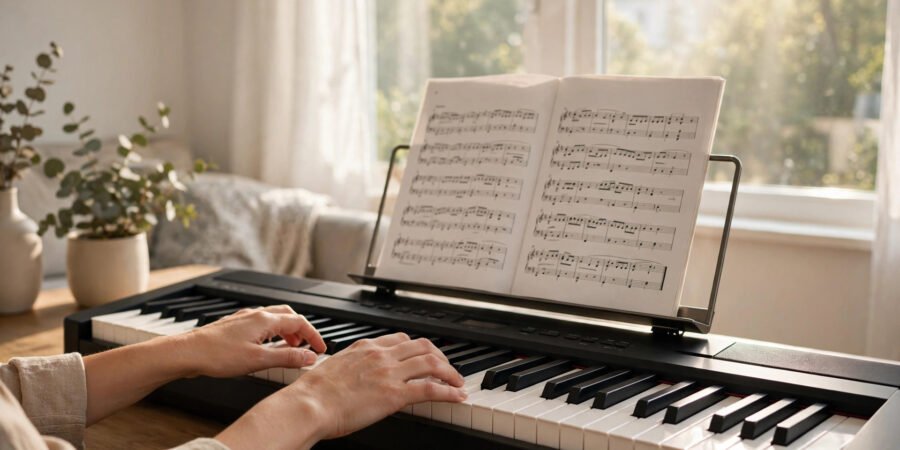
Twenty minutes a day does not sound like much. It is a sitcom episode, a commute, a scroll through your phone. But twenty focused minutes at a piano, every day, compounds into something remarkable: within months you are playing pieces you once thought impossible, and within a year or two you are genuinely, recognisably a pianist. The constraint is not time — it is knowing how to spend those twenty minutes.
This guide gives busy beginners a realistic plan for learning piano with just 20 minutes a day: the practice method that makes short sessions work, what to prioritise (and what to skip), and honest milestones so you know it is working.
Why 20 Focused Minutes Beats 2 Distracted Hours
Music research is unambiguous on this: distributed, focused practice outperforms massed practice. Twenty minutes daily beats a single two-hour weekend session because motor learning consolidates between sessions — particularly during sleep. Your brain literally rehearses piano overnight. Daily short sessions give it fresh material every night; weekly marathons give it one big dump it cannot fully process.
“Focused” is doing the heavy lifting in that sentence. Twenty minutes of noodling through pieces you already know is entertainment, not practice. Twenty minutes of deliberate work on the edge of your ability — the passage you cannot quite play, the rhythm that trips you — is transformative. The plan below is built around that distinction.
The 20-Minute Session Structure
Split every session into three blocks. Set a timer if it helps — constraints create focus.
Minutes 0–5: Warm-up with purpose. Scales or five-finger exercises, but musically: play them with dynamics (loud-soft-loud), varied rhythms, and full attention to evenness. Mindless scale-running teaches mindlessness; deliberate scales build technique. One scale a week, learned properly, beats twelve scales played badly.
Minutes 5–15: The hard thing. This is the core: one difficult passage from your current piece, practised in small chunks. The method: play it slowly enough to get it right (even painfully slow), repeat 3–5 times perfectly, then increase speed slightly. If errors return, slow down again. “Slow practice” feels unproductive and is the fastest known route to mastery — every serious pianist does it.
Minutes 15–20: Play for joy. End with something you can already play — a favourite piece, improvisation, a song you love. This matters more than it sounds: ending on pleasure wires your brain to want tomorrow’s session. Practice you dread gets skipped; practice you enjoy compounds.
What to Prioritise (and What to Skip)
Prioritise: reading music gradually (even 5 minutes a day compounds — do not try to learn it all at once), rhythm accuracy (the most neglected beginner skill; use a metronome app), playing with both hands together as early as possible (hands-separate practice has diminishing returns), and learning complete short pieces rather than fragments of hard ones.
Skip or defer: advanced theory (learn it as pieces demand it, not as abstract study), expensive method books beyond one good beginner course, and perfectionism on easy material (move on when it is musical, not when it is flawless). Also skip the guilt about missed days — one missed day changes nothing; the habit resumes tomorrow. Our guide to building routines that stick applies the same psychology to practice habits.
Realistic Milestones
- Month 1: comfortable hand position, simple melodies with both hands, basic note reading in one octave. Playing recognisable tunes slowly.
- Month 3: simple pieces played musically (with dynamics and phrasing), major scales in a few keys, reading improving steadily. The “I can actually play piano” moment.
- Month 6: intermediate beginner pieces, chord patterns, playing from lead sheets (melody plus chord symbols — the gateway to playing songs you love).
- Year 1: solid intermediate repertoire, comfortable sight-reading of easy pieces, improvisation basics. Genuinely, recognisably a pianist.
- Year 2+: the lifelong phase — technique, interpretation, and repertoire expanding indefinitely. The twenty minutes never stop paying.
These assume genuine daily practice. Miss half your days and double the timelines — still excellent progress for the time invested.
Making 20 Minutes Actually Happen
The plan fails only if the sessions do not happen. Anchor it: attach practice to an existing habit — straight after breakfast, or the moment you get home. Remove friction: keep the piano on, music open, bench out; a setup that takes five minutes to assemble loses to the sofa every time. Protect it: tell the household these twenty minutes are non-negotiable, like brushing teeth. Track it: a wall calendar with daily crosses builds a chain you will not want to break — the oldest motivation hack there is. Forgive lapses instantly: research is clear that self-compassion beats self-criticism for habit maintenance. Miss a day, resume tomorrow, no drama.
Equipment: Less Than You Fear
A weighted 88-key digital piano (£250–£400 — Yamaha, Roland, Casio all make excellent entry models) is the realistic starting point; unweighted keyboards teach bad technique for anything beyond casual play. Add a proper stand, a sustain pedal (£15), and a metronome app (free). If piano becomes a lasting hobby, it joins a rich life — our guide to starting hobbies in your forties places music among the most rewarding midlife pursuits. The BBC Music and Arts Council England both champion everyday music-making.
The Bottom Line
Learning piano with just 20 minutes a day works because distributed, focused practice beats occasional marathons — your brain consolidates motor learning overnight. Structure each session as 5 minutes of deliberate warm-up, 10 minutes on the hardest passage (played slowly until perfect), and 5 minutes of joyful playing. Prioritise rhythm, both-hands-together playing, and complete pieces over theory and perfectionism. In three months you will feel like a pianist; in a year you will be one. The twenty minutes were always enough — they just needed a plan.
Frequently Asked Questions
Am I too old to learn piano?
No. Adult beginners often progress faster than children in the early stages — better focus, better practice discipline, clearer goals. The “too old” myth confuses concert-pianist training (which starts young) with learning to play well (which starts whenever you start).
Do I need to learn to read music?
Eventually, yes — it multiplies what you can learn independently. But learn it gradually alongside playing, not as a prerequisite. Five minutes of reading practice within your twenty is plenty; it compounds quietly.
Is a keyboard okay instead of a piano?
For starting, a weighted 88-key digital piano is strongly preferred — unweighted keys build technique that does not transfer. If budget forces a compromise, get the best-weighted keys you can afford now and upgrade later; avoid unweighted “starter” keyboards if piano (not just keyboard) is the goal. Your future technique will thank you.
Should I get a teacher?
A teacher accelerates progress enormously — even fortnightly lessons catch bad habits apps cannot see. But self-teaching with good resources works, especially in year one. The hybrid (mostly self-taught, occasional lessons) is the budget sweet spot.
What if I miss days?
Nothing happens. The research supports daily practice, but “daily” means “as a habit,” not “without exception.” Missed days do not reset progress; quitting does. Resume tomorrow without guilt — the compound interest of practice forgives interruptions, and the chain resumes the moment you sit down again.