Introducing a Puppy to an Older Dog: Now or Later? (Wales)
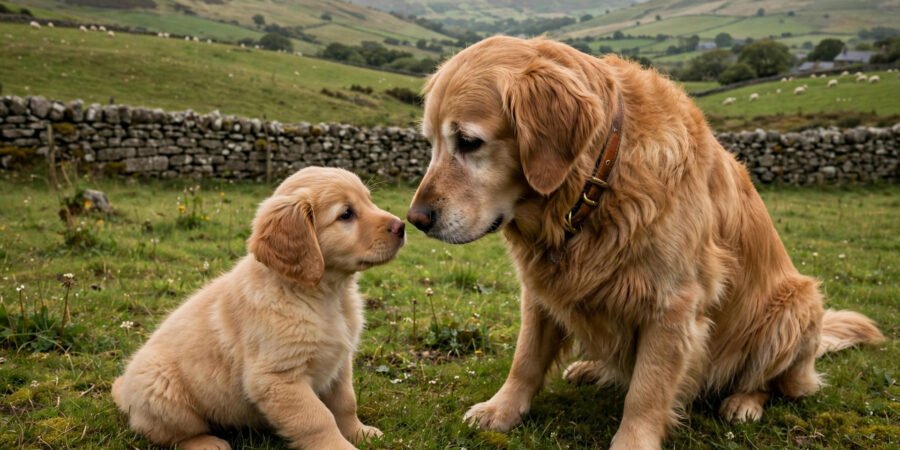
Adding a puppy to a home with an older dog is one of the happiest — and most delicate — decisions in dog ownership. Done well, the puppy revitalises the senior and the senior schools the puppy. Done badly, the older dog's golden years become a gauntlet of harassment, and the puppy learns its manners from a resentful teacher. The 'now or later' question is really about the older dog's welfare.
This guide covers whether to introduce a new puppy now or wait: assessing your older dog honestly, the timing factors, the neutral-territory introduction method, and the management that protects both dogs.
Assess the Older Dog Honestly First
The decision starts with a clear-eyed audit of your senior dog. Green lights: the older dog is social, enjoys other dogs' company, is physically robust, and has a history of tolerating puppies. Red lights: chronic pain (arthritis makes dogs snap — pain, not malice), significant anxiety, resource guarding of you/food/space, recent bereavement (wait 3–6 months — grieving dogs do not need a puppy's chaos), or age-related cognitive decline.
The vet check is non-negotiable: a full senior health screen before the puppy arrives. Pain is the hidden driver of most 'the old dog hates the puppy' cases — a dog with untreated arthritis will not tolerate being climbed on, and no training fixes pain. Be brutally honest: a 14-year-old arthritic dog who sleeps 20 hours a day is not a puppy companion; they are a hospice case deserving peace. Waiting — or choosing not to — is sometimes the kindest answer.
Now or Later: The Timing Factors
Choose 'now' when: the older dog is in the 7–10 window — senior but active, still playful, able to set boundaries the puppy respects; you have the time (puppies need 2–3 months of intensive supervision in multi-dog homes); and the season suits (spring/summer introductions with garden access are far easier than winter ones). A robust older dog often benefits enormously — many owners report their senior playing like a youngster again.
Choose 'later' (or never) when: the older dog is frail, in pain, or anxious; you are time-poor (two dogs, one neglected, is worse than one dog well-kept); or the household is in flux (house moves, new babies — puppies amplify chaos). There is no prize for rushing. A puppy introduced six months later to a settled household beats a puppy introduced now to a stressed one. Dogs Trust's multi-dog advice emphasises matching energy and temperament over arbitrary timelines.
The Introduction: Neutral Territory Method
Never introduce on the older dog's home turf. The method: first meeting on neutral ground — a friend's garden, a quiet field (Wales has no shortage) — both dogs on loose leads with a handler each. Walk parallel at a distance, gradually closing as both stay relaxed; let them sniff briefly (3 seconds, then move on — long face-to-face greetings escalate). End on a good note and go home separately.
Home entry: bring the older dog in first, then the puppy, with high-value items (food bowls, favourite toys, beds) removed or duplicated — resource guarding is the top flashpoint. Supervise all interactions for the first 2–4 weeks; crate or pen the puppy when unsupervised. Feed separately, always. The older dog keeps their safe spaces inviolable — a room or crate the puppy cannot enter. Respect is built through management, not hope.
Protecting the Senior: The Management Rules
Rule one: the older dog's routine is sacred — walk times, feeding spots, sofa privileges unchanged. The puppy adapts to the household; the household does not reorganise around the puppy at the senior's expense. Rule two: enforced rest for both — overtired puppies harass; overtired seniors snap. Crate the puppy for naps (puppies need 18–20 hours of sleep) and give the older dog puppy-free hours daily.
Rule three: let the older dog correct appropriately — a growl or snap that the puppy respects is communication, not aggression; intervene only if it escalates or the puppy cannot escape. Rule four: train the puppy separately — the older dog is not a training tool, and 'they'll sort it out' is how bad habits form. And puppy-proof thoroughly: childproofing your home without ruining the decor translates directly — the puppy is a toddler with teeth.
The Welsh Specifics and the Long View
Wales-specific notes: puppy socialisation classes run by the Kennel Club-registered trainers and Dogs Trust centres give your puppy appropriate playmates so the older dog is not the sole outlet; Welsh weather means indoor management matters — invest in the pen/crate setup before winter. Register with a vet before the puppy arrives (many Welsh practices have waiting lists for new clients), and budget honestly: two dogs means double insurance, double food, double vet bills — the cost of taking a dog on a UK holiday roughly doubles too.
The RSPCA's dog advice reminds owners that the older dog chose none of this — the puppy is your decision, and the senior's welfare is your responsibility. Done right, with honest assessment, careful timing and diligent management, the pair becomes the joy of the household: the puppy with a mentor, the senior with a new lease of life. That outcome is earned in the first month, not hoped for.
Introduce the puppy now if your older dog is healthy, social and in the active-senior window and you have the time for a month of careful management; wait if the senior is frail, in pain or anxious — their welfare outranks your timeline. Either way, the method is the same: neutral-territory introduction, supervised integration, protected routines, and respect for the dog who was there first.
The best multi-dog households are built, not hoped for. Build it properly and you get the finest sight in dog ownership: the old teacher and the young student, asleep in a heap, having sorted it out exactly as dogs do.
Feeding Two Dogs: The Practical Rules
Feeding is the commonest flashpoint in multi-dog homes, and the rules are absolute: separate locations, always — the puppy eats in the pen or a different room, the older dog in their established spot. Pick up bowls after 15–20 minutes (no grazing — grazing creates guarding opportunities), never feed high-value chews or treats in shared space unsupervised, and train a solid 'leave it' in the puppy from day one — the skill that prevents most food conflicts.
Watch for the subtle signs: the older dog hovering near the puppy's bowl, the puppy rushing the senior's food, either dog eating faster (competition anxiety). These precede the growl by weeks — intervene at the hovering stage by increasing distance, not at the snapping stage with punishment. And keep diets age-appropriate: puppy food for the puppy (growth formulation), senior food for the senior — fed separately, they cannot steal each other's nutrition. Food is the resource dogs guard most fiercely; manage it perfectly and half of multi-dog conflict never starts.
Frequently Asked Questions
Should I get a puppy if I have an older dog?
If the older dog is healthy, social and tolerant — yes, it often works beautifully. If the senior is frail, in pain, anxious or very elderly, waiting or not proceeding is kinder. Always vet-check the older dog first.
How do I introduce a puppy to an older dog?
On neutral territory: parallel walks at a distance, brief sniff greetings, then home entry with the older dog first. Supervise all interactions for 2–4 weeks, feed separately, and give the older dog puppy-free safe spaces.
Will an older dog accept a new puppy?
Most do, with proper introduction and management. Allow appropriate corrections (growls the puppy respects), protect the senior's routine and rest, and never leave them unsupervised until trust is established — usually 4–8 weeks.
When is the wrong time to add a puppy?
When the older dog is unwell or grieving, when you lack time for intensive supervision, or during major household upheaval. A puppy amplifies existing stress; resolve the stress first.

