Safe Chew Toys for Aggressive Chewers: A UK Buyer’s Guide
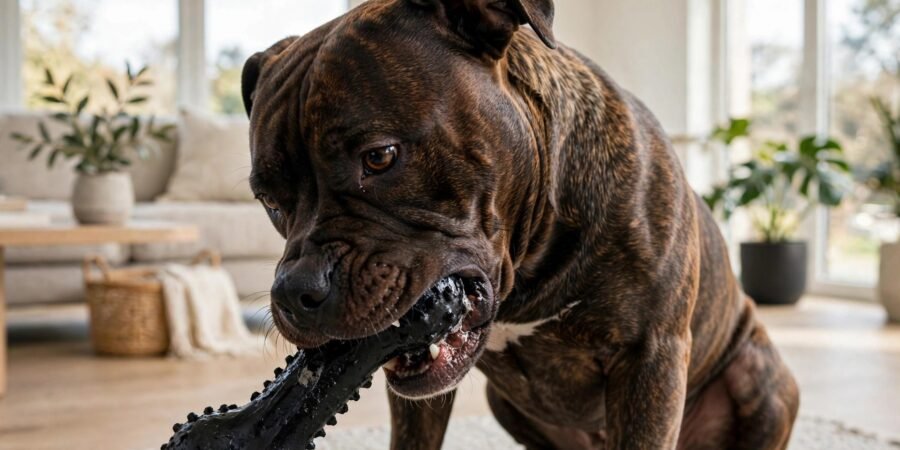
If you have ever watched a supposedly “indestructible” toy reduced to confetti in eleven minutes flat, you already know the particular despair of owning an aggressive chewer. Power chewers — staffies, terriers, Labradors, Belgian Malinois and their determined friends — do not just play with toys; they engineer their demolition. The problem is not the mess on your carpet. It is the vet bill: swallowed chunks of rubber, splintered nylon and squeakers can mean intestinal blockages, cracked teeth and emergency surgery. Choosing the right toy is therefore less about entertainment and more about harm reduction. This guide walks through exactly how to choose safe chew toys for aggressive chewers, with UK-specific buying advice, material science in plain English, and the warning signs that mean a toy’s days are over.
Why aggressive chewers need a different class of toy
A casual chewer mouths, carries and occasionally gnaws. An aggressive chewer applies sustained, focused force — often 200 psi or more from breeds like Staffordshire bull terriers — combined with a shearing action from the carnassial teeth designed by evolution to strip meat from bone. Standard plush toys stand no chance, and worse, they fail dangerously: stitching bursts, stuffing escapes, and the squeaker becomes a choking hazard in seconds.
There is also a behavioural dimension. Chewing releases endorphins and relieves stress, which is why heavy chewers often chew hardest when under-exercised or anxious. A toy that survives is therefore part of a welfare strategy, not just a purchase. The RSPCA’s guidance on dog enrichment stresses that dogs need safe outlets for natural behaviours, and chewing sits near the top of that list. Buy the wrong toy and you have not saved money — you have bought a hazard.
The materials that actually survive power chewing
Not all “tough” toys are tough in the same way. Here is how the main materials rank for genuine power chewers:
Natural rubber (the dense, solid kind): The gold standard. Thick-walled rubber toys from reputable makers flex under pressure rather than shattering, and they tend to wear down gradually instead of breaking into shards. Look for solid, one-piece construction with no glued seams.
Nylon (flavoured chew bones): Extremely hard-wearing and designed to be gnawed down slowly, shedding only tiny rice-grain-sized shavings. They suit determined gnawers but are too hard for dogs that try to crack chunks off — more on chew styles below.
Rope (thick cotton): Fine for supervised tug games but a poor choice for unsupervised power chewing, because determined dogs unravel and swallow the fibres, which can cause linear foreign bodies in the gut — one of the nastiest surgical emergencies vets see.
Materials to avoid entirely
Steer clear of thin vinyl squeaky toys, latex novelties, plush toys with plastic eyes or noses, and anything with glued-on parts. Rawhide deserves special caution: it swells in the stomach, can carry bacterial contamination, and aggressive chewers tear off and swallow large pieces. The Blue Cross advice on dog toys and play is a useful sanity check before you buy anything marketed as “tough”.
How to read a toy label like a vet nurse
Marketing copy lies; labels tell the truth if you know what to look for. First, check the size rating and then go one size up. A toy rated “large” for a 25 kg dog is often undersized for a 25 kg dog that chews like a demolition crew — undersized toys are swallowed whole far more often than oversized ones. The toy should be too large to fit entirely behind the canine teeth.
Second, look for explicit chew-strength grading. Several UK-stocked brands now grade toys from gentle to extreme; only the top grade is relevant to you. Third, check for non-toxic certification — reputable makers state BPA-free, phthalate-free and lead-free plainly. If the packaging says nothing about materials at all, treat that silence as an answer. Finally, prefer toys sold by pet specialists over novelty gift shops: the supply chain matters, and counterfeit “tough” toys are a genuine problem on some marketplaces.
Match the toy to your dog’s chew style
Aggressive chewers are not all the same, and the safest toy depends on how your dog destroys things:
The Destroyer
Tears toys apart to “kill” them, scattering pieces. Needs solid one-piece rubber with no appendages to rip off. Supervise closely and remove the toy at the first sign of chunking.
The Gnawer
Settles in for long, methodical sessions, wearing toys down over days. Flavoured nylon bones and thick rubber are ideal. Inspect daily for sharp edges developing on nylon.
The Gulper
Tries to swallow pieces whole rather than chewing them. This is the highest-risk style. Use only oversized toys, never leave them unsupervised with any toy, and consider food-puzzle feeders instead of chew toys for part of their enrichment. If your dog is a gulper, mention it at your next vet visit — the Dogs Trust behaviour and advice resources also cover managing risky chewing habits.
A UK buying checklist that actually works
Before you spend a penny, run through this list: (1) one-piece or solid construction, no glued parts; (2) sized up from the manufacturer’s recommendation; (3) top durability grade; (4) non-toxic materials stated on the label; (5) appropriate to your dog’s chew style; (6) from a reputable pet retailer, not a novelty seller. Expect to pay £12–£25 for a genuinely tough toy in the UK — anything under a fiver claiming to be indestructible is telling you a story.
Rotate toys rather than leaving the whole arsenal out: novelty keeps heavy chewers engaged with the safe options instead of turning to your skirting boards. And think about context — a dog that chews hardest when bored will benefit from puzzle feeders and proper exercise alongside toys. If you are planning time away, read our guide to the cost of taking a dog on a UK holiday before deciding whether your power chewer travels with you or stays with a sitter who understands the supervision rules.
When to throw a toy away (the part everyone skips)
Even the best toy has a retirement date, and keeping a worn toy in circulation is how emergencies happen. Bin it immediately if: pieces larger than a pea can be torn off; cracks or splits appear in rubber; nylon develops sharp ridges; any squeaker or stuffing becomes accessible; or the toy has become small enough to fit wholly in the mouth. Inspect toys weekly — make it part of your routine, like checking the garden fence. A safe outdoor play area helps too; see our piece on making your garden wildlife-friendly on a budget for fencing and planting ideas that keep an unsupervised chewer out of trouble between play sessions.
Conclusion
Choosing safe chew toys for aggressive chewers comes down to five decisions: buy dense rubber or quality nylon, size up, match the toy to the chew style, buy from reputable UK retailers, and retire toys before they fail. Do that, and you turn chewing from a veterinary risk into what it should be — a happy, healthy, endorphin-releasing pastime. Your carpet, your vet and your dog will all thank you.
Frequently Asked Questions
Are expensive “indestructible” toys really worth it?
For genuine power chewers, yes — a £18 solid-rubber toy that lasts three months is cheaper than six £6 toys that last a weekend each, and far cheaper than a £2,000 foreign-body surgery. The value is in the gradual wear pattern, not the marketing claim.
Can aggressive chewers have plush toys at all?
Only under direct supervision and only sturdy ones with no plastic parts — and remove them at the first tear. Many power chewers do best with plush toys reserved for cuddling, not chewing, with rubber toys for the heavy work.
How often should I replace my dog’s chew toys?
Inspect weekly and replace at the first sign of cracking, chunking or sharp edges. For a heavy daily chewer, even top-grade rubber toys typically need replacing every two to four months.
Is rawhide ever safe for aggressive chewers?
Most vets advise against it for power chewers specifically, because they tear off large pieces that swell in the stomach. Safer long-lasting alternatives include thick rubber toys, quality nylon chews and frozen stuffed food puzzles.

