How to Help Your Pet Cope With Fireworks Anxiety: A Complete Guide
The safest way to help your pet cope with fireworks anxiety: desensitisation that works, the calm-night playbook for dogs, cats and rabbits, and vet options.
Bonfire Night, New Year’s Eve, Diwali — for millions of UK pets, fireworks season is the most frightening time of the year. Dogs tremble, pant and try to bolt; cats vanish under beds for hours; rabbits can literally die of shock. An estimated 40–45% of dogs show fear responses to fireworks, yet most owners only think about it when the first bang goes off — by which time it is too late to prepare properly.
This guide explains how to help your pet cope with fireworks anxiety safely: the science of noise phobia, what to do in the weeks before, how to manage the night itself, and the long-term fixes that actually reduce fear year after year.
Understanding Fireworks Fear: It Is Not Disobedience
Noise phobia is a genuine panic response, not bad behaviour. A dog’s hearing is roughly four times more sensitive than a human’s, and fireworks combine the three things animals fear most: sudden loud noise, unpredictable timing, and bright flashes with no identifiable source. The stress response floods the body with cortisol and adrenaline — the animal is experiencing terror, and punishing fear (shouting “stop it!”) only adds a scary owner to a scary situation.
Fear also escalates without intervention: each bad fireworks season sensitises the animal further, so a mildly nervous young dog often becomes a severely phobic older one. This is why preparation matters more than reaction. The RSPCA’s fireworks advice is the UK’s definitive resource, covering dogs, cats, rabbits and horses.
Weeks Before: Preparation That Actually Works
Desensitisation sound therapy is the gold standard — but it takes weeks. Play firework sounds at barely-audible volume while your pet eats or plays, increasing volume in tiny increments over 2–4 weeks, always paired with good things. The Dogs Trust’s sound therapy programme provides free downloadable tracks with a structured plan. Start in September for November; starting on Bonfire Night itself is too late.
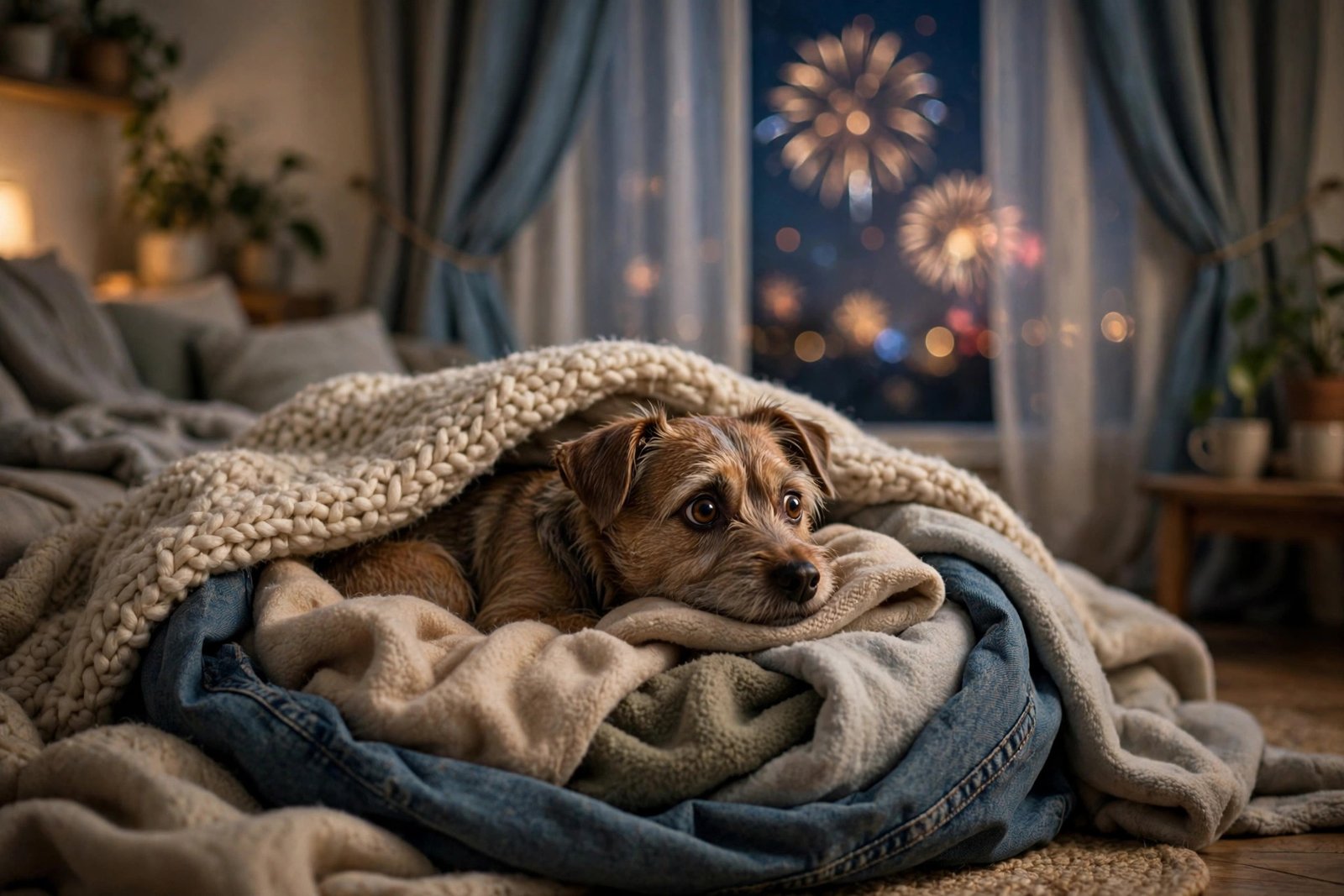
Create a safe den now, not on the night: a covered crate, a cupboard, or a space behind the sofa — somewhere the animal chooses voluntarily over several calm weeks, furnished with blankets and familiar-smelling items. Talk to your vet early about anti-anxiety options: prescription medications like sileo (for dogs) or gabapentin can transform severe cases, but they need trial dosing before the event. Pheromone diffusers (Adaptil for dogs, Feliway for cats) have modest but real evidence — start them 1–2 weeks ahead.
Update the microchip details — more pets go missing on fireworks nights than any other time. And check your pet insurance and holiday plans: taking your dog away for fireworks season is a legitimate strategy many owners swear by.
On the Night: The Calm-Household Playbook
Dogs: walk them at dusk, well before dark. Keep them indoors with curtains closed and the TV or music on (classical music and audiobooks mask bangs surprisingly well). Let them hide in their den — never drag them out for “reassurance.” Act normally yourself: fussing anxiously teaches the dog there is something to fear, while calm indifference teaches safety. Distraction works — a stuffed Kong or chew gives the brain something else to do.
Cats: keep them in after dark (a litter tray, closed cat flap — ideally a microchip flap locked to in-only). Provide hiding spots and do not try to coax out a terrified cat; let them emerge when ready. Rabbits and small pets: bring hutches indoors or into a shed if possible, cover outdoor hutches with thick blankets (leaving ventilation), and provide extra bedding to burrow in. Horses: stable them with a calm companion if possible, and check fields for firework debris the next morning. The Blue Cross fireworks guide covers every species in detail.
A calm household helps everyone — two-legged included. If fireworks season coincides with family stress, our guide to planning a stress-free family Christmas on a budget has transferable wisdom on keeping the whole house serene in November and December.
Afterwards: The Long-Term Fix
Each fireworks season is also preparation for the next. Note what worked and what did not while it is fresh. Continue desensitisation training year-round in short sessions — fear memories fade with consistent counter-conditioning. If your pet’s fear is severe (self-harm, escape attempts, days-long shutdown), ask your vet for referral to an ABTC-registered clinical animal behaviourist; severe noise phobia is treatable, but it needs professional structure.
Consider the bigger picture too: the UK debate over restricting private fireworks sales continues, with Scotland introducing licensing for private firework purchases. Supporting organised displays over garden fireworks — and talking to neighbours about timing — reduces the unpredictability that makes private fireworks so much worse for animals than a single scheduled display.
New Year’s Eve and Beyond: Year-Round Noise Planning
Bonfire Night gets the attention, but fireworks now span October to January — Diwali, Bonfire Night, Christmas, New Year’s Eve — plus weddings, football victories and random summer displays. Year-round planning beats seasonal panic. Keep the den up permanently: a safe space that exists year-round is familiar and comforting; one erected in a panic on November 5th is just a strange box. Maintain desensitisation: short monthly sound-therapy sessions (5 minutes, low volume, paired with treats) keep the training fresh — think of it as a booster jab for calm. Know your calendar: check local event listings for displays, and ask neighbours about planned garden fireworks — a polite conversation in October (“what night are you planning, so I can prepare the dog?”) prevents most surprises.
Thunderstorms deserve the same preparation — many firework-phobic animals are equally terrified of thunder, and the desensitisation work transfers directly. And if you move house, factor noise into the decision: a cottage backing onto a wedding venue’s field is a very different prospect for a phobic dog than a quiet cul-de-sac. Your pet’s quality of life is a legitimate housing criterion.
Conclusion
Helping your pet cope with fireworks anxiety is a year-round project disguised as a November problem: desensitise with sound therapy starting weeks ahead, build a safe den, talk to your vet about medication for severe cases, and run a calm, boring household on the night itself. Your pet cannot understand that the bangs are celebration — but with preparation, they can learn that the bangs are survivable. That is the greatest gift you can give a frightened animal.
Frequently Asked Questions
What percentage of dogs are scared of fireworks?
Studies suggest 40–45% of dogs show fear responses to fireworks, ranging from mild unease to severe panic. Without intervention, the fear typically worsens each year.
Do calming products like Adaptil actually work?
Pheromone diffusers show modest benefits in studies — worth using as part of a plan, but not a standalone solution. Prescription anti-anxiety medication from your vet is far more effective for severe cases.
Should I comfort my dog during fireworks?
Calm, matter-of-fact presence is fine; frantic fussing can reinforce the idea that something is wrong. Let your dog choose: proximity if they seek it, hiding if they prefer it.
When should I start preparing for Bonfire Night?
Start desensitisation sound therapy 4–6 weeks ahead (September for November). Talk to your vet about medication at least 2–3 weeks before, to allow trial dosing.
Are fireworks dangerous to rabbits?
Yes — rabbits can die of shock from fireworks noise. Bring hutches indoors or into shelter, cover outdoor hutches with blankets (keeping ventilation), and provide deep bedding for burrowing.