How to Stop Your Puppy Biting Your Hands: A Beginner’s Guide
The safest way for beginners to stop puppy biting hands: why puppies bite, the yelp-withdraw-redirect method, overtiredness triggers, and mistakes to avoid.
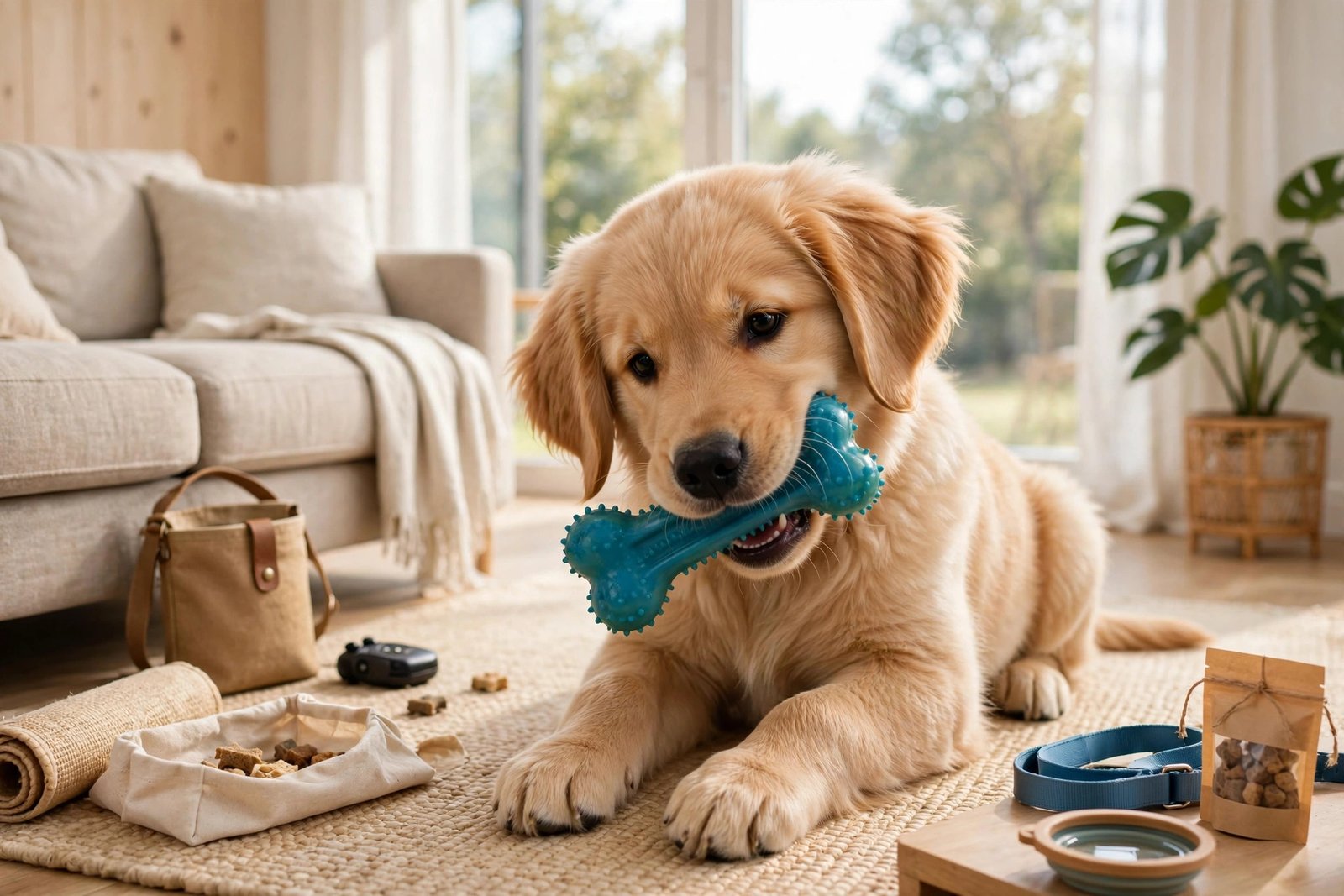
Your new puppy is adorable. Your new puppy is also a tiny land shark currently using your hands as chew toys. Every puppy owner goes through this — those needle teeth on your fingers, the trouser legs, the sleeves — and every puppy owner asks the same question: how do I stop my puppy biting my hands without damaging our bond? The reassuring answer: biting is normal, it is temporary, and the safest beginner-friendly methods work by teaching, not punishing.
This guide explains why puppies bite, the step-by-step method to stop hand-biting safely, what to do when it gets intense, and the mistakes that make biting worse.
Why Puppies Bite: It Is Not Aggression
Puppies explore the world with their mouths the way toddlers use their hands. Between 3 and 6 months, they are also teething — adult teeth pushing through sore gums makes chewing a physical need, not a choice. In the litter, puppies learn bite inhibition (how hard is too hard) when a sibling yelps and stops playing. Taken home at 8 weeks, your puppy has only half-learned this lesson — and you are now the teacher.
Understanding this reframes everything: your puppy is not being naughty, dominant or aggressive. They are an infant with teeth, doing what infants do. Methods based on punishment — alpha rolls, scruff grabs, shouting — do not teach bite inhibition; they teach fear, and fearful puppies bite harder. The RSPCA’s puppy advice is unequivocal: reward-based training is the safe, effective standard.
The Core Method: Yelp, Withdraw, Redirect
The safest technique mirrors what puppies learn from each other. Step 1: When teeth touch skin, give a short, high-pitched “ouch!” — not a scream, just a clear yelp. Step 2: Immediately withdraw your hand and go still for 3–5 seconds — fun stops the instant teeth land. Step 3: Redirect onto an appropriate chew: offer a toy, a frozen carrot, or a rope tug. Step 4: Praise calmly when they take the toy instead.
Repeat this dozens of times daily for 1–2 weeks. You are teaching a simple equation: teeth on skin = fun ends; teeth on toy = fun continues and praise happens. Most puppies show clear improvement within 7–10 days of consistent application. Everyone in the household must do the same thing — one person who wrestles roughly while others yelp will confuse the puppy completely. The Kennel Club’s puppy training resources reinforce this consistency message.
When Biting Gets Intense: The Overtired Puppy
Here is the insight that changes everything for struggling owners: the worst biting almost always happens when the puppy is overtired. Puppies need 18–20 hours of sleep a day, and an exhausted puppy becomes a bitey, zooming maniac — exactly like an overtired toddler’s meltdown. If biting peaks in the evening after a busy day, the answer is not more training; it is enforced naptime in a crate or quiet pen.
Other intensity triggers: overexcitement during play (keep play sessions short — 5 minutes for young puppies — and end before arousal spikes), and understimulation (a bored puppy invents games, and hands are the nearest toy). A frozen Kong, a snuffle mat, or a short training session burns mental energy far better than another lap of the garden. Dogs Trust’s puppy training guides have excellent week-by-week plans.
Teething Relief: Give Them Something Better to Chew
You cannot stop a teething puppy chewing — you can only choose what they chew. Stock the house: frozen carrots and apple slices (soothe gums), puppy-safe rubber chew toys (Kong puppy, Nylabone puppy), rope toys for supervised tugging, and long-lasting chews like yak bars for older puppies. Rotate toys every few days to keep novelty high.
Puppy-proofing matters as much as redirecting: shoes in cupboards, cables hidden, precious items out of reach. Think of it like baby-proofing — indeed, our guide to childproofing your home covers the same principles (cord covers, cupboard locks, stair gates) that work brilliantly for puppies too. Management prevents 90% of “bad” chewing before training is even needed.
Mistakes That Make Biting Worse
Pulling your hand away fast triggers chase instinct — go still instead, then withdraw slowly. Waving hands as toys during play teaches puppies that hands are toys; keep hands boring and toys exciting. Punishing after the fact — the puppy cannot connect your anger now with the bite five minutes ago. Inconsistency between family members, as noted above. And expecting too much too soon: bite inhibition is a developmental process. A 10-week-old physically cannot control their mouth the way a 5-month-old can. Progress, not perfection, is the goal.
One more: do not worry that gentle mouthing means future aggression. Normal puppy mouthing that decreases with age and training is developmentally appropriate. True aggression in puppies is rare and looks very different — stiff body, hard stare, growling over resources — and warrants a certified behaviourist (look for ABTC-registered practitioners), not internet advice.
Socialisation: The Other Half of Bite Training
Bite inhibition is only half the puppy syllabus — the other half is socialisation: teaching your puppy that the world is safe and interesting. Between 3 and 14 weeks (the critical socialisation window), puppies form lifelong attitudes to everything they encounter. A well-socialised puppy becomes a confident adult; an under-socialised one becomes fearful, and fearful dogs are the ones that bite for real.
Socialisation is not just “meeting other dogs” — it is calm, positive exposure to the world: traffic sounds, umbrellas, children, hats, vacuum cleaners, car rides, the vet’s waiting room. The rule: every new experience paired with treats and kept short enough to stay fun. Puppy classes (look for APDT-registered trainers using reward-based methods) combine socialisation with training beautifully — and a tired, well-socialised puppy is dramatically less bitey at home. One caution: balance socialisation with vaccination schedules — your vet will advise on safe exposure before jabs are complete. Carry young puppies in busy areas rather than putting them down, and you get the sights and sounds with none of the disease risk.
Conclusion
Stopping your puppy biting your hands comes down to understanding it is normal developmental behaviour, then applying yelp–withdraw–redirect with total household consistency, managing overtiredness with enforced naps, and providing plenty of legal chewing outlets. Most puppies turn the corner within a couple of weeks. Stay patient, stay consistent, and remember: the land-shark phase ends. What replaces it, if you train kindly now, is a dog with a soft mouth and total trust in your hands. And once the biting is sorted, you can start planning adventures — like taking your dog on a UK holiday.
Frequently Asked Questions
At what age do puppies stop biting?
Most puppies significantly reduce mouthing by 5–6 months as adult teeth finish coming in and bite inhibition training takes effect. Some mouthy breeds take a little longer.
Should I punish my puppy for biting?
No. Punishment (shouting, scruff grabs, alpha rolls) creates fear without teaching bite inhibition, and can make biting worse. Redirect and reward instead.
Why does my puppy bite more in the evening?
Overtiredness. Puppies need 18–20 hours of sleep daily; evening “witching hour” biting usually means enforced naptime is overdue.
What can I give a teething puppy to chew?
Frozen carrots, puppy Kong toys, rope toys for supervised play, and puppy-safe rubber chews. Rotate toys to maintain interest.
When should I worry about puppy biting?
If biting is accompanied by a stiff body, hard staring, or growling over food/toys — or if it escalates rather than improves with training — consult an ABTC-registered behaviourist.