Choosing the Right Fish Tank Size: A Beginner’s Guide
The safest way for beginners to choose the right fish tank size: why bigger is easier, stocking by species, cycling explained, and the traps that kill fish.
The single most common mistake in fishkeeping is starting too small. That charming little desktop tank looks perfect on a shelf — and then becomes a water-chemistry nightmare within weeks. Small volumes of water change temperature and chemistry fast, waste builds up quickly, and the fish you were promised would “stay small” do not. Choosing the right fish tank size as a beginner is the decision that determines whether fishkeeping becomes a relaxing hobby or a frustrating cycle of cloudy water and sick fish.
This guide explains how to choose the right fish tank size as a beginner: the minimums that actually work, how to calculate for the fish you want, and the beginner traps to avoid.
The Golden Rule: Bigger Is Easier (Seriously)
It feels backwards, but larger tanks are easier for beginners, not harder. A 100-litre tank dilutes waste, holds temperature steady, and forgives the overfeeding mistakes every beginner makes. A 20-litre tank punishes the same mistakes within hours — ammonia spikes, temperature swings, stressed fish. Experienced fishkeepers joke that nano tanks are expert-level equipment disguised as beginner products, and they are right.
The practical beginner minimum for tropical freshwater fish is 60–100 litres (roughly 60 x 30 x 30 cm and up). This size supports a small community of hardy fish, cycles stably, and fits on a proper stand in most rooms. Anything under 40 litres should be considered advanced territory or reserved for a single betta with careful maintenance. The RSPCA’s fish welfare guidance sets out the space and environmental needs that underpin these recommendations.
Matching Tank Size to the Fish You Want
Start from the fish, not the furniture. The old “one inch of fish per gallon” rule is a rough starting point, but modern guidance is more nuanced: consider adult size (that cute 5cm pleco becomes 30cm), swimming behaviour (active danios need length; sedate bettas need less), and bioload (messy goldfish need far more water per fish than small tetras).
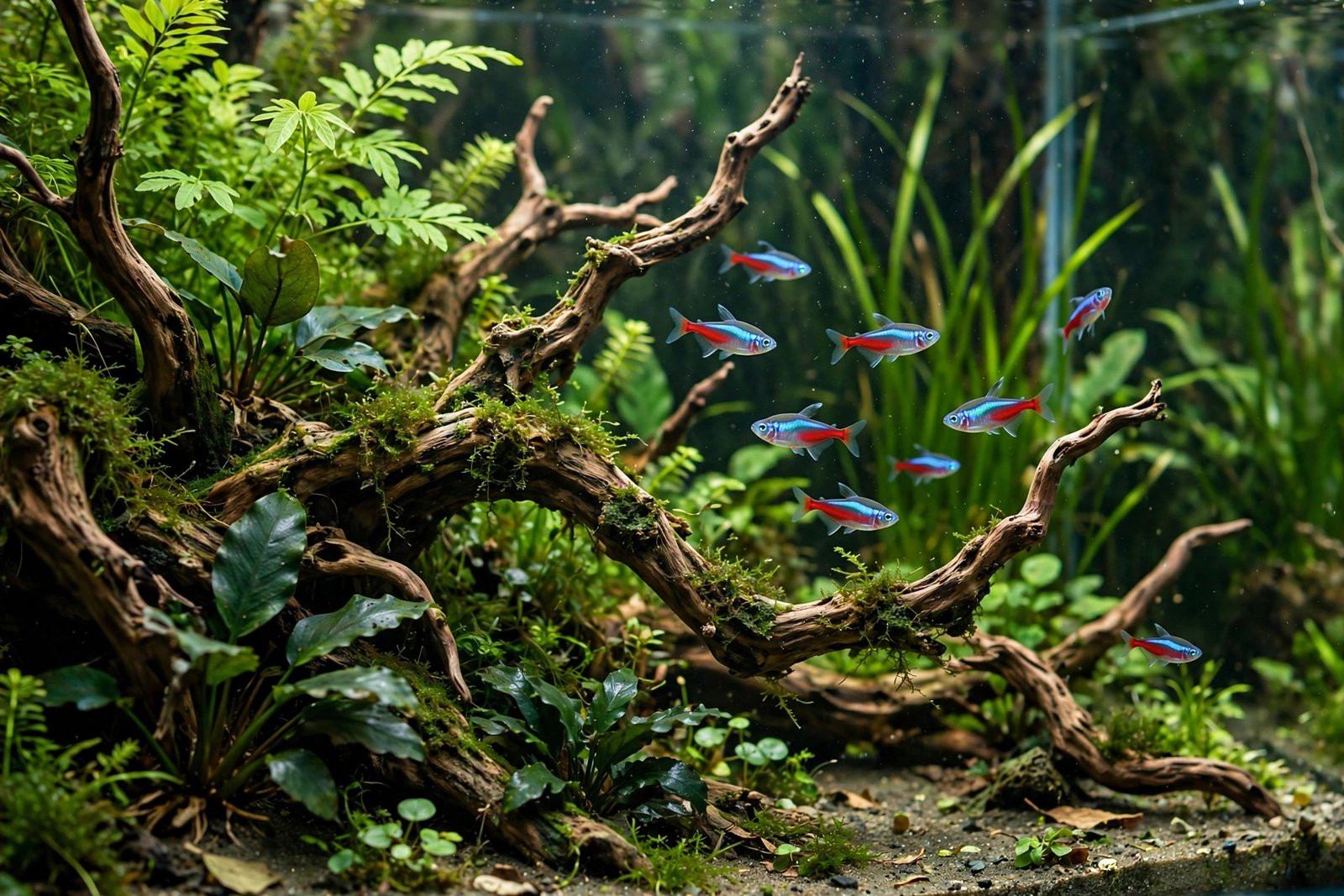
Realistic beginner stocking for a 100-litre community tank: 8–10 small tetras or rasboras, 6 corydoras catfish for the bottom, and perhaps a centrepiece fish like a dwarf gourami — added gradually over weeks, not all at once. For goldfish, the rules change completely: fancy goldfish need 75+ litres for the first fish and 40 litres per additional fish, with powerful filtration — those “starter” goldfish bowls are unsuitable, full stop. Practical Fishkeeping, the UK’s leading magazine, publishes reliable stocking guidance by species.
Tank Shape, Placement and Equipment Matter Too
Surface area matters more than depth: long, shallow tanks oxygenate better and give fish more usable swimming space than tall narrow ones of the same volume. Place the tank away from windows (algae blooms) and radiators (temperature swings), on a level, purpose-built stand — a full 100-litre tank weighs over 100kg, far beyond what ordinary furniture safely holds.
Budget for the full setup, not just the glass: a reliable heater with thermostat (£20–£35), a filter rated for your tank size (£25–£50), a water test kit (£15–£25 — non-negotiable for beginners), dechlorinator, substrate and decor. The test kit is the item beginners skip and experts never would: you cannot manage what you do not measure. As with any pet, the setup costs are just the start — see what pet ownership really costs for the budgeting mindset that applies to fishkeeping too.
Cycling: The Step Beginners Skip (Do Not)
Before any fish go in, the tank must be cycled — the 2–6 week process of growing beneficial bacteria that convert toxic ammonia (fish waste) into safer nitrates. Adding fish to an uncycled tank is the number one cause of “new tank syndrome”: fish gasping, dying within days, and a devastated beginner.
Fishless cycling is the safe method: add an ammonia source, test daily, and wait until ammonia and nitrite read zero 24 hours after dosing. It requires patience — the hobby’s first test — but it means your first fish enter a safe, stable home. Bottled bacteria products can speed the process but do not replace testing. If a shop tells you to buy fish and tank on the same day, shop elsewhere.
Beginner Traps to Avoid
The “starter kit” trap: cheap all-in-one kits often include underpowered filters and heaters — budget separately for quality basics. The overstocking trap: shops profit from selling fish; stock slowly and quarantine new arrivals. The “it’ll stay small” trap: fish grow to their genetics, not their tank — stunting is organ damage, not adaptation. The cleaning trap: never wash filter media in tap water (chlorine kills the bacteria); rinse in old tank water during water changes. The impulse-buy trap: research every species before buying — temperament, adult size, water parameters.
Fishkeeping rewards the same patient observation as gardening — creating a thriving underwater habitat is deeply satisfying. If you enjoy building habitats for animals, making your garden wildlife-friendly on a budget is the outdoor equivalent, and just as rewarding.
Maintenance Rhythm: The Weekly 20 Minutes
A stable tank needs less work than beginners fear — about 20 minutes a week once cycled. Weekly: test ammonia, nitrite and nitrate (2 minutes); change 20–25% of the water with dechlorinated water matched to tank temperature (10 minutes); rinse filter media in the removed tank water, never tap water (3 minutes); wipe the glass and check the heater is holding temperature (5 minutes). Monthly: trim plants, deep-clean the substrate surface with a gravel vacuum, check filter impellers for debris. Never: change all the water at once, replace all filter media simultaneously, or “clean” the tank with soap or chemicals — each of these destroys the bacterial colony you spent weeks growing.
Put it in your calendar like any appointment. Tanks that get their weekly 20 minutes stay crystal-clear and healthy for years; tanks that get sporadic attention develop the algae blooms and sick fish that drive beginners out of the hobby. Consistency, not effort, is the whole secret — the same lesson as everywhere else in fishkeeping.
Conclusion
Choosing the right fish tank size as a beginner comes down to one counterintuitive truth: go bigger than feels necessary. A 60–100 litre tank, matched to fish you have researched, placed properly, equipped with a test kit, and cycled before stocking — that is the formula for a hobby that relaxes you instead of stressing you. Start with stability, stock slowly, and test the water. The fish will do the rest.
Frequently Asked Questions
What is a good first fish tank size for beginners?
60–100 litres is the sweet spot for beginners — stable water chemistry, room for a small community of fish, and manageable maintenance. Avoid tanks under 40 litres to start.
How many fish can I put in a 100-litre tank?
A typical community: 8–10 small tetras, 6 bottom-dwelling corydoras, and one centrepiece fish — added gradually over several weeks, not all at once.
How long should I cycle a tank before adding fish?
Fishless cycling typically takes 2–6 weeks. The tank is ready when ammonia and nitrite read zero 24 hours after dosing ammonia, confirmed with a liquid test kit.
Can goldfish live in a bowl?
No. Fancy goldfish need 75+ litres for one fish plus 40 litres per extra fish, with strong filtration. Bowls cannot provide stable water conditions.
Why is my new tank water cloudy?
Usually a bacterial bloom during cycling — normal and temporary. Test ammonia and nitrite; do not add more fish until both read zero.