Growing Potatoes in Bags: When and How in the UK (2026)
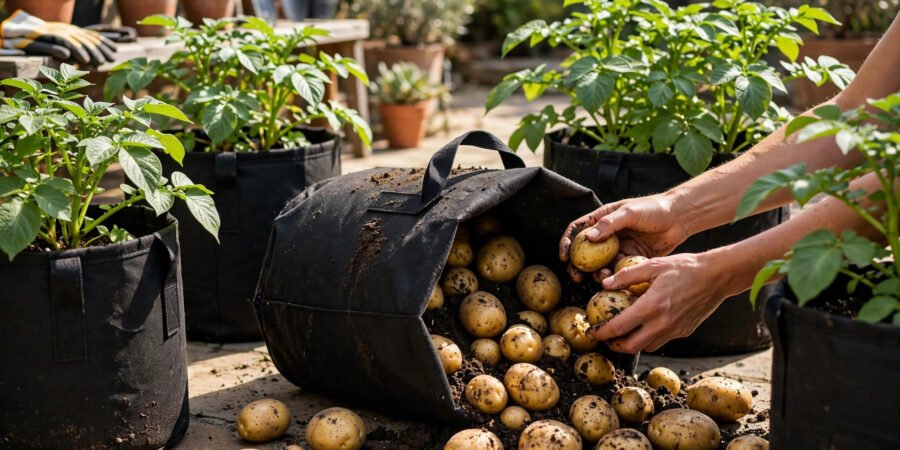
Potatoes are the perfect beginner crop: forgiving, productive, and deeply satisfying to harvest. But they have one notorious problem in the ground — the back-breaking digging, and the heartbreak of spearing your best tubers with a fork. Growing potatoes in bags or containers eliminates both: no digging, no fork casualties, harvest by tipping the bag over. It is also ideal for small gardens, patios, balconies, and rented homes where digging up the lawn is not an option.
This guide covers when to grow potatoes in bags in the UK, which varieties suit containers, the planting method step by step, and how to get a genuinely bumper harvest.
When to Plant: The UK Calendar
Potatoes are grouped by harvest time, and the groups plant at different moments:
- First earlies: plant mid-March to early April (after the worst frost risk). Harvest June–July. The classic new-potato experience — ‘Rocket’, ‘Swift’, ‘Pentland Javelin’.
- Second earlies: plant early to mid-April. Harvest July–August. ‘Charlotte’ (the salad-potato queen), ‘Kestrel’, ‘Maris Peer’.
- Maincrop: plant mid to late April. Harvest August–October. Bakers and storers — ‘Maris Piper’, ‘King Edward’, ‘Sarpo Mira’ (blight-resistant).
The golden rule: plant when soil is workable and frost risk is easing — containers warm faster than ground soil, giving bag-growers a slight head start. In mild southern areas, first earlies can go in as early as late February with fleece protection; in Scotland and the north, wait until April. Bags have a bonus: you can start them in a frost-free shed or greenhouse and move them out after the last frost, effectively buying 2–3 weeks.
Chitting: The Head Start Worth Taking
Chitting means pre-sprouting seed potatoes before planting — and it is worth the small effort. From late January, stand seed potatoes eye-up in egg boxes in a cool, bright, frost-free spot (a windowsill works). In 4–6 weeks they develop short, sturdy purple-green sprouts. Chitted potatoes establish faster, crop earlier, and yield more — particularly valuable for first earlies where earliness is the point. Do not chit in the dark (long pale sprouts snap off) or somewhere warm (weak leggy growth).
Buy certified seed potatoes (not supermarket potatoes, which carry disease and are often treated with sprout inhibitors). One bag of seed potatoes (£4–£6 for 2kg, ~20 tubers) plants 4–5 large bags — the economics are excellent.
Containers and Compost
Bags: purpose-made potato bags (£3–£6 each, reusable for years) with harvesting flaps are ideal — 30–40 litre size. Sturdy rubble sacks, old compost bags, or even dustbins with drainage holes work; potatoes are not snobs. Ensure drainage holes — waterlogged potatoes rot.
Compost: multipurpose compost mixed with garden soil (50/50) is the economical sweet spot — pure multipurpose works but dries fast and costs more at volume. A 40-litre bag needs ~30 litres of compost (£4–£6). Do not use fresh manure (causes scab); well-rotted is fine.
How many per bag: 3–4 seed potatoes per 35–40 litre bag for earlies; 2–3 for maincrop (they need more room). Overcrowding is the classic beginner error — fewer tubers with space out-yield crammed ones.
The Earthing-Up Method (Step by Step)
Earthing up — covering stems with compost as they grow — is the core technique, and bags make it effortless:
- Put 15cm of compost in the bag’s bottom. Place seed potatoes sprout-up on the surface, evenly spaced.
- Cover with 10–15cm of compost. Water well.
- When shoots reach ~15–20cm tall, add more compost to bury all but the top few centimetres of growth.
- Repeat as the plants grow until the bag is nearly full. Each buried stem section produces more tubers — this is where the yield comes from.
- Keep compost consistently moist (not waterlogged) — bags dry faster than ground, so check every couple of days in warm weather.
- Feed every 1–2 weeks with high-potassium liquid feed (tomato feed works) once flowering starts.
Why it works: potato tubers form on underground stems, and light turns them green (green potatoes contain solanine — mildly toxic and bitter). Earthing up keeps developing tubers in darkness while multiplying the stem length available for tuber formation. In bags, you simply roll the sides up as you add compost — no back-breaking hilling with a hoe.
Harvesting: The Best Part
First and second earlies: harvest when flowers open (or ~2–3 weeks after flowering starts) — feel around gently for the first new potatoes, or tip the whole bag for the full reveal. Nothing beats the flavour of a potato eaten minutes after lifting.
Maincrop: wait until foliage yellows and dies back (2–3 weeks after), then tip out. Let tubers dry for a few hours before storing in hessian sacks in a cool, dark, frost-free place — properly stored maincrop keeps until spring.
Expected yield: 3–4 seed potatoes in a 40-litre bag typically produce 3–5kg — a very respectable return on £10 of inputs. Our guide to reducing kitchen food waste will help you make the most of the glut — and for renters, our rental garden guide shows how container growing transforms patios without touching the landlord’s lawn.
Troubleshooting
- Blight: the potato grower’s nemesis — brown patches on leaves in warm, humid weather. Remove affected foliage immediately; grow resistant varieties (‘Sarpo Mira’, ‘Setanta’) if blight is common in your area. Water at the base, not overhead.
- Green tubers: light exposure — earth up more thoroughly and ensure no tubers sit at the compost surface.
- Small harvest: usually underfeeding, underwatering, or overcrowding. Bags need more water and feed than ground plantings — they are intensive, high-reward systems.
- Slugs: fewer in bags than in ground (a genuine advantage), but copper tape around bag rims deters the determined.
The RHS and Gardeners’ World both publish annual variety trials and month-by-month growing calendars for UK conditions.
The Bottom Line
Grow potatoes in bags in the UK by: chitting seed potatoes from late January, planting first earlies mid-March to April (later in the north), using 30–40 litre bags with drainage, earthing up in stages as plants grow, watering and feeding consistently, and harvesting earlies at flowering and maincrop after die-back. Three to five kilos per bag from £10 of inputs, zero digging, zero fork casualties — and new potatoes minutes from bag to plate. It is the highest-pleasure-per-pound crop in British gardening.
Frequently Asked Questions
Can I grow potatoes on a balcony?
Yes — bags are ideal for balconies. Use 30-litre+ bags (weight matters: a full 40-litre bag weighs ~30kg, so check balcony load limits), ensure good sunlight (6+ hours), and water diligently — balconies are windier and drier than gardens.
Can I reuse the compost after potatoes?
Yes, with rotation: do not grow potatoes (or tomatoes) in the same compost next year — use it for other crops and refresh with new compost. This breaks pest and disease cycles. The old compost is excellent for general mulching.
What is the easiest potato variety for beginners?
‘Charlotte’ (second early) — reliable, delicious, versatile, and forgiving. For first earlies, ‘Rocket’ is bombproof and fast. For blight-prone areas, ‘Sarpo Mira’ removes the biggest worry entirely.
Why are my potatoes green?
Light exposure during growth — the green is chlorophyll plus solanine, which tastes bitter and is mildly toxic in large quantities. Cut away small green patches generously; discard heavily greened tubers. Prevention is earthing up thoroughly.
How do I store harvested potatoes?
Cool (4–10°C), dark, and ventilated — hessian sacks in a garage or shed are ideal. Light causes greening, warmth causes sprouting, plastic bags cause sweating and rot. Maincrop varieties store for months; earlies are for eating fresh.