Balance and Flexibility After 50: What to Know Before You Start (UK)
After 50, two quiet changes start reshaping daily life: balance gets wobblier and joints get stiffer. You notice it reaching for a high shelf, stepping off a kerb, or getting up from the floor after playing with grandchildren. These are not inevitable declines to accept — they are trainable abilities. Balance and flexibility respond to practice at any age, and the payoff is enormous: fewer falls, less pain, and a body that keeps doing what you ask of it.
Before you improve balance and flexibility after 50 in the UK, there are things worth knowing — what actually works, what to avoid, when to see a professional, and how to start safely even if you have not exercised in years.
Why Balance and Flexibility Matter More After 50
Falls are the leading cause of injury-related hospital admissions in older adults in England, and the risk climbs steeply after 65. But balance is not just about avoiding falls: it underpins everything from carrying shopping to walking on uneven pavements. Flexibility, meanwhile, is what keeps joints moving through their full range — lose it and everyday tasks like dressing, driving (checking blind spots) and gardening quietly get harder.
The good news is that both are highly trainable. Research consistently shows that structured balance training cuts fall rates significantly in older adults, and that flexibility improves with regular gentle stretching regardless of starting point. Muscle mass declines about 3–8% per decade after 30 (sarcopenia), accelerating after 60 — but resistance and balance work slow it dramatically. The NHS guidance on exercise as you get older recommends balance and strength activities at least twice a week alongside 150 minutes of moderate activity.
What to Know Before You Start: The Safety Briefing
First, get a health check if you have been inactive. If you have heart disease, uncontrolled blood pressure, joint replacements, osteoporosis, or dizziness, talk to your GP or practice nurse before starting — not to get permission to do nothing, but to get advice on what is safe for you. Our guide to what a private health check includes explains what these assessments cover.
Second, start where you are, not where you were at 30. The single biggest mistake over-50s make is attempting the flexibility they had decades ago on day one. Stiff muscles and tendons need weeks of gradual loading. Pain is information: mild stretch discomfort is fine, sharp or joint pain is a stop signal.
Third, balance training needs a safety net — literally. Always practise near a wall, sturdy chair or kitchen counter you can grab. Falls during balance practice are the cruel irony to avoid: challenge yourself, but never so far from support that a wobble becomes an accident.
The Core Routine: 15 Minutes, Three Times a Week
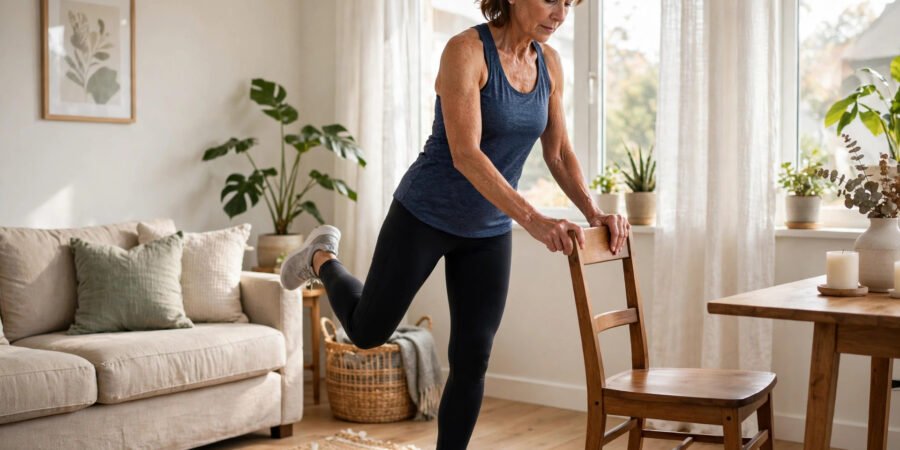
You do not need a gym. This simple routine covers the essentials. Single-leg stands: hold a chair, lift one foot, hold 10–30 seconds per side. When easy, try eyes closed (with fingertips on the chair). Heel-to-toe walking: walk a hallway placing each foot directly in front of the other, like a sobriety test — brilliant for dynamic balance. Calf raises and mini-squats: holding the chair, rise onto tiptoes 10–15 times, then small squats — these build the leg strength that balance depends on.
For flexibility: neck and shoulder rolls, seated spinal twists, standing quadriceps stretches (holding the chair), calf stretches against a wall, and gentle hamstring stretches seated on a chair edge. Hold each stretch 20–30 seconds, breathe normally, never bounce. The Chartered Society of Physiotherapy has excellent free exercise sheets for older adults, and Age UK’s exercise advice is tailored specifically to staying active later in life.
Yoga, Tai Chi and Pilates: Which Suits You?
These three are the gold standard for over-50s, and they suit different temperaments. Tai chi has the strongest evidence for fall prevention — its slow, flowing weight-shifts are essentially balance training disguised as meditation, and classes for beginners are widely available through local councils and Age UK groups. Chair yoga adapts traditional poses for limited mobility and is ideal if getting up and down from the floor is difficult. Pilates focuses on core strength and postural control, which translates directly into steadier movement.
Try a taster class of each before committing. Council leisure centres across the UK run over-50s sessions at reduced rates, and many are genuinely excellent — taught by instructors who specialise in older bodies rather than twenty-something fitness models. If you want to build an overall plan around classes, our guide to creating a personalised workout plan for beginners shows how to structure your week.
Tracking Progress Without Obsessing
Measure what matters: can you stand on one leg for 30 seconds? Touch your toes (or get closer)? Get up from the floor without using furniture? Test monthly, not daily — flexibility and balance improve in plateaus, not straight lines. A cheap fitness tracker can log your active minutes and remind you to move, which helps consistency more than any single exercise.
Expect meaningful change in 6–12 weeks of regular practice. That sounds slow until you consider the alternative: the decline you prevent compounds just like the fitness you build. People who start balance training at 55 are building the steadiness they will rely on at 75. Consider asking your GP surgery about an NHS falls-risk assessment if you have had a fall or feel unsteady — many areas offer free strength-and-balance classes (often called “falls prevention” or “otago” programmes) specifically designed for older adults, and they are among the most effective interventions in all of preventive medicine.
Conclusion
Before improving balance and flexibility after 50, know this: get checked if you have health conditions, start gently near something sturdy, practise 15 minutes three times a week, and consider tai chi, chair yoga or Pilates for structure. The science is unambiguous — these abilities are trainable at any age, and the return on a few hours a month is measured in independence, confidence and years of capable movement. Your future self is counting on the sessions you do this month.
Frequently Asked Questions
Can you improve balance after 60?
Absolutely. Studies show balance training reduces fall rates in adults well into their 80s. Single-leg stands, heel-to-toe walking and tai chi are among the most effective exercises. Many people start in their 70s and still see major gains.
How often should over-50s stretch?
The NHS recommends flexibility and balance activities at least twice a week, alongside 150 minutes of moderate aerobic activity. Short daily stretching is even better for maintaining range of motion.
Is yoga safe for beginners over 50?
Yes, especially chair yoga or gentle/beginners’ classes. Tell the instructor about any joint issues, osteoporosis or replacements so poses can be adapted.
What is the best exercise to prevent falls in older adults?
Tai chi has the strongest evidence base for fall prevention, combining balance, leg strength and body awareness. Any regular balance practice near a sturdy support helps.
Should I see a doctor before starting exercise after 50?
If you have heart conditions, uncontrolled blood pressure, severe osteoporosis, joint replacements or frequent dizziness, check with your GP first. Otherwise, starting gently is safe for most people.