Grow Your Own Food to Cut Emissions: Does It Work in 2026?
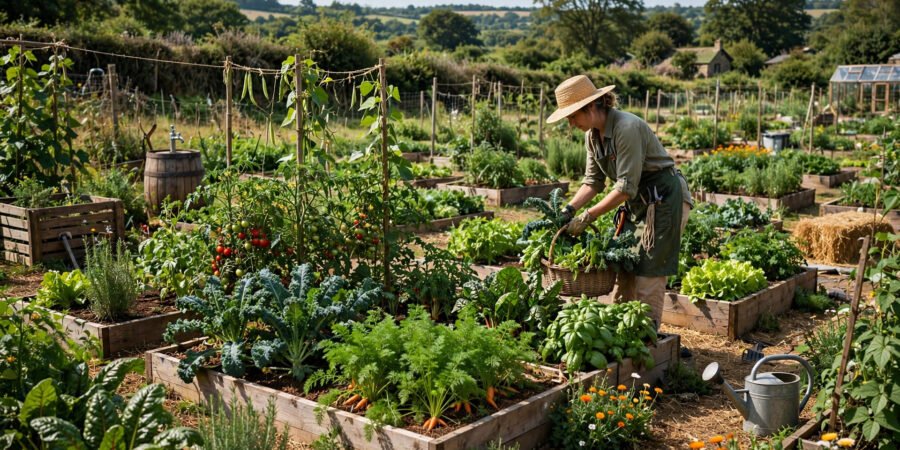
The logic seems airtight: grow your own vegetables, skip the food miles, cut your emissions. Allotments are booming, seed sales are soaring, and “grow your own” has a halo of unquestioned virtue. But is it actually true? Does a few raised beds of carrots meaningfully cut your carbon footprint — or is it feel-good gardening with negligible climate impact?
The honest answer in 2026: growing your own food can cut emissions — but not always, not automatically, and not for the reasons most people think. This guide examines the real carbon maths, where home growing genuinely wins, where it can backfire, and how to maximise the climate benefit of your plot.
The Carbon Maths: Where Food Emissions Actually Come From
To judge home growing, you need to know what drives food’s footprint. For most foods, the breakdown is roughly: production dominates — farming itself (fertiliser, machinery, livestock methane, land use) accounts for the majority of emissions. Transport (“food miles”) is surprisingly small — typically under 10% for most foods; how food is grown matters far more than how far it travels. A tomato grown in a heated UK greenhouse in February can have a bigger footprint than one shipped from Spain grown in unheated sunshine.
The big levers in diet emissions: what you eat dwarfs where it grew — beef and lamb have footprints an order of magnitude above vegetables, regardless of origin. Food waste is enormous — roughly a third of food is wasted, and wasted food means all its production emissions for nothing. Seasonality matters more than locality for many crops.
This reframes the question: home growing cuts emissions not primarily through food miles, but through waste reduction, seasonality, and displacement — replacing high-footprint purchases with low-footprint home produce, and wasting almost none of it because you harvested it yourself.
Where Home Growing Genuinely Wins
Replacing air-freighted and heated-greenhouse produce: out-of-season tomatoes, peppers, cucumbers and soft fruit bought in winter often carry heavy footprints (heated greenhouses, air freight). Growing your own in season displaces exactly these — the highest-value swap in home growing. Eliminating waste: home growers waste a fraction of what shoppers waste — you harvest what you need, when you need it, and gluts get shared, preserved or composted rather than binned. Given waste’s huge footprint share, this alone is significant. Cutting packaging: home produce needs no plastic wrap, punnets or transport packaging — a meaningful saving across a growing year. Building soil carbon: composting, no-dig methods and perennial plantings genuinely sequester carbon in soil — small per garden, meaningful in aggregate across millions of gardens.
The WRAP charity’s research on food waste quantifies just how much emissions hide in the bin — and home growing attacks that directly. Our guide to reducing kitchen food waste multiplies the benefit whatever you grow.
Where It Can Backfire (Honest Caveats)
Heated greenhouses and grow lights: running electric heating or lighting to grow tomatoes in January can produce a bigger footprint than buying imported seasonal produce — the “local” halo does not survive the energy bill. Grow with the seasons, not against them. Peat-based compost: peat extraction releases enormous stored carbon — always buy peat-free compost (now widely available and legally standard in UK retail). Using peat-based compost can wipe out a season’s growing gains. Overbuying inputs: plastic pots, imported tools, synthetic fertilisers and pesticides all carry footprints — the low-impact grower reuses, composts and goes organic by default. Driving to the allotment: a regular car trip to a distant allotment can exceed the footprint of the food grown — walk, cycle, or grow at home where possible. Low-yield effort: a struggling plot producing a handful of carrots represents inputs without meaningful output — learn the easy high-yield crops first.
Maximise the Climate Benefit: The High-Impact Playbook
Grow what you actually eat, in season: the humble, high-yield staples — potatoes, courgettes, beans, salads, herbs, soft fruit — displace the most shop-bought produce per effort. Check what is in season with our guide to seasonal vegetables and grow to the calendar. Go no-dig: layer compost on top rather than digging — better soil structure, more carbon stored, fewer weeds, less work. Compost everything: kitchen scraps and garden waste become free, peat-free fertility — closing the loop. Save seeds and share plants: community seed swaps and shared gluts multiply every garden’s impact. Grow perennials: fruit bushes, rhubarb, herbs and perennial vegetables produce for years with minimal annual inputs — the highest return on effort in climate terms.
Pair growing with eating shifts: the biggest dietary climate win remains eating less meat and dairy — home-grown vegetables make that shift delicious rather than dutiful. A garden full of courgettes has converted more diets than any lecture.
And put growing in its full low-impact context — our guide to planning a low-waste lifestyle covers the household systems that multiply what the garden starts.
So — Is It Worth It?
For emissions: yes, with the caveats above — a well-run seasonal garden, peat-free, composting, low-input, replacing shop-bought produce and wasting nothing, genuinely reduces your food footprint. The effect is modest per household but real — and it compounds across the UK’s millions of gardens and allotments. For everything else: the case is overwhelming regardless — fresher food, physical activity, mental health, biodiversity, food security, community, and the unmatched pleasure of eating something you grew. The carbon case does not need to carry the whole argument; it just needs to be honest.
The GOV.UK environmental guidance sets the national context, but the garden is where the abstract becomes personal — and personal is where change actually happens.
Conclusion
Growing your own food cuts emissions when done right — not mainly through food miles (which matter less than people think), but through waste elimination, seasonal displacement of high-footprint produce, packaging avoidance and soil carbon. Avoid the traps: heated winter growing, peat compost, input-heavy methods and car-dependent allotments. Grow seasonally, compost everything, go peat-free and no-dig, and let the garden nudge your diet plant-ward. Start with the easy wins — salads, herbs, courgettes, beans — and expand as confidence grows. The climate benefit is real, the savings add up over a season, and the tomatoes taste better anyway.
Frequently Asked Questions
Does growing your own vegetables reduce carbon emissions?
Yes, when done well — mainly by eliminating food waste, displacing high-footprint out-of-season produce, avoiding packaging, and building soil carbon. The benefit is modest per household but genuine, and larger with seasonal, peat-free, low-input growing.
Are food miles actually important?
Less than most people think — transport is typically under 10% of food’s footprint; production methods dominate. A Spanish tomato grown in unheated sun can beat a UK tomato grown in a heated greenhouse. What and how it was grown matters more than distance.
What is the most climate-friendly thing to grow?
Whatever displaces your highest-footprint purchases: out-of-season salad crops, tomatoes, peppers and soft fruit grown in season at home. Perennial edibles (fruit bushes, rhubarb, herbs) give the best long-term return on inputs.
Is peat-free compost really necessary?
Yes — peat extraction releases vast stored carbon, and using peat-based compost can cancel out a season’s growing gains. Peat-free alternatives are now standard in UK retail and perform well.
Can I grow food without a garden?
Absolutely — windowsills (herbs, salads), balconies (tomatoes, beans, potatoes in bags), and community allotments all work. Even small-scale growing cuts waste and packaging while building the habits that scale up.

