Buying Second-Hand Clothes in Scotland: A Confident Guide
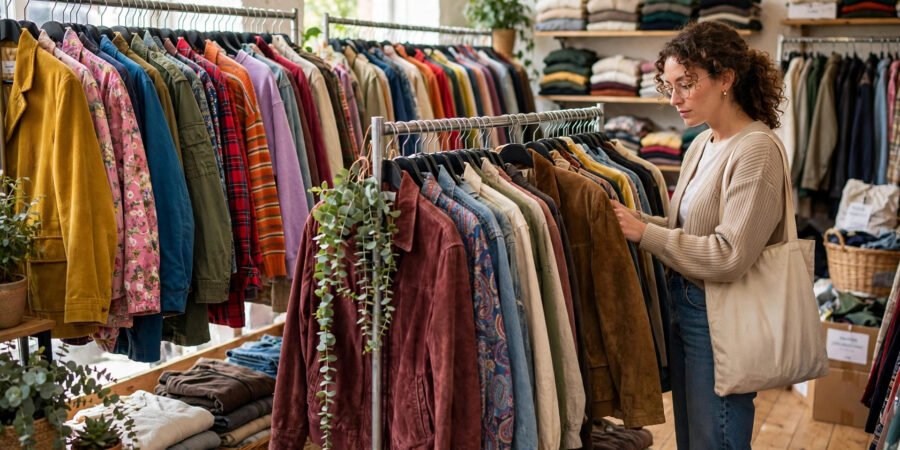
Scotland might be Britain’s best place to buy second-hand clothes. Edinburgh’s Stockbridge and Bruntsfield are charity-shop goldmines, Glasgow’s West End vintage scene rivals London’s, and even small Highland towns hide shops where cashmere jumpers sell for the price of a coffee. Yet many people still hesitate — worried about quality, hygiene, sizing roulette, or simply not knowing where to start.
This guide removes the guesswork: where to shop across Scotland, how to judge quality like a professional, and how to build a wardrobe you love for a fraction of retail — sustainably.
Why Second-Hand Makes Particular Sense in Scotland
Three Scottish factors tilt the maths. Weather: quality outerwear and knitwear — the expensive stuff — is exactly what Scottish charity shops receive in abundance, as people clear out barely-worn coats and cashmere. A £200 Johnstons of Elgin scarf for £8 is not a fantasy; it is a Tuesday in Morningside. Student churn: university cities (Edinburgh, Glasgow, St Andrews, Aberdeen, Dundee) flood charity shops every June with near-new clothes as students vacate flats. Culture: Scotland’s strong charity-retail sector — from Shelter Scotland to local hospice shops — means better-curated stock than the jumble-sale stereotype suggests.
The sustainability case is solid too: extending a garment’s life by just nine months cuts its carbon, water, and waste footprint by around 30%, according to WRAP research. Every second-hand purchase is also a vote against the fast-fashion model — and your wallet notices immediately, with quality pieces typically 70–90% below retail.
Where to Shop: Scotland’s Second-Hand Map
Charity shops (the backbone)
Edinburgh: Stockbridge, Bruntsfield, and Morningside have the highest hit-rate for quality brands — affluent donor postcodes are the open secret of charity shopping. Glasgow: the West End (Byres Road, Great Western Road) and Southside for vintage and designer; city-centre shops for volume. Aberdeen, Dundee, Inverness: smaller but less picked-over — patience pays. Tip: befriend the staff and ask when new stock goes out; regulars who are known get tipped off about the good rails.
Vintage and kilo stores
Glasgow’s vintage quarter (around King Street and the Barras) and Edinburgh’s Grassmarket/Cowgate offer curated vintage at £15–£40 a piece — pricier than charity shops but with the curation done for you. Kilo stores (pay by weight) are best for basics, denim, and sportswear; go early in the day for first pick of fresh bales.
Online: Vinted, eBay, and Depop
Vinted has exploded in the UK for good reason: no seller fees, buyer protection, and prices that undercut eBay. Search with specific brand + size + “new with tags” for the best deals. eBay remains king for precise searches (saved searches with alerts for grail items) and auction bargains ending at odd hours. Depop skews younger and trendier. Always check seller ratings, request measurements for anything fitted, and factor postage into the “bargain”.
Judging Quality Like a Pro: The 60-Second Inspection
Professional resellers assess a garment in under a minute — here is their checklist. Fabric first: check the label — natural fibres (wool, cashmere, silk, cotton, linen) age gracefully; cheap polyester pills and looks tired fast. The scrunch test: crush the fabric in your fist for five seconds; quality fabric springs back, cheap fabric stays creased. Seams: straight stitching, finished edges, no puckering — turn inside out and look. Stress points: check armpits, crotch, elbows, and pocket corners for thinning; hold up to light to spot weak patches. Zips and buttons: metal zips (YKK) and spare buttons signal quality; test every zip twice. Smell: mustiness usually washes out; smoke and perfume often do not — sniff the armpits honestly.
Sizing: ignore the label number (vanity sizing varies wildly by era and brand) and know your measurements — chest, waist, hips, inseam. Carry a tape measure; vintage sizing runs 1–2 sizes smaller than modern. For online buys, always ask sellers for pit-to-pit and length measurements. Our guide to looking stylish on a high-street budget covers the fit principles that make cheap clothes look expensive.
Hygiene, Alterations, and the Confidence Mindset
Hygiene: wash everything on arrival — hot wash for sturdy cottons, delicates cycle for wool and silk. A hot tumble (where the fabric allows) kills moth eggs; freezing items for 48 hours does the same for delicates. This single habit ends the “is it clean?” anxiety permanently. Alterations: a £12 hem or £15 waist-take-in transforms a £6 “almost” into a perfect fit — find a local tailor or dry cleaner offering repairs and use them routinely. Repairs: learn to sew a button and fix a hem; Scottish charity shops often have sewing corners or can point you to repair cafés.
The confidence shift is psychological: stop seeing second-hand as compromise and start seeing it as curation. Nobody else owns that exact 1970s wool coat. The most stylish people in any Scottish city are usually wearing a mix with at least one second-hand piece — they just do not announce it. And the environmental story is genuinely worth telling: our low-waste lifestyle guide puts fashion’s footprint in the wider context of consumption.
Selling and Swapping: The Other Side of Second-Hand
Buying is half the circular economy — selling your own cast-offs completes it and funds the next finds. Vinted is the path of least resistance: photograph in daylight, measure accurately, price at 30–50% of retail for good condition, and watch it sell within days for desirable brands. eBay suits higher-value items (designer, outdoor brands) where auction dynamics push prices up. Clothes swaps — increasingly popular in Edinburgh and Glasgow, often organised via community groups — are free, social, and perfect for refreshing a wardrobe without spending a penny.
What does not sell (stained, worn out) still has value: textile recycling via charity shops (they sell rag-grade textiles by weight — always donate, never bin), council textile banks, or retailers’ take-back schemes. WRAP’s clothing research shows the UK bins hundreds of thousands of tonnes of textiles yearly — nearly all of it avoidable. And the Charity Retail Association represents the shops that keep this whole ecosystem running: every purchase funds their causes, from hospices to homelessness services. Your £8 cashmere jumper is also an £8 donation.
Conclusion
Choosing second-hand clothes confidently in Scotland comes down to knowing where to look (affluent-postcode charity shops, student-clearance season, Vinted with measurements), inspecting like a pro (fabric, seams, stress points, smell), and washing everything on arrival. Do that, and you will dress better than the high street for a tenth of the price — in clothes with stories, not just SKUs. The cashmere is out there. Go find it.
Frequently Asked Questions
Where are the best charity shops in Scotland?
Edinburgh’s Stockbridge, Bruntsfield, and Morningside, and Glasgow’s West End have the highest concentration of quality donations. University cities are goldmines in June when students clear out flats.
Is it hygienic to buy second-hand clothes?
Yes, with basic care: wash everything on arrival (hot wash where fabric allows), tumble or freeze items for 48 hours to kill moth eggs, and air thoroughly. This removes any hygiene concern completely.
How do I avoid buying poor-quality second-hand clothes?
Check fabric labels (natural fibres age best), do the scrunch test, inspect seams and stress points, test zips, and sniff for smoke. Ignore label sizes — go by your measurements.
Is Vinted reliable for buying clothes in the UK?
Generally yes — buyer protection covers items not as described, and there are no seller fees keeping prices low. Check seller ratings, request measurements, and factor postage into the total cost.
What should I never buy second-hand?
Swimwear and underwear for hygiene reasons (unless new with tags), cracked helmets or safety gear, worn-out shoes with collapsed soles, and anything with persistent smoke smell that washing will not shift.

