Colouring Grey Hair From Scratch: The Beginner’s Guide
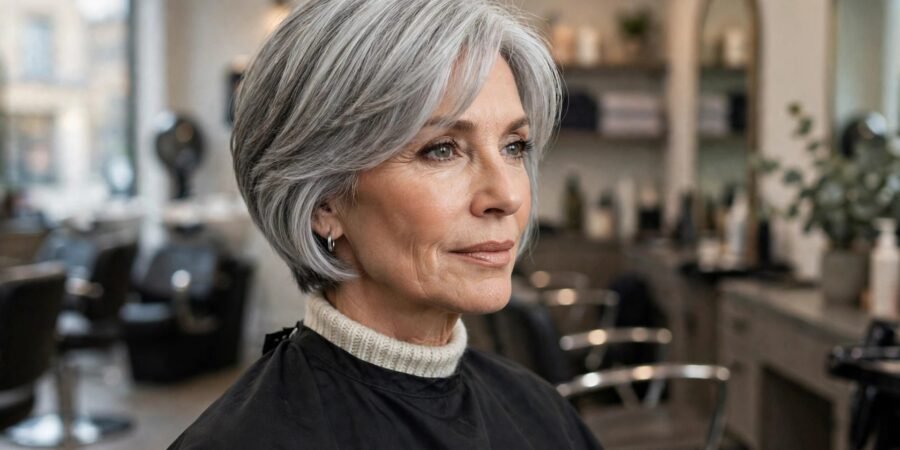
The mirror moment arrives differently for everyone: a streak of silver at the temple in your thirties, a salt-and-pepper tide by forty-five, or the sudden realisation that your parting has gone full moonlight. Going grey is universal, but what you do about it is deeply personal — and colouring grey hair is genuinely harder than colouring non-grey hair, for reasons of chemistry that nobody explains at the dye aisle. Where can you learn about colouring grey hair from scratch? Right here: this is the complete beginner’s guide, from the science of why grey resists colour to the techniques that actually work, the costs across the UK, and the increasingly popular decision to stop fighting it entirely.
Why grey hair is difficult to colour (the science)
Grey hair is not just pigmented hair minus colour — it is structurally different. As melanin production stops, the hair shaft becomes coarser, more wiry, and crucially more resistant to dye penetration: the cuticle layers are tighter and the hair is often drier, so colour molecules struggle to enter and escape more easily once in. This is why grey coverage fades faster, why box dyes “take” unevenly, and why the same shade looks different on grey roots versus dyed lengths. Additionally, grey hair yellows — from sun, pollution, hard water and heat styling — which is why maintaining cool tones requires purple/silver shampoos, not just dye.
The resistance factor also explains the number-one beginner mistake: choosing too dark. Dark dye on resistant grey gives the dreaded “helmet” effect — solid, flat, ageing colour with a harsh regrowth line. Colourists overwhelmingly recommend going one to two shades lighter than your natural colour was, because softer colour grows out gracefully and looks more natural against changing skin tone. The NHS guidance on hair dye safety also reminds beginners to allergy-test every dye 48 hours before use — grey coverage formulas are among the most allergenic because of their PPD content.
Your options, from commitment-phobe to all-in
Semi-permanent colour: no ammonia, fades over 6–8 washes, blends grey rather than covering it fully. The ideal starting point for the nervous — low commitment, no harsh regrowth line, and it adds shine that grey hair desperately needs. Limitation: will not cover more than ~30% grey convincingly. For choosing a formula, Which? hair dye reviews compare home colour kits for coverage and fade, which takes some of the guesswork out of a first attempt.
Demi-permanent colour: the professional’s blending tool — longer-lasting than semi, gentler than permanent, excellent for the transition phase. Many colourists use demi-permanent to “smudge” the demarcation line while clients grow grey out gracefully.
Permanent colour: full grey coverage, the only option past ~50% grey if you want complete concealment. Requires root touch-ups every 4–6 weeks — factor this into your budget honestly before starting, because visible regrowth on dark dye is worse than grey.
Highlights/lowlights: the sophisticated compromise — blonde or caramel highlights woven through grey break up the regrowth line and grow out softly. More expensive per appointment but needed less often (8–12 weeks). Particularly flattering on fair skin; our guide to colours for pale skin tones explains why softer, multi-dimensional colour suits changing complexions.
Henna and plant dyes: natural, conditioning, but unpredictable on grey (often orange-toned) and a nightmare to remove if you change your mind — many salons refuse to colour over henna. Research thoroughly first.
Box dye vs salon: an honest cost-benefit
Box dye costs £6–£12 and takes an hour at home; salon grey coverage costs £60–£150+ in most UK cities. For straightforward all-over coverage on short-to-medium hair, modern box dyes formulated “for stubborn greys” perform respectably — the technique matters more than the price. For long hair, complex colour history, more than 70% grey, or any kind of blending/highlighting, the salon earns its fee: colourists see the back of your head, understand underlying pigment, and fix the banding that home attempts create. A good compromise is salon for the initial transformation, box for root maintenance — though tell your colourist, because some box formulas complicate future salon work.
The UK cost reality
Annual cost of fighting grey, honestly calculated: box dye route: £70–£150/year (dye every 5–6 weeks plus purple shampoo). Salon route: £600–£1,500/year depending on region and technique — London and the South East cost most; the North and Midlands are kinder. The growing-out route: £100–£300 in transition appointments (blending, toning, strategic cuts), then nearly zero. These numbers surprise people — which is why the “should I just grow it out?” question deserves serious treatment rather than dismissal. Budget-conscious readers will appreciate our broader take on looking stylish on a budget: the principle of spending where it shows applies perfectly to hair.
The third option: growing it out gloriously
The silver-hair movement is not surrender — it is a aesthetic choice with a growing community, dedicated products and genuinely stunning results. The transition (6–18 months depending on hair length) is the hard part: strategies include the big chop, blending with highlights, demi-permanent smudging, or simply wearing hats with pride. What converts most sceptics is maintenance reality — silver hair needs purple shampoo, deep conditioning (grey hair is drier) and good cuts, but no more 4-week root panic. Many women report the transition as one of the most liberating beauty decisions they have made. There is no wrong answer between colouring and growing out — only the answer that makes you feel like yourself when you catch your reflection, whether that is a rich chestnut, a dimensional blonde, or a glorious silver.
Conclusion
Colouring grey hair from scratch means understanding that grey is structurally resistant (so go lighter and softer than instinct suggests), choosing your commitment level honestly (semi-permanent to test the waters, permanent for full coverage, highlights for sophistication), allergy-testing every time, and budgeting the real annual cost. Or — increasingly popularly — embracing the silver with excellent conditioning and a great cut. Whatever you choose, choose it deliberately — and remember that the most flattering hair colour at any age is the one worn with confidence. Your hair, your rules, your timeline — and whichever path you take, own it with the confidence of someone who made an informed choice.
Frequently Asked Questions
Where can I learn about colouring grey hair from scratch?
Start with the fundamentals: grey hair is coarser and more dye-resistant than pigmented hair, so choose shades one to two levels lighter than your natural colour, allergy-test 48 hours before every application, and consider semi-permanent dye first for low-commitment blending before moving to permanent colour.
Why won’t hair dye cover my grey hair properly?
Grey hair has a tighter cuticle that resists dye penetration, so colour takes unevenly and fades faster. Use dyes formulated for resistant grey, extend development time as instructed, and avoid going too dark — dark shades on resistant grey create harsh, flat results.
Is it better to highlight grey hair or dye it fully?
Highlights and lowlights grow out far more gracefully than solid permanent colour, need redoing less often (8–12 weeks vs 4–6), and look more natural — but cost more per appointment. Full permanent colour gives complete coverage but demands disciplined root maintenance.
How do I transition to grey hair gracefully?
Options include a shorter cut to remove dyed lengths faster, demi-permanent blending to soften the demarcation line, strategic highlights, or cold-turkey growing out. The transition takes 6–18 months; purple shampoo prevents yellowing and regular trims keep it looking intentional.