Double Cleansing Explained: Do You Actually Need It? (UK)
Double cleansing — washing your face twice, first with an oil-based cleanser then a water-based one — arrived from Korean skincare routines and conquered the beauty internet. But it confuses UK beginners: why would oily skin need oil? Isn't twice just stripping? Do I need it if I don't wear makeup? The confusion is understandable, because the answer is genuinely 'it depends'.
This guide explains double cleansing from scratch: the science of why two cleansers, who actually benefits, who should skip it, the correct method, and affordable UK product options.
Why It's Confusing: The Oil Paradox
The core confusion is the oil step: applying oil to dissolve oil feels backwards. But it is basic chemistry — like dissolves like. Sunscreen, waterproof makeup, sebum and pollution are oil-soluble; water-based cleansers barely touch them. The oil cleanser (cleansing oil or balm) dissolves the oil-soluble layer; the water-based cleanser (gel or foam) then removes sweat, dirt and residue. One cleanser doing both jobs either strips (harsh enough to cut through sunscreen) or under-cleanses (gentle but leaving film).
The second confusion: 'cleansing twice' sounds like double stripping. Done correctly, it is the opposite — two gentle, specialised steps clean more thoroughly with less irritation than one harsh step. The method fails when people use two stripping cleansers, or double cleanse twice daily when once suffices.
Who Actually Needs It
You benefit most if: you wear sunscreen daily (everyone should — and sunscreen is the main thing single cleansing leaves behind), you wear makeup (especially long-wear or waterproof), you have oily or congested skin, or you live in a polluted city (London, Birmingham, Manchester — particulate pollution needs proper removal). For these groups, double cleansing in the evening measurably reduces congestion and improves subsequent product absorption.
You can probably skip it if: you wear no makeup or sunscreen and have dry or sensitive skin (a single gentle cleanse suffices — over-cleansing damages your barrier), or your skin is reactive and happy with minimal routine. Morning double cleansing is unnecessary for almost everyone — overnight, skin produces minimal oil-soluble debris; a water rinse or single gentle cleanse does the job. The rule: double cleanse in the evening if you have something to remove; otherwise, don't.
The Method (60 Seconds, Done Right)
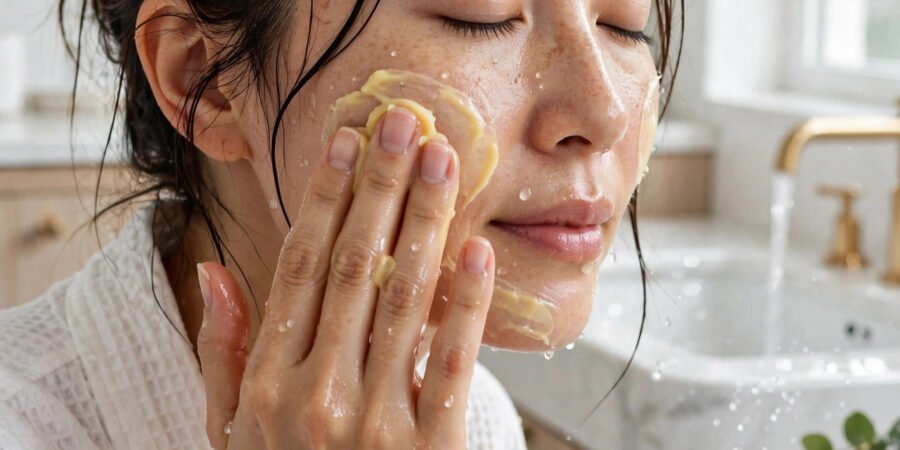
Evening routine: step one — apply cleansing oil or balm to dry skin with dry hands, massage for 60 seconds (this dissolves sunscreen, makeup and sebum; the massage itself boosts circulation), add a splash of water to emulsify (oil turns milky), rinse. Step two — a pea-sized amount of gentle water-based cleanser on damp skin, 30–60 seconds, rinse with lukewarm water (hot water strips). Pat dry, continue with the rest of your routine within a minute on damp skin for best absorption.
Product notes: cleansing oils suit most skin types (even oily — the paradox holds); balms suit dry skin and travel; micellar water is not a substitute for the oil step on heavy sunscreen days. Avoid: oil cleansers with heavy fragrance, the second cleanser being a harsh foaming sulphate formula (that combination is what gives double cleansing its stripping reputation), and flannels used roughly — soft muslin, gentle pressure.
UK Product Picks (Budget to Premium)
The high street does double cleansing brilliantly now. Oil/balm step: Simple Water Boost Micellar… no — proper oil cleansers: Superdrug's own Vitamin E Hot Cloth Cleanser (£4), The Body Shop Camomile Cleansing Butter (£13), DHC Deep Cleansing Oil (£20, the cult classic). Water-based step: CeraVe Hydrating Cleanser (£12), La Roche-Posay Toleriane (£16), Simple Refreshing Gel Wash (£5). Total routine cost: £9–£30 — this is not a luxury habit.
Which? skincare reviews independently test cleanser claims. And match to your skin story: if acne is the concern, the NHS guide to acne is the medical baseline — double cleansing helps remove pore-clogging layers but does not treat acne alone, and over-cleansing worsens it. For reactive skin generally, the best fabrics for sensitive skin principle extends inward: gentleness is a system, not a product.
Mistakes That Give Double Cleansing a Bad Name
The five errors: double cleansing twice daily (evenings only for most), using two harsh cleansers (gentle + gentle is the formula), skipping it while wearing daily SPF (the commonest under-cleansing in skincare), over-massaging with dirty hands (clean hands first), and expecting it to fix acne, rosacea or pigmentation alone (it is preparation, not treatment — it helps everything after it absorb, but treats nothing itself).
Judge it over 2–3 weeks: less congestion, fewer clogged pores, better makeup application. If skin feels tight or looks red, you are overdoing it — drop to single cleansing or swap the second cleanser for something gentler. Like finding colours that suit you, the right routine is discovered by testing on your own skin, not by following someone else's ten-step ritual.
Double cleansing is confusing because the answer is conditional: it is basic chemistry (oil dissolves oil-soluble grime, water cleanser finishes the job), it benefits sunscreen wearers, makeup wearers and oily or city skin, and it is unnecessary for minimal routines and reactive skin. Evenings only, gentle products, sixty seconds.
You do not need it because the internet says so; you need it if you have something to remove. Work out which camp you are in, and cleanse accordingly — your barrier will thank you for the precision.
Double Cleansing for Different Skin Types
The method adapts to the skin. Oily skin: the classic beneficiary — a light cleansing oil followed by a gel cleanser, evening only; the oil step prevents the over-stripping that makes oily skin worse. Dry skin: cleansing balm (richer, less stripping than oils) followed by a cream or milky cleanser; if even that feels tight, single cleanse with the balm alone. Sensitive skin: fragrance-free everything, minimal massage time, lukewarm water — or skip double cleansing entirely if your barrier is compromised; barrier repair outranks thorough cleansing.
Combination skin: zone the method — double cleanse the T-zone, single cleanse dry cheeks (apply the oil cleanser all over, but use the water-based second step only where needed). Acne-prone: double cleansing helps remove the pore-clogging layers, but the second cleanser should contain salicylic acid rather than being a second plain cleanser — and never scrub. Mature skin: balm first step, hydrating cream second step, gentle always. The principle across all types: the evening cleanse should leave skin comfortable, never tight. Tightness is not cleanliness; it is damage. Adjust the method until comfort is the result, and you have your personalised version.
Frequently Asked Questions
What is double cleansing?
Washing your face twice in the evening: first an oil-based cleanser (oil or balm) to dissolve sunscreen, makeup and sebum, then a water-based cleanser to remove sweat and residue. Each step does a job the other cannot.
Do I need to double cleanse if I don't wear makeup?
If you wear daily sunscreen — yes, sunscreen needs the oil step for full removal. If you wear neither makeup nor sunscreen and have dry/sensitive skin, a single gentle cleanse is enough.
Is double cleansing bad for oily skin?
No — it's often ideal for oily skin, since the oil step dissolves excess sebum gently. The problems come from using harsh cleansers, not from the oil step itself.
Should I double cleanse morning and night?
Evenings only for almost everyone. Mornings need just a water rinse or single gentle cleanse — overnight skin doesn't accumulate the oil-soluble layers that need the double method.