Makeup for Sensitive Skin: 7 Mistakes to Avoid
Your skin stings, flushes, and stages a full protest at products your friends wear effortlessly. You have tried the ten-step routines, the “gentle” launches, the miracle serums — and your face has vetoed most of them. Makeup for sensitive skin is a minefield, and most of the damage is self-inflicted: not because sensitive-skinned people are careless, but because the standard advice was written for resilient skin. What are the biggest mistakes people make when they choose makeup for sensitive skin? The same seven, over and over — and every one is fixable. Here they are, with what to do instead.
Mistake 1: Choosing fragrance as a feature
Fragrance — listed as “parfum” — is the single most common cosmetic allergen and the top offender in sensitive-skin reactions. Yet beautifully scented foundations and powders keep selling because fragrance signals luxury to the nose while the skin pays the bill. The fix is boring but effective: choose fragrance-free (not “unscented”, which can mean masked fragrance — look for the explicit “fragrance-free” claim and check the ingredients). Your makeup does not need to smell of roses; it needs to not set your face on fire. The British Association of Dermatologists lists fragrance among the first ingredients sensitive patients should avoid.
Mistake 2: Piling on actives under makeup
Vitamin C serum, exfoliating toner, retinol residue from last night, then a “brightening” primer with more acids, then foundation with niacinamide and chemical SPF — the modern routine stacks irritants like a Jenga tower, then blames the foundation when the face rebels. Sensitive skin needs a calm base: gentle cleanser, simple moisturiser, mineral SPF, then makeup. Introduce one active at a time, and never test a new treatment product on a day you need full makeup — reactions plus cover-up is a miserable combination. Once the base is calm, shade choice does the rest: our guide to which colours suit pale skin tones best explains how the right tones camouflage redness before you even reach for concealer.
Mistake 3: Skipping the patch test (everyone does it)
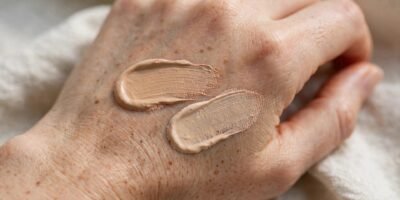
Nobody patch-tests, and sensitive-skinned people — of all people — cannot afford to skip it. The correct method: apply a small amount behind the ear or on the inner forearm twice daily for 3–5 days (reactions can be delayed). A full-face maiden voyage with a new foundation before a wedding is how horror stories happen. Keep a “new product diary” on your phone: product, date started, any reaction. Patterns emerge — “every product with that preservative breaks me out” — that transform future shopping from gambling to strategy.
Mistake 4: Confusing coverage with kindness
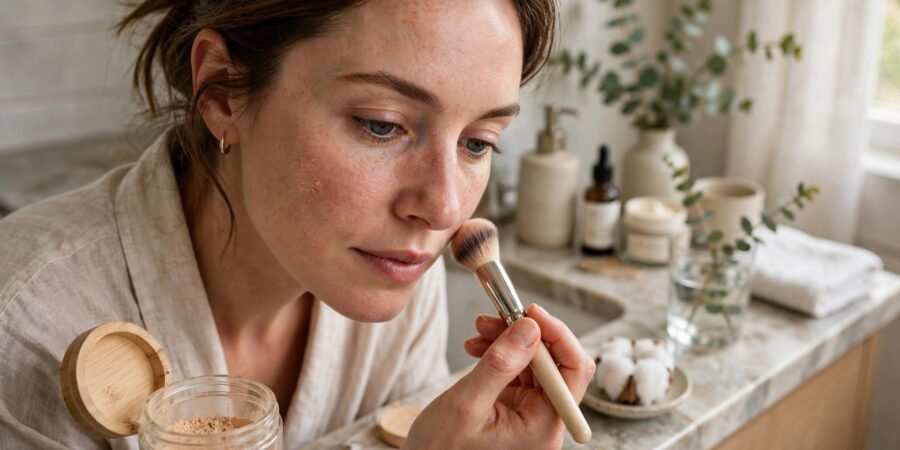
Heavy full-coverage foundations often contain more pigments, more preservatives and more potential irritants — and the thick layers trap heat and sweat against reactive skin. Mineral foundations (zinc oxide, titanium dioxide based) are frequently better tolerated: fewer ingredients, inherent SPF, and anti-inflammatory properties. Sheer-to-medium coverage in a simple formula beats full coverage in a 40-ingredient cocktail for sensitive skin every time. If you need more coverage in specific areas, spot-conceal rather than masking the whole face.
Mistake 5: Dirty tools and double-dipping
The £45 hypoallergenic foundation applied with a brush that has not been washed in a month is not hypoallergenic in practice. Brushes harbour bacteria, old product and oils that trigger exactly the reactions sensitive skin is prone to. Wash brushes weekly with gentle soap, replace beauty sponges monthly (they cannot be fully sanitised), wash hands before application, and never share eye or lip products. Mascara older than three months is an eye-infection vector regardless of skin type. This unglamorous hygiene does more for sensitive skin than most product upgrades.
Mistake 6: Ignoring the non-makeup irritants
Sometimes the makeup is innocent and the culprit is everything around it: fragranced laundry detergent on pillowcases, harsh shampoo running down the face in the shower, over-exfoliation from “sensitive” scrubs, or the wool scarf rubbing the jawline. Sensitive skin is a whole-lifestyle condition. Our guide to fabrics for sensitive skin covers the textile half of the equation — switching pillowcases and scarves to smooth, low-friction fabrics reduces mechanical irritation that mimics product reactions. Audit the full contact chain before declaring another foundation guilty.
Mistake 7: Treating all redness as “sensitivity”
Persistent flushing, visible blood vessels, bumps that are not quite acne — this may be rosacea, not generic sensitivity, and it needs different management (and sometimes prescription treatment). Similarly, flaking around the nose and brows may be seborrhoeic dermatitis, and eyelid dermatitis has its own triggers. If “sensitive skin” has been your self-diagnosis for years without improvement, a dermatologist appointment is overdue. For rosacea-prone skin especially, the rules above matter doubly: fragrance-free mineral makeup, minimal layering and strict trigger avoidance. Northern Ireland’s climate adds its own challenge — cold wind, driving rain and sudden temperature shifts are classic rosacea flare triggers, so a protective barrier routine (gentle moisturiser plus mineral SPF, even on grey days) matters as much as the makeup itself. The NHS dermatology referral guidance explains how to get assessed — proper diagnosis beats another decade of guessing.
Building your sensitive-skin kit from scratch
If you are starting over, build in this order and stop when your needs are met: 1. a fragrance-free mineral SPF (the daily non-negotiable); 2. a fragrance-free mineral foundation or tinted moisturiser in your shade; 3. a simple concealer for spot coverage; 4. one blush and one lip product, both fragrance-free. That is a complete face. Add mascara only if your eyes tolerate it — tubing mascaras are often better for sensitive eyes than waterproof formulas, which require harsh removers. Skip setting sprays with alcohol and fragrance; a light press of translucent mineral powder does the same job. Buy from retailers with generous return policies (most UK beauty halls accept returns of gently used products), keep every receipt until patch-testing clears, and remember that “hypoallergenic” is a marketing term with no legal definition — the ingredient list is the only truth. A minimal kit of four well-chosen products will outperform a drawer of irritating almost-rights, and your skin (and budget) will thank you.
Conclusion
The biggest mistakes people make when choosing makeup for sensitive skin are all variations on one theme: adding complexity where simplicity was needed — fragrance, stacked actives, untested products, heavy formulas, dirty tools, ignored lifestyle triggers, and self-diagnosis instead of proper assessment. Strip it back: fragrance-free mineral formulas, patch-tested, applied with clean tools onto a calm simple base. Sensitive skin is not difficult skin. It is honest skin — it tells you immediately what it thinks, and it rewards simplicity generously. Start listening today.
Frequently Asked Questions
What are the biggest mistakes people make when they choose makeup for sensitive skin?
The seven classics: choosing fragranced products, stacking too many active ingredients underneath, skipping patch tests, equating heavy coverage with better results, using dirty brushes and old sponges, ignoring non-makeup irritants like laundry detergent, and self-diagnosing persistent conditions like rosacea instead of seeing a dermatologist.
What foundation is best for sensitive skin?
Fragrance-free mineral foundations with short ingredient lists are usually best tolerated. Choose sheer-to-medium coverage, patch-test first, and spot-conceal rather than applying heavy layers across the whole face.
Should I avoid all active ingredients if my skin is sensitive?
No — but introduce one at a time, keep the overall routine simple, and avoid layering multiple strong actives. Niacinamide and azelaic acid are often well tolerated by sensitive skin; start with low concentrations.
How do I patch-test makeup properly?
Apply a small amount behind the ear or on the inner forearm twice daily for 3–5 days, since reactions can be delayed. Only then try it on the face — and never debut a new product before an important event.