Microneedling Risks at Home: What Dermatologists Warn
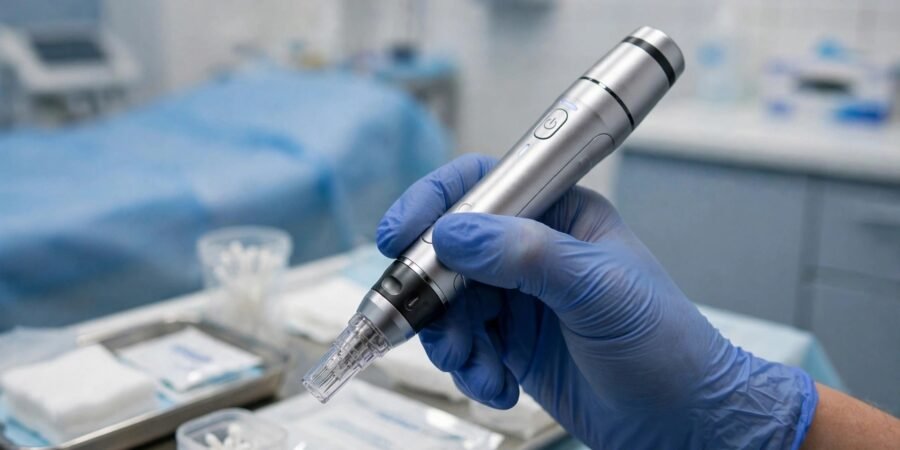
Somewhere between the Instagram before-and-afters and the Amazon listings promising “professional results at home”, the microneedling roller has become a bathroom-cabinet staple across the UK. The premise is seductive: tiny needles create micro-injuries, the skin heals itself, collagen rebuilds, and you get clinic-like glow for the price of a takeaway. But dermatologists keep issuing warnings, and the gap between marketing and medicine is where injuries happen. How long does it take to really understand microneedling risks at home? About fifteen focused minutes — which is exactly what this guide gives you. No hype, no horror stories for clicks: just what the devices do, what can go wrong, and how to decide whether your skin should go anywhere near one.
What microneedling actually does to skin
Microneedling (collagen induction therapy) uses fine needles — 0.25mm to 2.5mm — to puncture the skin thousands of times per session. The controlled injury triggers the wound-healing cascade: inflammation, proliferation, remodelling, with new collagen and elastin laid down over weeks. In clinics, dermatologists use it for acne scarring, fine lines and enlarged pores, with needles typically 1.0–2.5mm, sterile single-use cartridges, medical-grade devices, and proper anaesthesia. Home rollers and stamps operate at 0.25–0.5mm — shallower, but emphatically not risk-free, because the risk was never only about depth.
The key misunderstanding: “shallow” does not mean “safe”. Home devices injure the skin’s barrier — its primary defence against infection — in non-sterile bathroom conditions, often with devices of dubious manufacturing quality. Understanding that single fact reframes every risk below. The British Association of Dermatologists advises caution with at-home devices and recommends professional assessment for anything beyond the most superficial cosmetic use.
The real risks, ranked honestly
Infection — the headline risk. Puncturing skin with a non-sterile roller, then applying serums of unknown sterility, invites bacterial infection; case reports include cellulitis, abscesses and, rarely, atypical mycobacterial infections from contaminated devices. Reusing rollers (extremely common) compounds this — needles dull, bend and harbour biofilm.
Scarring and hyperpigmentation. Too much pressure, too-frequent sessions, or needling over active acne or inflamed skin can cause the very scarring the user hoped to fix — plus post-inflammatory hyperpigmentation, a particular risk for medium and deeper skin tones. The irony is cruel: treating acne scars aggressively at home frequently creates new ones.
Allergic and irritant reactions. Micro-channels drive topical products deeper than they were formulated to go. That “brightening” serum with fragrance and essential oils becomes a sensitisation event when needled in. Dermatologists report contact dermatitis from products that were perfectly fine on intact skin.
Spreading infection and contraindicated conditions. Needling over cold sores can disseminate herpes simplex; needling over undiagnosed skin cancers or moles is dangerous; and anyone on isotretinoin, with keloid tendency, diabetes with poor wound healing, or on blood thinners faces elevated risk. The NHS guidance on cosmetic procedures stresses checking practitioner credentials and understanding complications before any skin-penetrating treatment — advice that applies doubly at home.
The device-quality problem nobody mentions
Clinic devices are regulated medical equipment. Home rollers from marketplaces may have uneven needle lengths, barbed tips, nickel-containing metals (a common allergen), or needles that detach. There is no UK pre-market safety testing for cosmetic rollers sold as beauty tools. A £9 roller and a £90 roller can look identical and behave very differently under a microscope. If you cannot verify the manufacturer, the materials and the sterilisation, you are puncturing your face with a mystery object.
If you are determined to do it anyway: harm reduction
Dermatologists would prefer you did not — but realistic harm reduction beats moralising. Never use needles longer than 0.25–0.3mm at home; longer belongs in clinics. Never roll over active acne, eczema, rosacea flares, cold sores, moles or broken skin. Single-use only — treat rollers as disposable; “disinfecting” with alcohol does not sterilise. Patch-test any serum on intact skin first, and use only simple, fragrance-free, sterile-packaged products afterwards (hyaluronic acid serums without extras are the standard choice). Frequency: no more than fortnightly at 0.25mm; skin needs full barrier recovery between sessions. Stop immediately for spreading redness, heat, pus, fever or worsening pain — and see a GP or pharmacist promptly rather than waiting.
Also examine your motivation honestly. Much home-microneedling enthusiasm is driven by filtered before-and-afters and the sunk-cost glow of a new gadget. For significant scarring or texture concerns, a consultation with a dermatologist — who can offer prescription retinoids, chemical peels or in-clinic needling with proper safety — usually delivers better results per pound. Our guide to fabrics for sensitive skin covers the everyday side of barrier care, and choosing colours for pale skin tones addresses the cosmetic confidence question without needles at all.
The regulatory picture in the UK
Here is the uncomfortable truth: at-home microneedling sits in a regulatory gap. Devices sold as cosmetics escape medical-device scrutiny; there is no licensing requirement to buy one; and misleading “dermatologist approved” claims on listings are rarely challenged. The MHRA (Medicines and Healthcare products Regulatory Agency) oversees medical devices — check gov.uk’s MHRA pages for how device safety is regulated — but cosmetic rollers largely fall outside its remit. Parliamentary and professional bodies have repeatedly called for tighter regulation of the aesthetics industry; until it arrives, the consumer is the regulator. That means your scepticism is the safety system. If a claim sounds too good — “erase deep scars in 4 weeks!” — it is. And remember that professional help is not an admission of defeat: a single dermatologist consultation often costs less than the cumulative spend on gadgets, serums and cover-up for complications, and it comes with something no roller offers — accountability.
Conclusion
Really understanding microneedling risks at home takes fifteen minutes: the devices puncture your skin’s protective barrier in non-sterile conditions, with infection, scarring and hyperpigmentation as the documented risks, compounded by unregulated device quality. If you proceed, keep needles short, devices single-use, skin intact and expectations modest — and get professional advice for anything beyond mild cosmetic texture concerns. Your skin barrier is a masterpiece of engineering. Think twice before drilling holes in it with a £12 gadget — and if in doubt, ask a professional first.
Frequently Asked Questions
How long does it take to really understand microneedling risks at home?
About fifteen minutes of focused reading: the core facts are that home devices puncture the skin barrier in non-sterile conditions, carrying documented risks of infection, scarring and hyperpigmentation, and UK cosmetic rollers face minimal safety regulation. That is 90% of what you need to know.
Is at-home microneedling safe with a 0.25mm roller?
Lower-risk than longer needles, but not risk-free — infection, irritation and product sensitisation can still occur. Use single-use sterile devices only, never on broken or inflamed skin, and stop at any sign of spreading redness or pain.
Can microneedling make acne scars worse?
Yes — needling over active acne can spread bacteria and cause new scarring, and excessive pressure or frequency can worsen texture. Acne scarring is best assessed by a dermatologist, who can recommend in-clinic treatment with proper safety controls.
How often can I use a home microneedling roller?
No more than once a fortnight at 0.25mm, allowing full barrier recovery between sessions. More frequent use increases irritation and infection risk without improving results — collagen remodelling takes weeks regardless.