How to Treat Tendonitis: Step-by-Step Guide (2026)
That dull, nagging ache in your shoulder when you reach for the top shelf. The stiff elbow that makes your morning kettle feel like it weighs a stone. If that sounds familiar, there’s a decent chance you’re dealing with tendonitis — one of the most common (and most irritating) overuse injuries in the UK.
Tendonitis is simply inflammation of a tendon, the tough cord that connects your muscle to bone. It tends to show up in the shoulders, elbows, wrists, knees and heels — basically anywhere you repeat the same movement day after day. Gardeners get it. DIY enthusiasts get it. Office workers hunched over a keyboard get it. The good news? Most cases clear up perfectly well at home if you treat them properly from the start. Here’s exactly how.
Step 1: Rest the Affected Area (But Don’t Freeze Up Completely)
This is the step everyone wants to skip, and it’s the one that matters most. When a tendon is inflamed, continuing to load it is like picking at a scab — it just prolongs the misery.
That said, “rest” doesn’t mean strapping yourself to the sofa for a fortnight. Complete immobilisation can actually make things worse by stiffening the joint. What you want is relative rest: stop the specific activity that’s aggravating it (tennis, painting the ceiling, that new weightlifting routine), but keep the joint gently mobile with pain-free movement.
As a rough rule: if an activity makes the pain noticeably worse during or after, park it for now. Most mild tendonitis starts improving within a week or two of sensible rest.
Step 2: Ice It — 15 Minutes, Several Times a Day
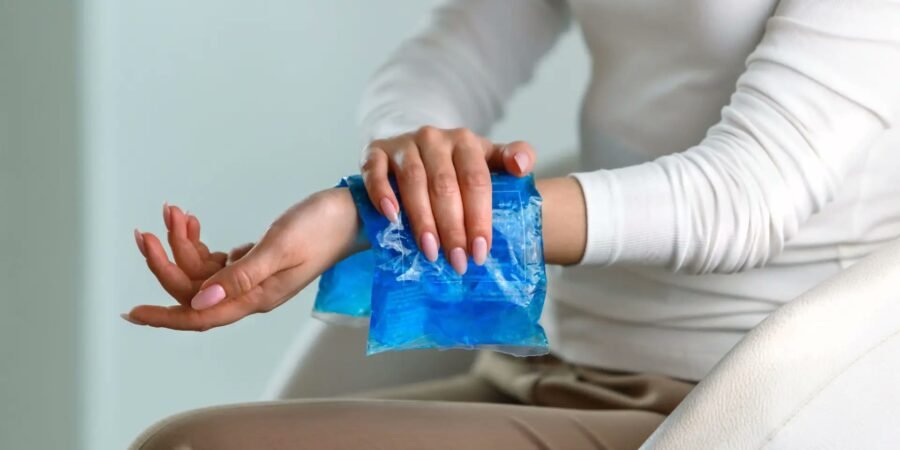
For the first few days, ice is your best friend. It calms inflammation and numbs the ache. Wrap a bag of frozen peas (every British household’s unofficial ice pack) in a tea towel and hold it against the sore spot for 15 minutes, two or three times a day.
Never put ice directly on skin — that’s a fast track to an ice burn on top of your tendonitis, which nobody needs. After the first 48–72 hours, some people find switching to gentle heat (a warm flannel or hot water bottle) helps loosen things up, especially before gentle stretching.
Step 3: Manage the Pain Sensibly
Over-the-counter painkillers can take the edge off while the tendon heals. Paracetamol is fine for pain relief, while ibuprofen (an NSAID) also tackles inflammation — which is rather the point with tendonitis.
A few practical notes:
- Ibuprofen gel rubbed directly on the sore spot is often a brilliant option — you get the anti-inflammatory effect where you need it with less going through your whole system. Available at any pharmacy or supermarket without prescription.
- Always take oral ibuprofen with food, and avoid it if you have stomach ulcers, asthma that’s triggered by NSAIDs, or kidney problems.
- If you’re on blood thinners or have other health conditions, have a quick word with your pharmacist before reaching for NSAIDs — they’re genuinely helpful like that.
Step 4: Support It — But Don’t Overdo the Brace
For elbows (tennis elbow is classic tendonitis), a simple forearm strap from Boots or Superdrug can reduce strain on the tendon during daily tasks. For Achilles tendonitis, a slight heel lift in your shoe takes pressure off. For wrists, a light support splint worn during aggravating activities helps.
The key word is during activities. Wearing a brace 24/7 can weaken the area and slow your recovery. Think of supports as training wheels, not a permanent fixture.
Step 5: Start Gentle Strengthening Once the Sharp Pain Fades
Here’s the bit most people miss. Rest and ice calm things down, but tendons heal stronger when they’re gradually loaded again. Once the sharp pain has eased (usually after a week or so), begin gentle eccentric exercises — these are movements where the muscle lengthens under tension, and they’re the gold standard for tendon rehab.
For example, with tennis elbow: hold a light weight (a tin of beans works), palm down, and slowly lower your wrist over 3–4 seconds, then use your other hand to lift it back up. Ten to fifteen repetitions, once or twice daily. It should feel like effort, not agony — mild discomfort is fine, sharp pain means back off.
The NHS recommends physiotherapy if self-care isn’t cutting it after a couple of weeks. A physio can tailor exercises to your specific tendon and spot movement patterns that caused the problem in the first place. You can self-refer to NHS physiotherapy in many areas without seeing your GP first.
Step 6: Fix Whatever Caused It
Tendonitis is almost always a messenger telling you something about your habits needs to change. Ask yourself honestly:
- Did you suddenly ramp up an activity? (The classic “first 10k run in years” or “painted the whole house in a weekend” scenario.)
- Is your workstation set up properly? Poor ergonomics is a massive driver of wrist and elbow tendonitis.
- Are your shoes worn out? Dead trainers are a leading cause of Achilles problems.
- Are you warming up before sport? Cold tendons are grumpy tendons.
Addressing the root cause is what stops tendonitis becoming a recurring houseguest. If you’re a runner, for instance, our guide on how long sprains and strains typically take to heal pairs well with this one.
When to See Your GP
Most tendonitis sorts itself out, but book an appointment if:
- The pain hasn’t improved after two to three weeks of proper self-care
- You can’t move the joint normally, or it’s hot, red and swollen (possible infection)
- The pain is severe, came on suddenly after an injury (possible tendon rupture)
- You have a fever alongside the joint pain
- It keeps coming back in the same spot
Your GP might refer you for an ultrasound scan, prescribe stronger anti-inflammatories, or in stubborn cases discuss corticosteroid injections or shockwave therapy — both available on the NHS in many areas for persistent tendonitis.
Tendonitis FAQs
How long does tendonitis take to heal?
Mild cases often improve within 2–3 weeks. More stubborn tendonitis — especially in the Achilles or shoulder — can take 6–12 weeks. The biggest factor is whether you actually rest it early on or try to power through.
Should I use heat or ice for tendonitis?
Ice for the first 48–72 hours to reduce inflammation, then gentle heat can help loosen stiffness. Many people use ice after activity and heat before stretching — that combination works well.
Can tendonitis go away on its own?
Sometimes, but “ignoring it and carrying on as normal” is the slowest route to recovery. A week or two of sensible self-care dramatically speeds things up compared with just hoping for the best.
Is walking okay with Achilles tendonitis?
Gentle walking on flat ground is usually fine and better than complete rest. Avoid hills, running and sudden sprints until the pain has settled, and consider a small heel lift to reduce strain.
What’s the difference between tendonitis and tendinopathy?
Tendonitis technically means acute inflammation, while tendinopathy is the broader term covering longer-term tendon degeneration. In practice, most people (and many clinicians) use tendonitis for the whole lot. The treatment approach is largely the same either way.
The Bottom Line
Tendonitis is painful and tedious, but it’s also one of the most fixable injuries going. Rest the aggravating activity, ice it, manage pain sensibly, support it during tasks, then rebuild strength gradually — and fix whatever habit caused it. Do that properly and most people are back to normal within a few weeks.
If it’s not shifting after two to three weeks, don’t just suffer in silence — your GP or an NHS physio can get you sorted. Tendons are patient; they just need you to be a little patient too.
This article is for information only and isn’t a substitute for professional medical advice. If you’re worried about your symptoms, speak to your GP or pharmacist.
Related News

How Long can Migraines Last? Complete Answer
If you’re reading this with one eye squinted against the screen brightness, I feel forRead More

How to Treat Tendonitis: Step-by-Step Guide (2026)
That dull, nagging ache in your shoulder when you reach for the top shelf. TheRead More