How Long does It Take to Heal a Meniscus Injury? Complete Answer
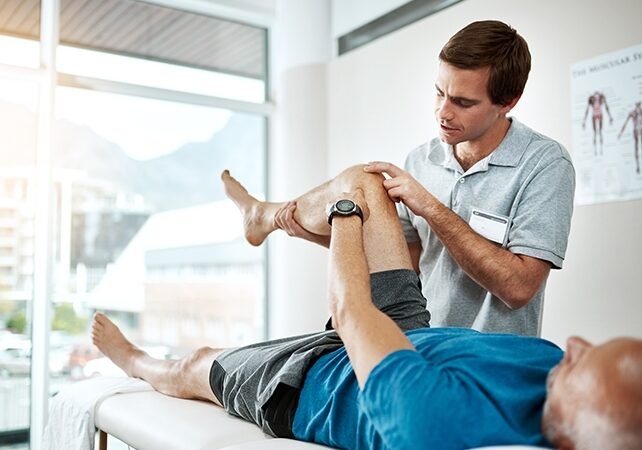
The short answer: a mild meniscus tear typically heals in 6–8 weeks with rest and physiotherapy, while more severe tears — especially those needing surgery — can take 3–6 months before you’re properly back on your feet. But “meniscus injury” covers a wide range, and where your tear sits on that spectrum changes everything about your recovery.
If you’ve just had that awful twisting moment on the football pitch — the pop, the swelling, the knee that suddenly doesn’t feel like yours — you’re probably Googling this through gritted teeth. I’ve been there. Here’s what you need to know, including how the NHS actually handles these injuries in the UK.
What Is the Meniscus, Anyway?
Each knee has two menisci — C-shaped pads of cartilage sitting between your thigh bone and shin bone. Think of them as shock absorbers. They cushion every step, stabilise the joint, and spread your body weight evenly across the knee.
Tears usually happen from a sudden twist with the foot planted (classic football, rugby, or skiing injury), but they can also develop gradually — cartilage gets more brittle with age, and plenty of people over 50 tear a meniscus doing nothing more dramatic than standing up from a crouch. If that sounds like you, you’re in crowded company.
Healing Time by Severity
Mild tear (Grade 1–2): 6–8 weeks
Small tears, particularly in the outer “red zone” of the meniscus where blood supply is decent, can heal on their own. Expect 6–8 weeks of proper rest, physiotherapy, and gradual return to activity. Many people are back to normal life — walking, stairs, desk work — within 2–3 weeks, with sport taking the full two months.
Moderate tear: 8–12 weeks
Larger tears or those in the poorly vascularised inner “white zone” heal slowly or not at all on their own. You’ll likely need a structured physio programme, and possibly a corticosteroid injection to calm things down. Most people need 2–3 months before the knee feels trustworthy again.
Severe tear / surgical repair: 3–6 months
Bucket-handle tears, complex tears, or a knee that locks or gives way usually mean arthroscopic surgery — either a repair (stitching the cartilage) or a partial meniscectomy (trimming the damaged bit). A trim has a quicker recovery (4–6 weeks to normal activity); a repair is slower (3–6 months) because the stitched cartilage needs protecting while it heals. Your surgeon will be specific about your case.
The NHS Treatment Pathway
Here’s how it typically works in the UK:
- GP appointment. Describe the mechanism of injury, the swelling, and any locking or giving way. Your GP will examine the knee and may arrange an X-ray (to rule out fracture, though X-rays don’t show cartilage).
- Physiotherapy referral. For most meniscus tears, physio is the first line. The NHS physio will assess you, give you a strengthening programme (quads and hamstrings are key), and monitor progress over several weeks.
- MRI scan. If you’re not improving, or if the knee locks, your GP or physio can refer you for an MRI — this is what actually shows the tear. Be aware: NHS MRI waits vary enormously by area, from a few weeks to several months.
- Orthopaedic referral. If physio isn’t cutting it or the tear is clearly surgical, you’ll be referred to an orthopaedic consultant to discuss arthroscopy.
Waiting lists are the frustrating reality — from GP to consultant to surgery can take many months in some areas. If you’re struggling, ask your GP about waiting times and whether a referral to a different trust might be quicker. You can read more about what to expect at the NHS page on torn meniscus injuries.
What You Can Do Right Now
The first 48–72 hours: calm it down
- Rest — not total bed rest, but avoid twisting, pivoting, and deep squats
- Ice — 15–20 minutes, several times a day, with a cloth barrier
- Compression — a simple elastic knee support helps with swelling
- Elevation — foot above heart level when you’re sitting
- Anti-inflammatories — ibuprofen can help if you can normally take it (check with a pharmacist if you’re on other medication)
Weeks 2–8: rebuild
This is where physio earns its money. The programme will focus on quad strengthening (especially the VMO — the teardrop muscle above the knee), hamstring flexibility, and balance work. Do the exercises. All of them. The people who recover fastest are almost always the ones who actually do their homework.
Good sleep matters more than you’d think here too — tissue repair happens largely overnight, and pain makes sleep harder, which slows healing. It’s a loop worth breaking: ice and elevate in the evening, and don’t be a hero about pain relief at bedtime.
Red Flags: See Someone Urgently If…
- The knee locks and you can’t straighten it
- It gives way repeatedly
- Swelling is severe or rapidly worsening
- You can’t bear weight at all
- There’s numbness, or the foot feels cold or pale
A locked knee in particular needs prompt attention — call your GP, 111, or head to A&E if you genuinely can’t straighten it.
Protecting Your Joints Long-Term
A meniscus tear is often a wake-up call about broader joint health. Once you’re through the acute phase, the habits that protect your knees for decades are unglamorous but effective: keep your weight in a healthy range (every extra kilo multiplies the load on your knees), keep the quads strong, warm up properly before sport, and don’t ignore small niggles until they become big ones. Organisations like Versus Arthritis have excellent free resources on looking after your joints at every age.
Meniscus Injury FAQs
Can a meniscus tear heal without surgery?
Yes — many do. Small tears in the outer, blood-rich zone often heal with rest and physio alone. Surgery is usually reserved for tears that cause locking, persistent giving way, or that haven’t improved after a few months of conservative treatment.
Will my knee ever feel normal again?
For most mild-to-moderate tears, yes. After proper rehab, the large majority of people return to their previous activity level. Even after a partial meniscectomy, most people do very well — though losing meniscus tissue slightly raises the long-term risk of arthritis in that knee, which is another reason to keep the surrounding muscles strong.
Should I wear a knee brace?
A simple elastic support can help with confidence and mild swelling in the early weeks. Hinged braces are sometimes used after surgical repair. But braces aren’t a substitute for muscle strength — the physio exercises matter far more in the long run.
How do I know if it’s a meniscus tear or something else?
You don’t, reliably — that’s what examinations and MRI scans are for. Ligament injuries (like ACL tears) can feel similar. The classic meniscus clues are: a twisting injury, a pop sensation, swelling within hours, pain along the joint line, and catching or locking. Your GP or physio will sort out which it is.
The Bottom Line
Most meniscus injuries heal in 6–8 weeks with sensible rest and proper physiotherapy; surgical cases need 3–6 months. The NHS pathway starts with your GP and physio — push for an MRI if you’re not improving, do your rehab exercises religiously, and respect the red flags. Knees are remarkably forgiving if you give them the right kind of help.
This article is for information only and isn’t a substitute for medical advice. If you’ve injured your knee, see your GP or a physiotherapist for proper assessment.
Related News

How Much Testosterone Should a Woman Take Per Week? Complete Guide (2026)
Important upfront: testosterone is a prescription-only medicine in the UK. This article explains what cliniciansRead More

How to Soothe Period Cramps: Step-by-Step Guide (2026)
It’s 7am, your alarm’s going off, and your lower abdomen feels like it’s being wrungRead More