How to Make Homemade Pizza Dough in Under an Hour
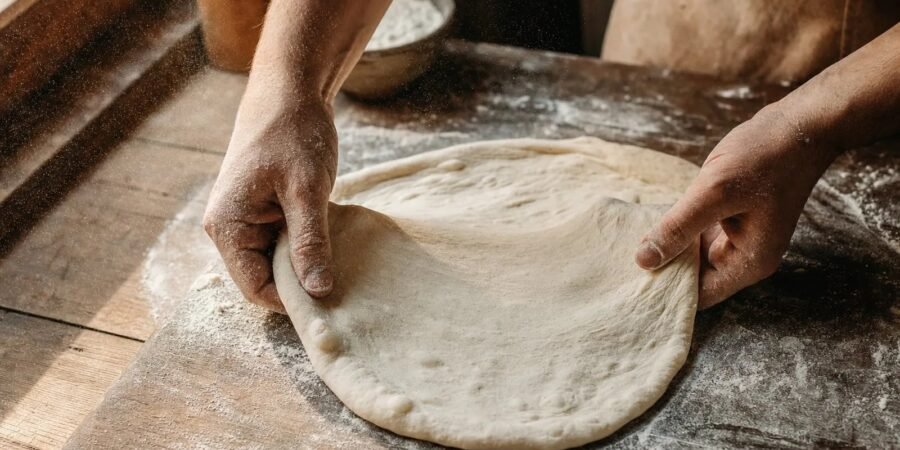
You absolutely can make homemade pizza dough in under an hour — the idea that pizza needs an overnight prove is true for Neapolitan perfection, but a quick dough made with a bit more yeast and warm water gets you a genuinely great pizza tonight. I’ve made this dozens of times on weeknights: 10 minutes to mix and knead, 30–40 minutes to rise while the oven heats, then straight onto toppings. It’s not Naples, but it’s about ten times better than a supermarket base.
How Can I Make Homemade Pizza Dough In Under An Hour: The Recipe
Makes 2 medium pizzas. Mix 300g strong bread flour (plain flour works in a pinch, but strong gives better chew), 7g fast-action dried yeast (one sachet), 1 tsp salt, 1 tsp sugar and 1 tbsp olive oil in a bowl. Add 200ml warm water (hand-hot, not boiling — too hot kills the yeast) and mix to a shaggy dough.
- Knead 8–10 minutes until smooth and elastic. It should spring back when poked. This develops the gluten that gives chew — don’t skimp.
- Prove 30–40 minutes somewhere warm: near (not on) a radiator, in an oven with just the light on, or in a bowl of warm water. Cover with a damp tea towel or cling film. It should roughly double.
- Shape by hand. Tip onto a floured surface, divide in two, and press/stretch from the centre outward, leaving a puffy rim. No rolling pin — it crushes the air bubbles. If it springs back, rest it 5 minutes and try again.
- Top lightly and bake HOT. Preheat the oven to its maximum (250–275°C) with a tray or pizza stone inside for at least 20 minutes. Thin layer of sauce, sparse toppings, 7–10 minutes until blistered and golden.
Topping rules for quick dough
Less is more — a watery pile of toppings makes a soggy middle, the classic homemade pizza failure. Sauce: tinned tomatoes blitzed with salt, garlic and oregano (no cooking needed). Cheese: torn mozzarella, patted dry. Then 2–3 toppings max. The pizza goes from oven to table in minutes, so have everything prepped before the dough goes in.
Quick Pizza Dough Tips
- Strong flour matters: the higher protein (12%+) builds the gluten network that makes pizza chewy rather than bready.
- Sugar feeds the yeast: that teaspoon of sugar isn’t for sweetness — it kickstarts fermentation for a faster rise.
- Don’t over-prove: with this much yeast, 40 minutes is the sweet spot. Much longer and the dough over-expands and collapses.
- Semolina or polenta on the peel: dust your tray with it for a crispy, pizzeria-style base that doesn’t stick.
Once you’ve nailed the dough, leftovers are a feature not a bug — cold pizza reheated properly is wonderful, and my pizza reheating guide keeps it crispy. For topping inspiration beyond pepperoni, BBC Good Food’s pizza collection has dozens of ideas.
Forty-five minutes from flour to first bite. That’s faster than delivery, cheaper, and — with a blistered, chewy crust you made yourself — considerably more satisfying. Weeknight pizza night is officially on.
Pizza Dough FAQs
Can I use plain flour instead of strong bread flour?
Yes, in a pinch — the pizza will be softer and less chewy, more like a flatbread. Strong flour’s higher protein (12%+) builds the gluten network that gives proper pizza its chew. For weeknight pizza, plain flour is acceptable; for the real thing, buy the strong stuff.
Why did my dough not rise?
Usual suspects: water too hot (killed the yeast — it should be hand-hot, not scalding), yeast past its date (test: it should foam in warm water with sugar within 10 minutes), or a cold kitchen (find a warmer spot — near the oven, in the airing cupboard). Old yeast is the most common cause.
Can I make the dough ahead?
Yes — after kneading, refrigerate for up to 48 hours (the cold slow-ferments it, developing better flavour — this is the secret of great pizzerias). Bring to room temperature for an hour before shaping. The 24-hour cold dough genuinely tastes better than the quick version.
My pizza base is soggy in the middle — help?
Three fixes: hotter oven (max it out), fewer/wetter toppings (drain mozzarella, go light on sauce), and bake on a preheated tray or stone. A soggy middle is almost always too much topping moisture plus insufficient bottom heat — not a dough problem.
From Dough to Pizza Night Tradition
Quick dough gets pizza on the table tonight; but once you’re hooked, the rabbit hole deepens beautifully. A 24–48 hour cold ferment transforms the flavour (complex, slightly tangy, with those leopard-spotted charred bubbles). A pizza steel — a slab of steel that holds ferocious heat — outperforms stones and costs £40–£60. And ’00’ flour, the Italian finely-milled standard, gives the most authentic Neapolitan texture.
But don’t let perfectionism steal the joy. The 45-minute dough in this guide, topped simply and baked as hot as your oven goes, beats delivery pizza on every measure that matters: taste, cost, and the satisfaction of having made it yourself. Friday pizza night, homemade, is one of the great domestic traditions — start it tonight.
The Bottom Line on Quick Pizza Dough
Forty-five minutes from flour to first bite — faster than delivery, cheaper, and better. The quick dough in this guide won’t win Naples competitions, but it’s not trying to: it’s trying to get excellent pizza on your table tonight, and it succeeds. Strong flour, warm water, a proper knead, a warm prove, and the hottest oven you’ve got.
Make Friday pizza night a tradition. The dough takes ten minutes of actual work; the topping is whatever’s in the fridge; the result beats anything from a box. And when you’re ready, the rabbit hole is there — cold ferments, pizza steels, ’00’ flour. But don’t let the pursuit of perfect steal the joy of tonight’s very good pizza. Start with the quick dough. The tradition starts now.