In Profile: Diana Ross — the Fortune Behind a Voice That Ruled Motown
In Profile: Diana Ross — the Fortune Behind a Voice That Ruled Motown The Life in Outline Diana Ross stands among the defining voices of popular…
In Profile: Diana Ross — the Fortune Behind a Voice That Ruled Motown
The Life in Outline
Diana Ross stands among the defining voices of popular music. She first sang lead for the Supremes, the Detroit group that Motown turned into the most successful vocal act of the 1960s, and she then built a solo career that still fills arenas more than sixty years after her first hit. Readers who ask about Diana Ross net worth meet one clear figure in this profile. Celebrity Net Worth puts her fortune at $350 million, and this profile attributes the figure to that source at every mention. A lower figure near $250 million circulates in general coverage, but no allowed source supports it, and the money section below records it only to set it aside.
She turned 82 in March 2026, and she still works. Her Diana in Motion tour carried dates through to 4 October 2026 and closed in Las Vegas. Very few performers headline major rooms six decades after a first hit record, and Ross does it with a catalogue that spans group classics, solo smashes and a signature stage presence that audiences recognise within seconds. This profile follows the verified record: the Detroit start, the career in its stages, the money and the family she keeps close.
Early Days
Diana Ross arrived on 26 March 1944 in Detroit, Michigan. Her full name at birth ran Diane Ernestine Earle Ross, and the city around her was building a new kind of popular music in studios, churches and street-corner harmony groups. She grew up in the Brewster-Douglass public projects in modest circumstances, and the family budget allowed few luxuries. Her parents, Fred Ross Sr. and Ernestine Ross, née Moten, raised their family in that neighbourhood and gave their daughter a strict, church-going upbringing.
Ernestine Ross died in 1984, just as her daughter’s solo career reached another peak. Fred Ross Sr. lived until 2007 and watched his daughter become one of the most recognisable performers on earth. The distance between the Detroit projects and a fortune in the hundreds of millions shapes the whole story, and Ross herself tells that story often on stage.
Music gave her the route out. She sang at school and in church, and as a teenager she joined friends in a vocal group that called itself the Primettes. The group sang at local events, learned close harmony the hard way and chased an audition at a young Detroit label called Motown. Label founder Berry Gordy first turned the group away because the singers were still at school, but the group kept returning to the Hitsville studio, sang backing parts for other artists and waited for a proper chance. Gordy finally signed the act in 1961 and gave it a new name: the Supremes. That signature changed everything, although success took another three years to arrive.
The Career Years
1964 — Where Did Our Love Go
The Supremes released single after single with little chart impact before 1964, and Motown staff nicknamed the group the no-hit Supremes. Then the songwriting team Holland–Dozier–Holland handed Ross a song that other acts had passed over. Where Did Our Love Go climbed to number one, and the group followed it with a run of chart-toppers that made Ross the voice of the label. Baby Love, Come See About Me, Stop! In the Name of Love and Back in My Arms Again all reached the top in quick succession. The group sang on the biggest variety stages in the country, dressed with famous care and crossed over to audiences that earlier Detroit acts had never reached.
1969 — Presenting the Jackson 5
By the late 1960s Ross carried star billing inside the group, and Motown used her name to launch its next great act. The label presented the Jackson 5 to the public under her endorsement in 1969, and histories of that launch still cite Michael Jackson’s net worth profile alongside hers because Motown tied the two stories together from the start. Ross sang lead on the group’s final number ones of the decade and prepared her solo move while the group still toured. She played her last show with the Supremes in January 1970 and handed the lead role to Jean Terrell.
1970 — The Solo Break
Ross launched her solo career in 1970 with a self-titled album and a striking first single, Reach Out and Touch (Somebody’s Hand). Ashford and Simpson then rebuilt Ain’t No Mountain High Enough for her, stretched it into a dramatic six-minute recording and sent it to number one. The solo sound differed from the group records: slower, grander and built entirely around her phrasing. She closed the year as a solo star in her own right and never needed the group name again.
1973 — Touch Me in the Morning
The early 1970s confirmed the solo standing. Touch Me in the Morning topped the charts in 1973 and showed Ross handling a tender ballad with complete control. She recorded steadily, toured constantly and kept her name in front of the public year after year. Record buyers followed her from the group era without hesitation, and radio programmers treated each new single as an event. The catalogue grew in both directions at once: dance floors took the uptempo records and late-night radio took the ballads.
1980 — Upside Down and I’m Coming Out
Ross changed labels’ worth of momentum without changing labels yet. She teamed with Nile Rodgers and Bernard Edwards of Chic for the 1980 album Diana, and the sessions produced Upside Down, a number one single, and I’m Coming Out, which became one of her signature songs. The record sounded lean and modern, and it introduced her to a new generation of listeners. She left Motown soon afterwards and signed with RCA in 1981 in a deal that newspapers reported at around $20 million. This profile counts that contract as an earnings event of its time, never as wealth itself.
1982 — Chain Reaction and the Later Records
The RCA years brought further hits, including Chain Reaction, which the Bee Gees writing team created for her and which reached number one in Britain in the mid-1980s. She kept recording into the following decades, released the well-received album I Love You in 2006 and returned in 2021 with Thank You, her first studio album of new material in over twenty years. Younger artists sample her records, cite her phrasing and invite her onto festival stages, and each new appearance sends listeners back to the catalogue.
2026 — Diana in Motion
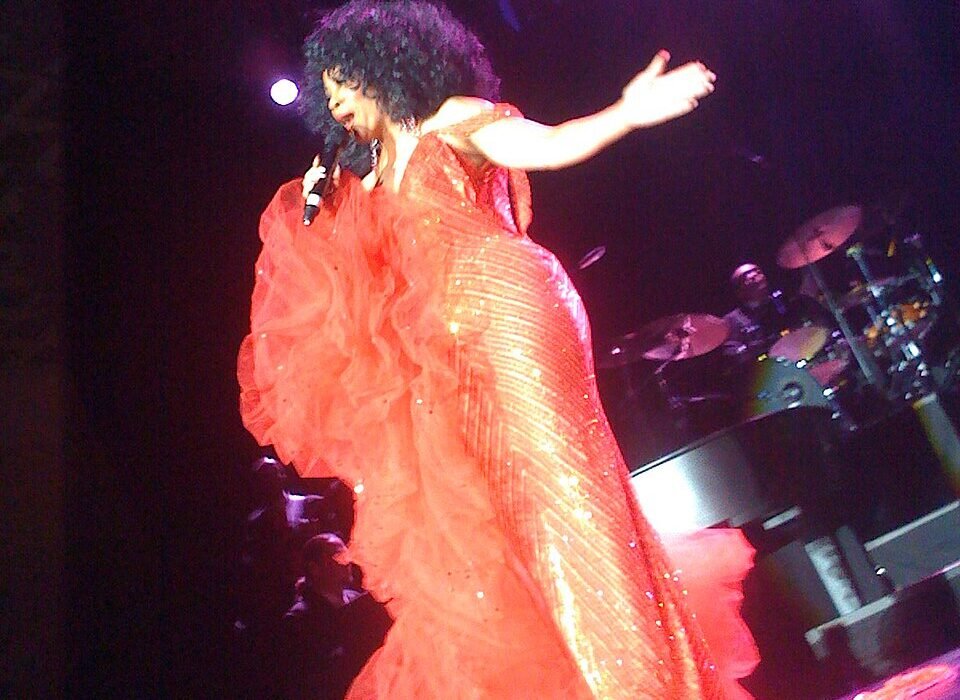
Ross still tours. The Diana in Motion dates ran through 2026 and ended in Las Vegas on 4 October, and reviewers noted the same trademarks that built the career: the gowns, the pacing, the direct address to the crowd and a voice that still carries the big ballads. She performs the Supremes hits alongside the solo records and treats the whole catalogue as one continuous story. At 82 she works a schedule that would test performers half her age, and she shows no sign of announcing a farewell.
The Money, Explained
Celebrity Net Worth puts Diana Ross net worth at $350 million. This profile uses that figure and names that source every time. The fortune rests on six decades of record sales, songwriting-era contracts that favoured the label early and favoured the star later, concert grosses across five decades of touring, and the long afterlife of a catalogue that radio, streaming services and advertisers still license constantly. The Supremes sold records in the tens of millions, the solo catalogue added tens of millions more, and Ross headlined premium rooms long after most of her contemporaries retired.
Readers will meet a second figure near $250 million in general coverage. No allowed source stands behind that number, and this profile does not use it. The gap between the two figures shows how celebrity wealth estimates work: counters weigh catalogue value, property and career earnings differently, and they rarely open their workings. The honest course prints the attributed figure, flags the unattributed one and moves on.
The 1981 RCA contract deserves a clear label. Newspapers reported the deal at around $20 million, a record sum at the time, but a contract pays earnings across its term; it does not equal net worth. Ross earned that money, spent and invested across forty further years of work, and the $350 million Celebrity Net Worth figure stands as the present-day estimate of what the whole career built. Her touring still adds to it: arena and theatre dates at premium prices, season after season, form the steadiest income stream of her later career.
Her Instagram account, @dianaross, supports that touring life directly. She posts dates, stage photographs and family moments to millions of followers, and promoters treat that reach as part of the draw. The account also documents the pace of the work: rehearsals, travel and performances across continents, all in her ninth decade.
Family and Private Life
Ross guards her private life carefully, and no current partner has public confirmation. The record therefore states her position plainly: no current partner publicly confirmed. She married twice earlier in her life and tells that history openly. She married music manager Robert Ellis Silberstein in January 1971, and the marriage ended in divorce in 1977. She later married Arne Næss Jr., a Norwegian shipping businessman and mountaineer, in 1986; that marriage ended in divorce in 2000, and Næss died in 2004.
Her children form the centre of her family life. She has five: Rhonda, born in 1971; Tracee, born in 1972; Chudney, born in 1975; Ross, born in 1987; and Evan, born in 1988. Tracee Ellis Ross built a major acting career of her own, Evan Ross works as an actor and singer, and Rhonda Ross Kendrick performs and writes. Ross counts seven grandchildren, and she brings family members on stage at milestone shows. Her parents anchor the earlier part of the story: Fred Ross Sr., who died in 2007, and Ernestine Ross, who died in 1984, raised the family in Detroit and lived the first chapters of the Motown story alongside their daughter.
Friends and colleagues describe a performer who keeps a small circle and a strict routine on the road. She credits her Detroit upbringing for her discipline, and she returns to the city for honours and charity work. The family story and the career story run together in her case: the projects produced the singer, and the singer never cut the connection.
The Profile File
| The Profile File | Details |
|---|---|
| Born | 26 March 1944, Detroit, Michigan |
| Age | 82 |
| Height | 5 ft 4 in (1.63 m) |
| Weight | No reliable published figure exists |
| Partner | No current partner publicly confirmed |
| Children | Five: Rhonda (b. 1971), Tracee (b. 1972), Chudney (b. 1975), Ross (b. 1987) and Evan (b. 1988); seven grandchildren |
| Parents | Fred Ross Sr. (d. 2007) and Ernestine Ross née Moten (d. 1984) |
| @dianaross | |
| Net Worth | $350 million (Celebrity Net Worth) |
The Last Word
Ross occupies a rare position: a performer whose first hits predate most of her audience and whose current shows still sell on the strength of her name alone. The Supremes changed what a Detroit vocal group could achieve, and her solo career then outlasted every trend that followed it. She built both chapters with the same tools — phrasing, discipline and an exact sense of how a song should land.
The money tells the same story in numbers. Celebrity Net Worth counts $350 million, and six decades of records and touring explain how such a figure accumulates. She still adds to the total the way she built it: one stage, one audience and one signature song at a time.