Riz Ahmed in Profile: Net Worth, Faith, Family and the Road from Wembley
Riz Ahmed in Profile: Net Worth, Faith, Family and the Road from Wembley The Life in Outline Riz Ahmed carries two careers at full stretch. As…
Riz Ahmed in Profile: Net Worth, Faith, Family and the Road from Wembley
The Life in Outline
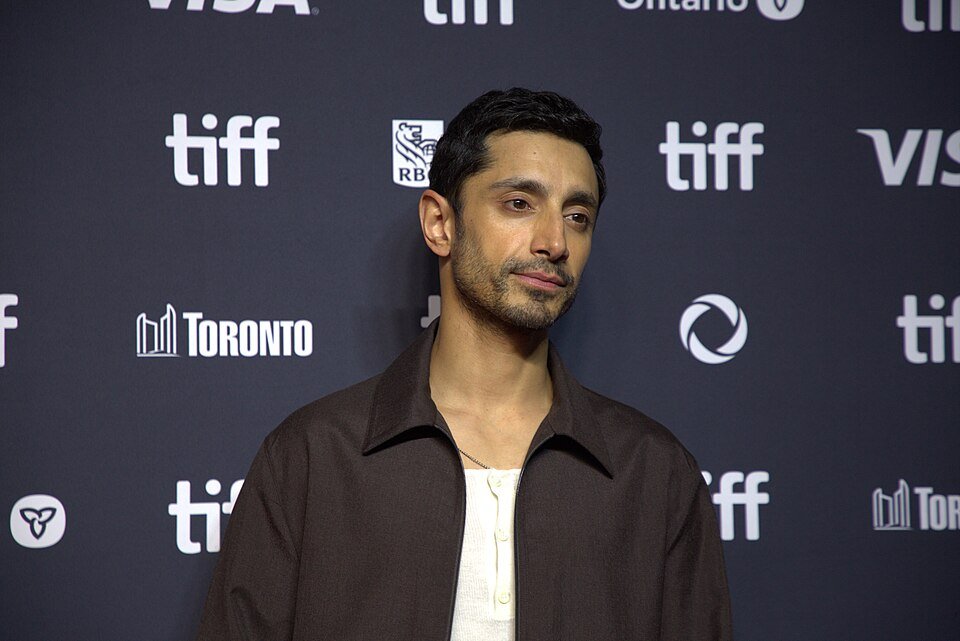
Riz Ahmed carries two careers at full stretch. As an actor he moved from British independent film to the centre of Hollywood: an Emmy Award for The Night Of, an Academy Award nomination for Sound of Metal, blockbuster turns in Rogue One and Venom, and an Oscar of his own as the writer-star of the short film The Long Goodbye. As Riz MC he raps, records and campaigns, and his work on representation — a speech to Parliament, the Riz Test for Muslim characters — reaches far beyond entertainment pages. Celebrity Net Worth puts his net worth at $10 million, a figure this profile adopts while noting the lower, unsourced numbers that circulate elsewhere. He stands, at 43, as the first Muslim and first Asian man to win a lead-acting Emmy and the first Muslim nominee for the Best Actor Oscar — firsts he treats as doors to hold open for others.
His recent work keeps the range wide. He headlined the thriller Relay in 2025, and in 2026 he created and stars in Bait, an Amazon comedy series that draws on the absurdities of an actor’s life. He lives between London and the United States with his wife, the novelist Fatima Farheen Mirza, and the couple welcomed their first child, a fact he revealed in interviews in 2025 while keeping every detail of the child’s life private.
Early Days
Rizwan Ahmed arrived on 1 December 1982 in Wembley, London. His parents had emigrated from Karachi, Pakistan, in the 1970s, and his father worked as a shipping broker. The family valued education fiercely, and Ahmed won a scholarship to Merchant Taylors’ School, an independent school in Northwood, where a working-class scholarship boy learned to move between worlds — an education in code-switching that his later work examines again and again. Reliable published sources do not print his parents’ names, and this profile states that plainly rather than repeating the names that low-quality websites circulate without a source.
He read Philosophy, Politics and Economics at Christ Church, Oxford, and acted in student productions while he absorbed the university’s confidence and its assumptions. After Oxford he trained at the Royal Central School of Speech and Drama in London. He also built a parallel life in music, battling as a freestyle MC and releasing satirical rap that radio stations occasionally banned and audiences adored. The two trainings — Oxford analysis and battle-rap timing — fused into the performer who could carry a courtroom drama, a Star Wars film and a parliamentary speech with equal conviction.
The Career Years
2006–2010: Guantánamo, Britz and Four Lions
Ahmed broke through in The Road to Guantánamo (2006), Michael Winterbottom’s account of the Tipton Three, and followed it with the Channel 4 drama Britz (2007) and the crime film Shifty (2008), which earned him award nominations. Chris Morris cast him as the hapless lead of Four Lions (2010), a comedy about would-be bombers that critics praised for its nerve and its heart. British film had found a leading man who could do tragedy and farce in the same scene.
2014–2016: Nightcrawler, The Night Of and Rogue One
Hollywood called in 2014: he played the desperate assistant Rick alongside Jake Gyllenhaal’s driven cameraman in the thriller Nightcrawler, and the performance announced him to American audiences. In 2016 he headlined HBO’s The Night Of as Nasir Khan, a student accused of murder, and won the Emmy for Outstanding Lead Actor — the first Muslim and first Asian man to win a lead-acting Emmy. The same year he joined two giant franchises, flying as Bodhi Rook in Rogue One: A Star Wars Story and appearing in Jason Bourne. He also released the album Englistan and delivered “The Long Goodbye” themes he would revisit for years.
Between the franchise years he kept choosing directors. He led Mira Nair’s The Reluctant Fundamentalist (2012) as a Pakistani financier whose American dream curdles after 9/11, starred in the London noir City of Tiny Lights (2016), and joined the western The Sisters Brothers (2018). His music ran in parallel: with Heems he formed Swet Shop Boys, whose album Cashmere (2016) turned border politics into wit, and he contributed “Immigrants (We Get the Job Done)” to The Hamilton Mixtape the same year. Critics increasingly treated the acting and the music as one project — a single argument about who gets heard — and his 2020 solo album The Long Goodbye made that argument explicit, pairing songs with the short film that later won him an Oscar.
2018–2022: Venom, Sound of Metal and an Oscar of His Own
He played the villain Carlton Drake in Venom (2018), then gave the performance of his career in Sound of Metal (2019) as Ruben, a drummer losing his hearing. He learned sign language and drumming for the role and earned an Academy Award nomination for Best Actor — the first Muslim nominee in the category. Mogul Mowgli (2020), which he co-wrote, explored illness and inheritance through a British-Pakistani rapper. In 2022 he won an Academy Award outright: The Long Goodbye, the short film he co-wrote and stars in, took Best Live Action Short Film. He had now won the two most famous prizes in his industry on both sides of the camera.
2023–2026: Relay, Bait and the Producer’s Chair
Ahmed increasingly builds his own vehicles through his production company, Left Handed Films. He voiced and acted across animation and drama, headlined the conspiracy thriller Relay in 2025, and in 2026 launched Bait, his Amazon comedy series about an actor whose life unravels between auditions and family expectations. His advocacy keeps pace with the acting: his 2017 speech to Parliament on diversity, his work on the Riz Test, and his public writing on Muslim representation shape policy conversations that most actors never enter.
His company, Left Handed Films, formalises the producer’s role: it develops projects he cares about, including Mogul Mowgli and Bait, and it gives him ownership rather than salary alone on his most personal work. He also co-founded a fellowship scheme that funds Muslim filmmakers, extending his advocacy into direct patronage. The structure mirrors his speeches: he argues that representation changes when underrepresented artists hold budgets, not just roles, and his own company practises the argument at independent-film scale.
Education threads through the whole record, and this profile gathers it in one place: a scholarship to Merchant Taylors’ School, a PPE degree from Christ Church, Oxford, and classical training at the Royal Central School of Speech and Drama. He has said that Oxford taught him how power speaks and Central taught him how people do, and his career keeps staging arguments between the two. Universities now invite him to lecture on representation, and his production work funds the pipeline he describes — a Wembley scholarship boy returning the ladder, rung by rung.
The Money, Explained
Celebrity Net Worth puts Riz Ahmed’s net worth at $10 million, and this profile adopts that figure from his direct page on the site. Readers will find lower numbers — $3 million and $4 million — on biography websites that state no basis for them, and this profile records those figures without adopting them, because no reputable publication stands behind them. Forbes publishes no total for him. The $10 million rests on two decades of steadily rising work: British film fees in the 2000s, an Emmy-winning HBO lead role, franchise salaries from Rogue One, Jason Bourne and Venom, a producer’s income through Left Handed Films, and music earnings from albums and touring as Riz MC. His fortune sits well below the franchise fortunes elsewhere in this series, and the record explains why: he alternates studio films with small, personal projects that pay modestly and mean more to him. Nothing in the published record suggests business losses or financial difficulty.
Family and Private Life
Ahmed married the American novelist Fatima Farheen Mirza in 2020 and disclosed the marriage in January 2021. The couple met in 2018 in a Brooklyn café, where both had claimed the same table to write; Mirza’s debut novel, A Place for Us (2018), had won wide acclaim the same year. They held a small ceremony during the pandemic period and guard their privacy closely. In interviews during 2025 Ahmed revealed that Mirza had given birth to their first child. The couple publish no name, date or details, and this profile prints none — the fact of the child corrects older profiles that state he has no children, and the privacy around everything else stands.
His parents remain the foundation of his story: they left Karachi in the 1970s, his father built a career as a shipping broker, and their emphasis on education carried their son from Wembley to Oxford. Their names do not appear in the reliable published record, and this profile respects that absence. Faith runs through his public life on his own terms. Ahmed describes himself as a practising Muslim, and he has spoken in interviews about what his faith asks of him; in March 2018 he posted photographs from Sufi shrines in Pakistan in his own words. His advocacy — the 2017 Parliament speech, the Riz Test — grows from the same root: he argues that screens should show Muslim lives in full rather than in stereotype. He posts as @rizahmed on Instagram, mixing film work, music and the occasional shrine photograph for millions of followers.
The Profile File
| The Profile File | Details |
|---|---|
| Born | 1 December 1982, Wembley, London, England |
| Age | 43 |
| Height | 5 ft 8 in (1.73 m) |
| Weight | No reliable published figure exists |
| Wife | Fatima Farheen Mirza (married 2020) |
| Children | One child (revealed 2025; no details public) |
| Parents | Names not part of the reliable published record; emigrated from Karachi in the 1970s; father a shipping broker |
| Religion | Muslim (practising, per his own public statements) |
| @rizahmed | |
| Net Worth | $10 million (Celebrity Net Worth) |
The Last Word
Ahmed’s career demonstrates how a performer can widen the doorway behind him. The Emmy and Oscar firsts matter, and he insists they matter most as precedent: casting directors, commissioners and young actors in Wembley all recalibrate what a leading man looks like. The $10 million that Celebrity Net Worth records understates his influence and accurately states his choices — he spends his bankability on projects with something to say.
At 43 he holds an Emmy, an Oscar, a production company, a marriage he keeps private and a new child he keeps entirely out of print. Bait puts his comedy at the centre of a series he created himself. The road from Wembley runs through Oxford and Guantánamo Bay’s dramatised cells to the Oscar stage — and he narrates every mile of it in his own voice.