In Profile: Bill Murray — The Deadpan Fortune Behind Ghostbusters, Groundhog Day and Fifty Years of Showing Up
In Profile: Bill Murray — The Deadpan Fortune Behind Ghostbusters, Groundhog Day and Fifty Years of Showing Up The Life in Outline Bill Murray occupies a…
In Profile: Bill Murray — The Deadpan Fortune Behind Ghostbusters, Groundhog Day and Fifty Years of Showing Up
The Life in Outline
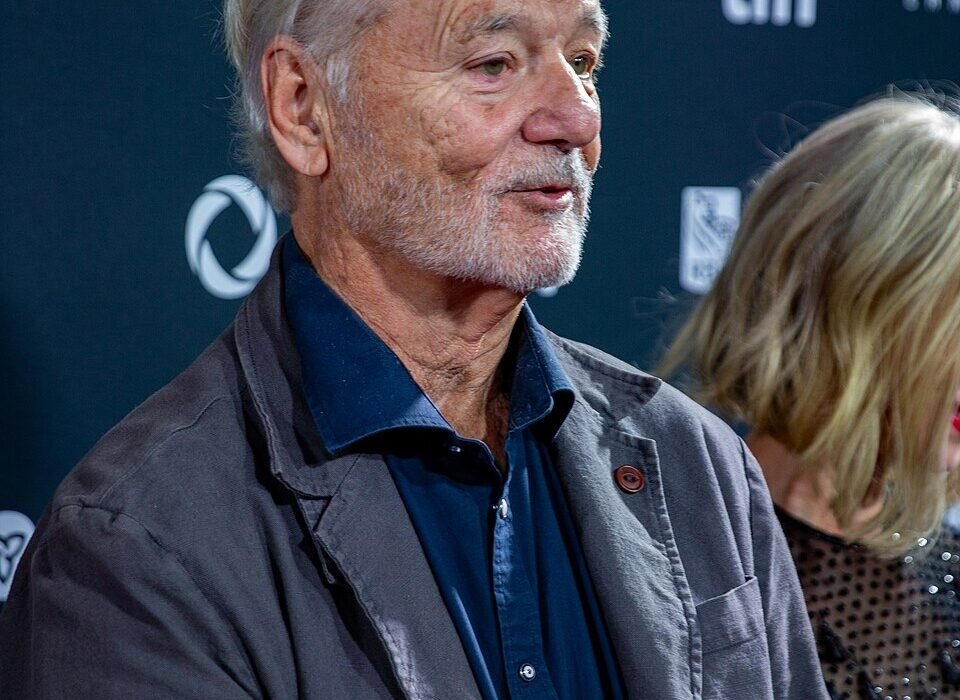
Bill Murray occupies a category of fame entirely his own. He broke through on Saturday Night Live in the late 1970s, headlined a run of comedies that defined a decade — Caddyshack, Ghostbusters, Groundhog Day — and then reinvented himself in middle age as the melancholy muse of directors such as Wes Anderson and Sofia Coppola. Along the way he acquired a second public life as a folk figure: the star who answers a stranger’s phone, tends bar at his son’s Brooklyn establishment, and turns up uninvited at parties and wedding photographs. Celebrity Net Worth puts his fortune at $180 million, a figure that has held steady across recent updates and that the round-ups citing it match, and this profile explains the deals underneath it. Murray turned 76 in September 2026, he stands 6 ft 2 in tall, and he has six sons from his two marriages, both of which ended in divorce. He remains busy: Ghostbusters: Frozen Empire and The Friend reached audiences in 2024, and in 2025 he toured as frontman of the blues-rock band the Blood Brothers, with further coverage of the tour appearing in November 2026.
Early Days
Murray entered the world on 21 September 1950 in Evanston, Illinois, and he grew up in nearby Wilmette, the fifth of nine children in a large, lively Catholic family. His father, Edward Joseph Murray II, worked as a lumber salesman, and his mother, Lucille, née Collins, worked in a hospital mailroom. Edward died in 1967, when Bill was seventeen, and the loss pressed the older children towards work: Murray caddied at local golf courses, an apprenticeship that later fed directly into Caddyshack, and he sang in a school rock band and acted in school productions. He enrolled at Regis University in Denver to study pre-medicine and left without a degree, drifting back to Chicago, where his older brother Brian had joined The Second City, the improvisational comedy institution. Murray followed him into the troupe, studied under Del Close, and found the loose, reactive style that became his signature. A move to New York brought radio work on The National Lampoon Radio Hour alongside John Belushi and Gilda Radner, and television followed quickly.
The Career Years
1977 — Saturday Night Live and the Breakthrough
Murray joined Saturday Night Live in 1977, stepping into the space Chevy Chase had vacated, and he won an Emmy Award for his writing on the show. His lounge-singer character and his pleading catchphrase made him a star, and film offers arrived at once. Meatballs, in 1979, gave him his first lead and a summer-camp hit that proved audiences would follow him out of the studio.
1980–1984 — Caddyshack, Stripes and Ghostbusters
He played the unhinged groundskeeper in Caddyshack in 1980 and the army washout in Stripes in 1981, and both films became permanent fixtures of comedy reruns. Ghostbusters, in 1984, changed his financial life: he and his co-stars negotiated a share of the profits rather than a simple fee, and the film’s enormous success turned that share into one of the great paydays in comedy history. He returned for the 1989 sequel on a similar footing, and Celebrity Net Worth treats the two productions as the foundation of his fortune — earnings, readers should note, that he then had decades to invest and compound.
1993 — Groundhog Day and a Performance for the Ages
Murray played Phil Connors, the weatherman trapped in a repeating day, in Groundhog Day in 1993, and critics now rank the performance among the finest comic turns ever filmed. The film’s reputation has grown every year since, and it anchors the first half of his career the way the next decade’s work anchors the second. His co-star in a later, quieter masterpiece built a very different career from the same starting point of audience affection; readers can compare paths in Scarlett Johansson’s net worth profile, which follows his Lost in Translation partner.
1988–1996 — Scrooged, Bob and the Comedy Institution
Murray headlined Scrooged in 1988, a dark retelling of the Dickens Christmas story, and What About Bob? in 1991, and he joined the ensemble of Kingpin in 1996 and the animated-live-action hit Space Jam the same year, playing himself as Michael Jordan’s golfing friend. By the mid-1990s he had settled into a position few performers reach: audiences trusted his name on a poster, studios trusted his improvisation inside a scene, and he answered that trust by working constantly while guarding his independence fiercely. He famously employs no agent and no manager, and hopeful directors leave messages on a freephone line he checks when he pleases — a system that has cost him roles and saved him, by his own cheerful account, a great deal of nonsense.
1998–2005 — The Anderson and Coppola Years
Wes Anderson cast Murray in Rushmore in 1998 and began a collaboration that ran through The Royal Tenenbaums, The Life Aquatic with Steve Zissou and The Grand Budapest Hotel, among others. Sofia Coppola then directed him in Lost in Translation in 2003, and the performance won him a BAFTA Award and a Golden Globe and brought him an Academy Award nomination. Jim Jarmusch’s Broken Flowers followed in 2005. Murray had become the actor serious directors called when a part needed charm worn thin by regret.
2014 — St. Vincent and a Globe Nomination
Murray took the title role in St. Vincent in 2014, playing a cantankerous, gambling, hard-drinking neighbour who becomes an unlikely mentor, and the performance brought him a Golden Globe nomination and reminded studios that his dramatic register still drew audiences. He also became, in these years, a fixture of Chicago sporting life: a lifelong Chicago Cubs supporter, he sang during the seventh-inning stretch at Wrigley Field and celebrated the club’s 2016 World Series victory, its first in 108 years, with the tearful enthusiasm of a fan rather than a celebrity guest.
2014–2026 — Franchises, Festivals and a Second Act on Stage
Murray continued to mix the Anderson ensemble pieces — The Grand Budapest Hotel in 2014 among them — with franchise returns, and he rejoined the Ghostbusters family for Frozen Empire in 2024. The Friend, also 2024, gave him a leading dramatic role opposite Naomi Watts. In 2025 he took the Blood Brothers, a blues-rock band, out on tour as its frontman, and coverage of the shows in November 2026 described venues full of fans who had come as much for the man as for the music.
The Money, Explained
Celebrity Net Worth prints $180 million for Murray, and the figure has held steady across the site’s recent updates; Parade and other round-ups citing the same source agree, and no reputable tracker publishes a rival total, so this profile shows no disagreement where none exists. Forbes publishes no figure for him. The architecture of the fortune is clear enough. The Ghostbusters profit share converted one hit into a generational payday, and its sequel repeated the trick; his peak-era salaries added steadily through the 1980s and 1990s; and the Anderson and Coppola years kept him in constant, if more modestly paid, demand. His working method protects the fortune in a quieter way. Murray reads every script himself, negotiates his own deals and keeps his overheads at a level that would shame a jobbing actor: no entourage, no publicity machine, no layers of management drawing percentages from every cheque. The industry’s standard machinery takes a significant slice of a star’s gross across a career, and Murray simply never installed the machinery. He also holds business interests that reports describe without reliable valuations: he has co-owned minor-league baseball teams for decades, and his family runs a golf-themed restaurant business in Florida. This profile records those interests plainly and invents no numbers for them. No reliable source publishes an inventory of his property, and he famously keeps no agent, no manager and no publicist, taking work through a widely reported freephone number instead — an arrangement that saves the commissions most stars surrender, and that suits a fortune nobody has ever needed to explain.
Family and Private Life
Murray married Margaret Kelly in January 1981, first in Las Vegas and then in a second ceremony in Chicago, and the couple had two sons: Homer, born in 1982, and Luke, born in 1985. The marriage ended in divorce in 1996. He married Jennifer Butler, a costume designer he had met during the Groundhog Day years, in July 1997, and they had four sons: Caleb, born in 1993; Jackson, born in 1995; Cooper, born in 1997; and Lincoln, born in 2001. Butler filed for divorce in May 2008, the courts finalised it on 13 June 2008, and Butler died in January 2021. Reports in 2023 linked Murray with the singer Kelis; neither party confirmed a relationship, and this profile records the association as unconfirmed and nothing more. No report of a remarriage has appeared since 2008. His family of origin remains central to his story: his eight siblings include the actor Brian Doyle-Murray, who has appeared alongside him for decades, the actor Joel Murray, the businessman John Murray, his sister Nancy, an Adrian Dominican nun, and his brother Ed, who died in 2020 and whose golf scholarship work the family supports. His parents, Edward and Lucille, both died long ago — his father in 1967, during Bill’s teens — and Murray credits the crowded Wilmette upbringing for both his comic timing and his ease in any room.
The Profile File
| The Profile File | Details |
|---|---|
| Born | 21 September 1950, Evanston, Illinois |
| Age | 76 |
| Height | 6 ft 2 in (1.88 m); listings range from 6 ft 1 in to 6 ft 2 in |
| Weight | No reliable published figure exists |
| Former Wives | Margaret Kelly (married 1981, divorced 1996); Jennifer Butler (married 1997, divorced 2008; died 2021) |
| Children | Six sons — Homer (born 1982) and Luke (born 1985) with Margaret Kelly; Caleb (born 1993), Jackson (born 1995), Cooper (born 1997) and Lincoln (born 2001) with Jennifer Butler |
| Parents | Edward Joseph Murray II (died 1967) and Lucille Murray, née Collins |
| Family | Parents Edward and Lucille; six sons; eight siblings |
| Siblings | Eight, including Brian Doyle-Murray, Joel Murray, John Murray, Nancy and Ed (died 2020); Murray is the fifth of nine children |
| Movies and TV Shows | Saturday Night Live, Caddyshack, Ghostbusters, Groundhog Day, Rushmore, Lost in Translation, Broken Flowers, The Grand Budapest Hotel, Ghostbusters: Frozen Empire, The Friend |
| No official personal account; fan and tribute accounts are not his | |
| Net Worth | $180 million — Celebrity Net Worth |
The Last Word
Murray’s $180 million rests on one inspired negotiation and fifty years of never quite leaving. The Ghostbusters profit share gave him independence early, and independence let him choose work the way he has chosen everything else — by instinct, by friendship and by whether the day promised to amuse him.
At 76 he tours with a band, fronts festival dramas and still answers the freephone when a script interests him. The fortune looks after itself; the legend, which he maintains with the discipline of a man who pretends to none, does the rest.