How Long to Smoke a Ham? Complete Answer
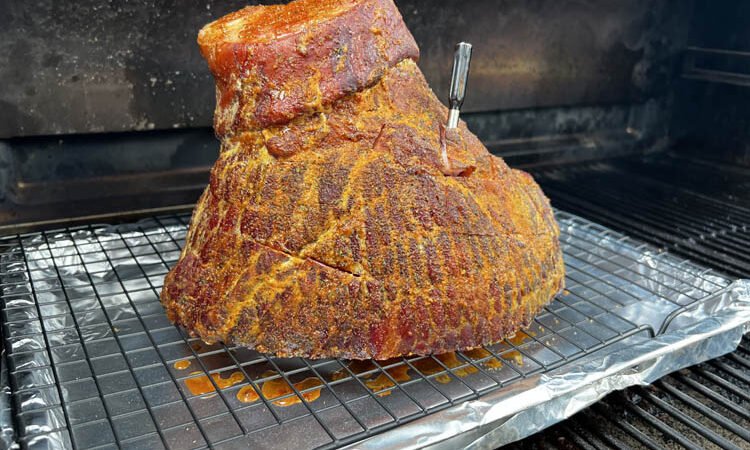
There’s something deeply satisfying about a properly smoked ham — that burnished, mahogany exterior, the gentle kiss of wood smoke, meat so tender it barely needs chewing. Whether you’re gearing up for Christmas dinner or just fancy a weekend project, smoking a ham is one of the most rewarding things you can do with a smoker or kettle barbecue. The question everyone asks first: how long does it actually take?
The short answer: roughly 30–40 minutes per pound (about 1–1.5 hours per kilo) at 110–120°C (225–250°F), until the internal temperature hits 60–63°C (140–145°F). So a 4 kg joint takes around 5–6 hours. But — and it’s a significant but — time is only a rough guide. Temperature is what actually matters. Let’s get into it properly.
First: What Kind of Ham Are You Smoking?
This is where most confusion starts, because “ham” covers several very different things:
- Fresh (green) ham: raw, uncured pork leg. Needs full cooking to 63°C+ internal. This is the full low-and-slow project.
- Cured but uncooked ham: brined or salt-cured but still raw. Also needs full cooking.
- Fully cooked/smoked ham: the kind you buy ready-to-eat. Smoking this is really re-smoking — you’re just adding flavour and warming it through, which takes far less time (2–3 hours).
Most UK supermarket “smoked hams” are already cooked. If yours says “ready to eat,” you’re in the quick camp. If you bought a fresh leg joint from the butcher, settle in for the full session.
Smoking Times by Ham Type
Fresh or cured-but-raw ham
Smoke at 110–120°C (225–250°F) for approximately 35–40 minutes per pound. A 3–4 kg joint: 5–7 hours. Target internal temperature: 63°C (145°F) minimum, then rest 15–20 minutes (carryover cooking adds a few degrees).
Pre-cooked ham (double-smoking for flavour)
Smoke at 120–135°C (250–275°F) for 2–3 hours, until the internal temperature reaches 60°C (140°F). You’re warming and flavouring, not cooking — don’t overdo it or it’ll dry out.
The Only Number That Really Matters: Internal Temperature
Ask any competition pitmaster and they’ll tell you the same thing: cook to temperature, not to time. Every joint is different — bone-in vs boneless, fat cap thickness, your smoker’s quirks, the weather. A £15 digital probe thermometer is the single best investment you can make for smoking meat.
- Fresh ham: pull at 62–63°C (143–145°F) internal, rest tented in foil 15–20 minutes.
- Pre-cooked ham: warm to 60°C (140°F) internal.
- Insert the probe into the thickest part, avoiding bone (bone conducts heat and gives false high readings).
The Food Standards Agency advises pork should reach safe internal temperatures — when in doubt, a degree or two over is far better than under.
Step-by-Step: Smoking a Fresh Ham
1. Prep (night before or morning of)
Pat the joint dry. Score the fat cap in a diamond pattern — this helps the smoke penetrate and the fat render beautifully. Apply your rub: a classic mix is brown sugar, smoked paprika, garlic powder, black pepper and a touch of mustard powder. Some people inject with apple juice or a brine for extra moisture; for your first ham, a good rub is plenty.
2. Set up the smoker
Get your smoker or kettle barbecue stable at 110–120°C with indirect heat. Water pan in place if your setup uses one — it keeps the atmosphere humid and the meat moist.
3. Choose your wood
Ham loves fruit woods: apple and cherry are the classics, giving a sweet, mild smoke. Hickory works too but go easy — it’s stronger and can overpower. Oak is a solid middle ground. Avoid softwoods (pine, fir) entirely; the resin makes food taste like a bonfire in the worst way.
4. Smoke it
Joint on the grate, fat side up. Add wood chunks (not chips — chunks smoulder longer) for the first 3–4 hours; after that the meat won’t absorb much more smoke flavour. Keep the lid closed — “if you’re lookin’, you ain’t cookin’.” Spritz with apple juice every hour if you like, though it’s optional.
5. The stall (don’t panic)
Around 65–70°C internal, the temperature may stall for an hour or more as moisture evaporates. This is normal. Don’t crank the heat — just wait it out, or wrap in foil/butcher paper (“the Texas crutch”) to push through faster.
6. Glaze (optional, recommended)
In the last 30–45 minutes, brush on a glaze: honey and Dijon, brown sugar and bourbon, marmalade thinned with a splash of juice. The sugars caramelise into that gorgeous sticky crust. Watch it doesn’t burn — sugary glazes go from perfect to bitter quickly.
7. Rest
Tent loosely in foil for 15–20 minutes before carving. This redistributes the juices. Cutting too early = dry ham and a puddle on the board.
Common Mistakes to Avoid
- Too much smoke. Thin blue smoke = good. Thick white billowing smoke = bitter, acrid meat. Less wood than you think.
- Opening the lid constantly. Every peek costs you 10–15 minutes of cooking time and heat stability.
- No thermometer. Guessing doneness on a 4 kg joint is how you serve either raw pork or shoe leather.
- Skipping the rest. The hardest step. Walk away from the ham.
- Smoking a pre-cooked ham like a fresh one. Hours of extra smoke on an already-cooked ham just dries it out.
What to Serve With Smoked Ham
Smoked ham is the centrepiece that makes everything else easy. Classic pairings: buttery mash or crispy roast potatoes, braised red cabbage, honey-glazed carrots, a sharp mustard or apple sauce to cut the richness. Leftover ham? Pea and ham soup, ham and cheese toasties, or diced into a hearty winter stew — arguably even better than the main event.
Smoked Ham FAQs
Can I smoke a ham on a regular kettle barbecue?
Absolutely — set it up for indirect heat (coals banked to one side, meat on the other), add a water pan, and use wood chunks on the coals. A kettle barbecue holds 110–120°C perfectly well with the vents managed.
Do I need to brine a fresh ham before smoking?
Not essential, but a simple overnight brine (water, salt, sugar, aromatics) adds moisture insurance and seasons the meat deeply. If your ham is already cured, skip the brine — it’s salty enough.
How long does smoked ham keep?
Properly refrigerated, 4–5 days. It also freezes brilliantly for up to 3 months — slice before freezing for easy portions.
What’s the best wood for smoking ham?
Apple or cherry for a sweet, mild smoke that complements pork. Hickory for a stronger, bacon-like punch (use sparingly). Most pitmasters blend — e.g. apple with a single chunk of hickory.
Why is my smoked ham dry?
Usually one of three things: cooked past temperature (thermometer!), not rested, or a pre-cooked ham smoked far too long. Low and slow plus a water pan plus proper resting = juicy ham.
The Bottom Line
Budget roughly 35–40 minutes per pound at 110–120°C for a fresh ham, less for a pre-cooked one — but cook to internal temperature (63°C fresh, 60°C pre-cooked), not the clock. Good wood, a steady fire, a probe thermometer and patience will give you a ham that ruins supermarket ham for you forever. In the best possible way.
Related News
How Long to Smoke a Ham? Complete Answer
There’s something deeply satisfying about a properly smoked ham — that burnished, mahogany exterior, theRead More
How to Cook Turkey Bacon: Step-by-Step Guide (2026)
Let’s address the elephant in the room straight away: turkey bacon is not bacon. IfRead More