Black Holes in Simple Terms: A UK Reader’s Guide
Can someone explain black holes in simple terms for UK readers? Yes — what they are, how they form, the event horizon and why they matter. Read the full guide.
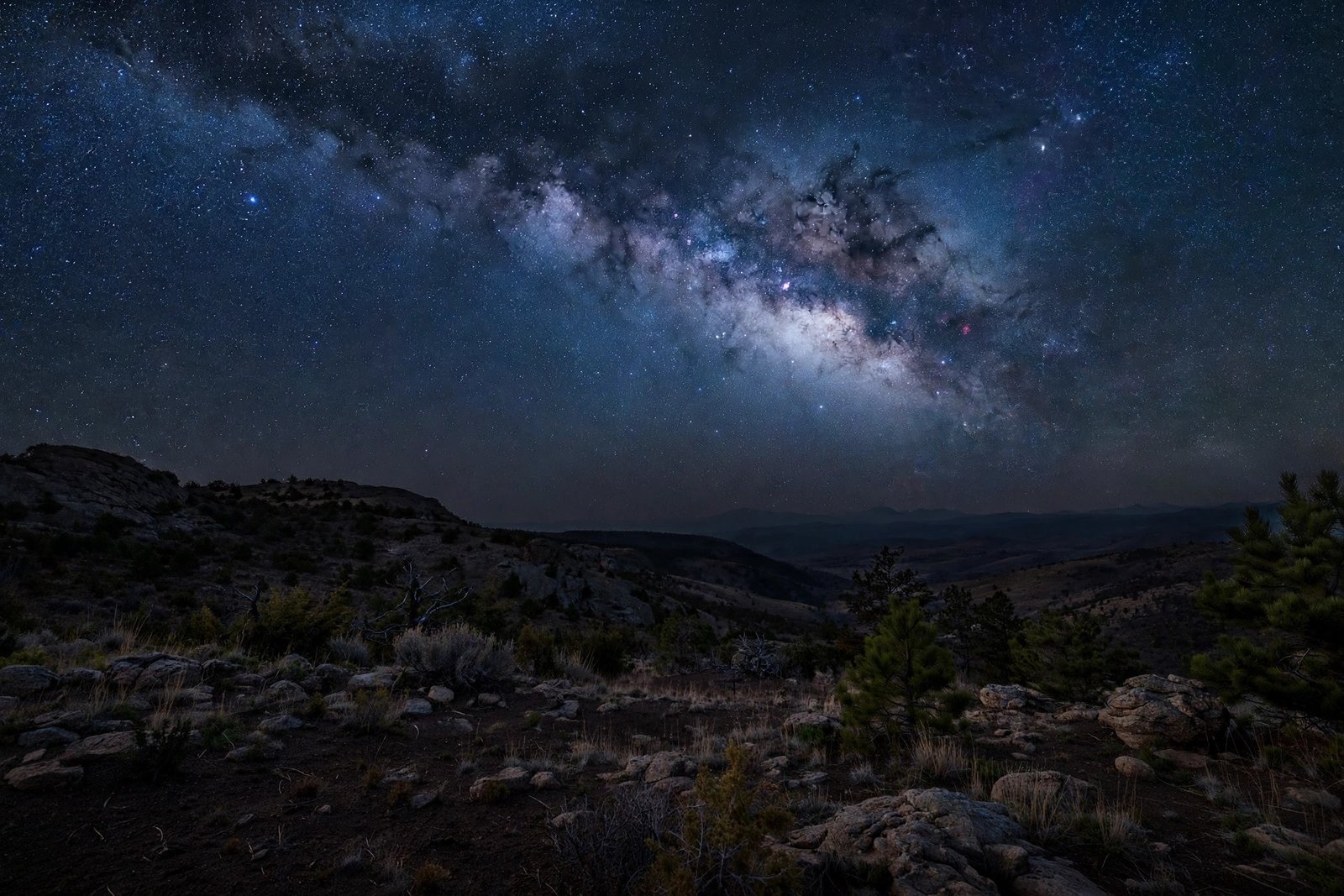
Somewhere out there, a region of space exists where gravity has won so completely that nothing — not matter, not light, not information itself — can ever escape. Black holes are the most extreme objects in the universe, and also among the most misunderstood: pop culture paints them as cosmic vacuum cleaners, while the reality is stranger, more elegant and more important to the story of everything. Can someone explain black holes in simple terms for UK readers? Yes — and without a physics degree. This guide builds the picture step by step: what they are, how they form, what happens at the edge, and why British scientists are at the heart of understanding them.
Start with gravity: the universe’s undefeated champion
Everything with mass pulls on everything else — that is gravity. Normally, other forces push back: the Earth’s solid ground pushes back against your feet, the pressure of hot gas pushes back against a star’s gravity. A black hole forms when gravity wins completely — when so much mass is packed into so small a space that no force in nature can resist the collapse, and the object crushes down past the point of no return. The result is a region where the escape velocity — the speed needed to leave — exceeds the speed of light. Since nothing can travel faster than light, nothing can leave. That is the entire concept: a black hole is a place where gravity beat everything, forever.
How much mass, how small a space? If you compressed the Earth to the size of a marble (about 9mm across), it would become a black hole. The Sun would need squeezing to about 3km. These are absurd compressions — which is why black holes only form in nature’s most violent events.
How black holes are born (three recipes)
1. Dying giant stars (stellar black holes). Stars more than ~20 times the Sun’s mass end their lives in supernova explosions; the collapsed core left behind can crush past the point of no return. These black holes are typically 5–100 times the Sun’s mass, and the Milky Way likely contains millions of them, drifting darkly between the stars.
2. Merging black holes. When two black holes spiral together and merge, the result is bigger — and the collision shakes spacetime itself, releasing gravitational waves. The LIGO and Virgo detectors have now recorded dozens of these mergers, each a confirmation that Einstein’s century-old predictions were right.
3. The monsters at galactic centres (supermassive black holes). Nearly every large galaxy, including ours, hosts a black hole millions or billions of times the Sun’s mass at its heart. Sagittarius A* — ours — weighs about 4 million suns. How these grew so enormous is one of astronomy’s great open questions; the leading ideas involve runaway mergers and sustained feeding on gas in the young universe. In 2019, the Event Horizon Telescope — a planet-sized virtual telescope — imaged a black hole’s shadow for the first time: the now-famous glowing orange ring around the M87 galaxy’s central giant. In 2022, it imaged Sagittarius A* itself.
British science is woven through this story: Stephen Hawking’s work on black hole radiation (Hawking radiation — the theoretical process by which black holes slowly evaporate) was done at Cambridge, and UK researchers remain central to gravitational-wave astronomy and Event Horizon Telescope science. The Institute of Physics and Royal Astronomical Society both publish accessible explainers for readers who want to go deeper.
What would happen if you fell in? (The honest answer)
For a stellar-mass black hole: you would be “spaghettified” — stretched by tidal forces (gravity pulling your feet harder than your head) into a stream of atoms before crossing the edge. For a supermassive black hole, tidal forces at the edge are gentler — you could theoretically cross the event horizon intact — but inside, all paths lead to the singularity, the point where our physics breaks down. Nobody knows what the singularity actually is; it is where general relativity and quantum mechanics contradict each other, and resolving that contradiction is arguably the biggest unsolved problem in physics. What is certain: no information returns. The universe keeps its secrets.
The edge of no return: the event horizon
The event horizon is not a physical surface — it is a mathematical boundary, the point past which escape becomes impossible. Cross it, and the future itself points inward: every direction you could travel leads closer to the centre, the way every direction at the North Pole is south. From outside, we see infalling matter frozen and reddened at the horizon (time dilation); from the infaller’s perspective, they sail through with nothing marking the crossing. Around the horizon swirls the accretion disc — superheated matter spiralling inward, glowing fiercely in X-rays, often launching powerful jets. These discs are among the brightest objects in the universe (quasars), outshining entire galaxies — powered by objects that emit no light themselves. The paradox is the poetry: the darkest things in existence create the brightest lights.
Why black holes matter (beyond the cool factor)
Black holes are not cosmic curiosities — they are load-bearing parts of the universe. Supermassive black holes appear to regulate galaxy formation: their energy output shapes how galaxies grow, in a relationship so tight it must be causal. Gravitational-wave detections have opened an entirely new sense — we now hear the universe’s most violent events, not just see them. And the information paradox (does information falling into a black hole survive?) sits at the fault line between our two great theories of physics — solving it may require quantum gravity, the theory of everything. When you look up at the night sky from a dark-sky spot — and the UK has wonderful ones; our guide to visiting the Isle of Skye covers one of Britain’s finest stargazing locations — remember that invisible black holes are shaping everything you see. Stargazing itself, incidentally, is one of the best hobbies to start in your forties: cheap, profound, and available every clear night.
Conclusion
Black holes in simple terms: regions where gravity has crushed matter past the point where even light can escape, born from dying giant stars and grown into galactic monsters, bounded by an event horizon past which all futures point inward — and central to the biggest unsolved questions in physics. They are not vacuum cleaners (they do not suck; things fall in only if aimed at them), not portals (probably), and not the end of the story. They are the beginning of the deepest questions we have. The universe built its most extreme objects from its simplest rule: gravity always wins, eventually.
Frequently Asked Questions
Can someone explain black holes in simple terms?
A black hole is a region of space where so much mass is packed so densely that gravity overwhelms everything and nothing — not even light — can escape. They form when giant stars collapse, grow by merging, and the biggest ones anchor the centres of galaxies.
What is the event horizon?
The boundary around a black hole past which escape is impossible — not a physical surface, but the point where the required escape velocity exceeds light speed. Inside it, all paths lead toward the centre.
Could a black hole swallow the Earth?
No — the nearest known black hole is over 1,000 light-years away, and black holes do not roam around “sucking” things up; objects only fall in if their orbits take them there. The Earth is in no danger.
What is Hawking radiation?
Stephen Hawking’s theoretical prediction that black holes slowly leak energy and evaporate over immense timescales due to quantum effects at the event horizon. For stellar-mass black holes, evaporation would take far longer than the current age of the universe.


