What to Know Before Visiting the Isle of Skye
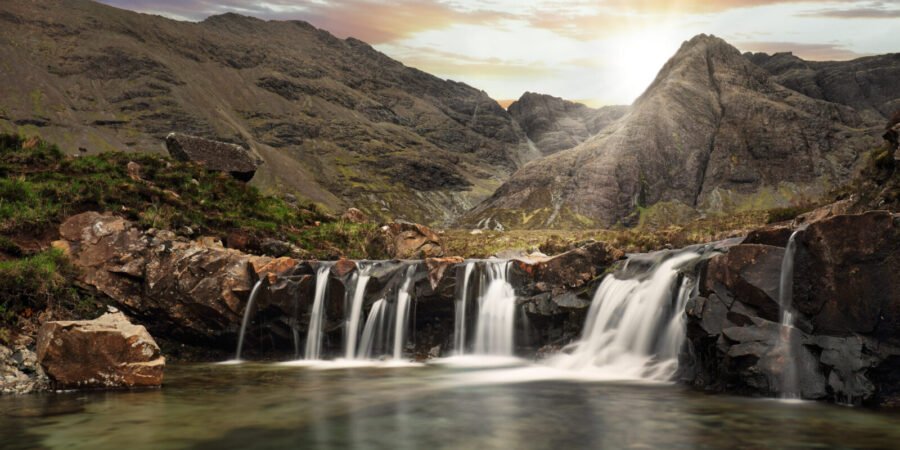
The Isle of Skye is Scotland’s most famous island — all jagged Cuillin ridges, fairy pools, and light that photographers dream about. But it’s also remote, weather-beaten, and busier than you’d expect. Knowing what to know before visiting the Isle of Skye saves you from the classic mistakes: underestimating distances, overestimating the weather, and arriving without accommodation in August.
Here’s the honest insider guide.
When to Go (and When Not To)
May, June and September are Skye’s sweet spots — decent daylight, fewer midges than high summer, manageable crowds, and accommodation that’s bookable. July and August bring the best weather odds but also the crowds: the Fairy Pools at midday in August are a queue, not a wilderness experience, and accommodation books out months ahead with prices to match.
Winter Skye is for the hardy and the rewarded: dramatic storms, empty roads, possible northern lights, and a wild beauty that’s arguably the island’s truest face. But many businesses close, daylight is short, and weather can disrupt ferries and roads. Shoulder seasons give you the best balance — go in June for the light that barely fades, or September for golden calm.
What Do I Need to Know Before Visiting the Isle of Skye?
Most visitors drive: the Skye Bridge from Kyle of Lochalsh (free, no tolls) is the main route; the Mallaig-Armadale ferry is the scenic alternative (book ahead in summer — it sells out). There’s no getting around it: Skye needs a car (or a very patient cycling plan). Public transport exists but is limited — two or three buses a day on main routes, nothing to the remoter sights.
Driving on Skye: single-track roads with passing places are the norm outside the main routes — learn the etiquette (pull into passing places on your left, let faster locals past, don’t park in them). Distances deceive: 30 miles on Skye can take over an hour. Fuel up on the mainland or in Portree/Broadford — rural pumps are sparse. And midges: June to September, especially still evenings — pack serious repellent and a head net if you’re walking.
- Book accommodation early: 3-6 months ahead for summer; options are limited and fill fast.
- Base yourself well: Portree (most facilities), Broadford (central, quieter), or Kyleakin (near the bridge).
- Plan around weather: have indoor/wet-day options; Skye’s weather changes hourly — flexibility beats itineraries.
- Respect the island: park only in designated areas, take litter home, keep dogs under control — overtourism strains Skye.
What to See (Beyond the Obvious)
The big sights earn their fame: the Quiraing (otherworldly landslip scenery — go early morning), the Old Man of Storr (iconic, busy — sunrise or sunset), the Fairy Pools (beautiful, crowded — go at 7am), Neist Point (dramatic lighthouse, sunset spot), and Talisker Bay. Do them, but do them early or late.
Then go deeper: the Coral Beach at Claigan (white sand, turquoise water — the Caribbean in Scotland), the quieter Duirinish peninsula, the waterfalls of the Allt Dearg, Elgol’s boat trips to Loch Coruisk (the Cuillin from the water is unforgettable), and the island’s whisky (Talisker distillery tours book ahead). Some of Skye’s best moments are unplanned: a layby with a view, an honesty-box bakery, a beach you have to yourself.
Practicalities
Food: Portree has the most options; elsewhere, book restaurants ahead (small places, big demand) and note that many kitchens close early. Self-catering is popular for good reason — stock up at the larger Co-ops in Portree or Broadford. Phone signal is patchy outside towns — download offline maps. Cash is useful for honesty boxes and small vendors.
Pack for four seasons regardless of month: waterproofs, warm layers, sturdy boots, midge protection, and a dry bag for electronics. Skye rewards the prepared and punishes the optimistic — but oh, the rewards. Mist rolling off the Cuillin, an empty beach at dusk, the light doing impossible things: this island earns every bit of its fame.
Skye’s Neighbours: Extending the Trip
Skye works brilliantly as part of a longer Highland journey rather than a standalone dash. Before the bridge: the road to Kyle of Lochalsh via Loch Ness, Eilean Donan Castle (the postcard castle, worth the stop) and the Applecross peninsula (the Bealach na Bà — Britain’s most dramatic road, not for the nervous). After Skye: the ferry to Uig, then the Outer Hebrides (Harris and Lewis — otherworldly beaches, the Callanish stones), or south to Mull and Iona via Oban.
The classic two-week Highland loop: Edinburgh/Glasgow → Loch Ness → Skye (4-5 days) → Outer Hebrides or Mull (3-4 days) → back via Fort William and Glencoe. Each leg contrasts with the last — castles then mountains then islands — and the whole is far greater than the parts. If you only have a week, do Skye plus one neighbour (Applecross or Mull) rather than rushing three. Scotland rewards depth over breadth; the islands especially reveal themselves slowly. Skye is the headline act, but the supporting cast is magnificent — give them time.
- Eilean Donan: the classic castle stop en route — touristy, photogenic, worth 30 minutes.
- Applecross: the Bealach na Bà mountain pass — Britain’s most dramatic drive, stunning destination.
- Outer Hebrides: Harris’s beaches, Callanish stones — Skye’s wilder, quieter neighbours.
- Mull and Iona: eagles, otters, abbey — the spiritual heart of the Hebrides.
- Glencoe: the weeping glen — history and drama on the return south.
- Two weeks ideal: one week Skye + one neighbour minimum — depth over breadth, always.
Skye is magnificent — but it’s also a gateway. Plan it well (shoulder season, booked accommodation, realistic driving expectations), explore beyond the famous sights, respect the island and its limits, and consider the neighbours. The Highlands are a lifetime’s exploration; Skye is where most people start, and where many fall in love.
The Takeaway
Before visiting the Isle of Skye: go in May/June or September, book accommodation months ahead, bring a car and learn single-track etiquette, see the famous sights at dawn or dusk, explore beyond them, and pack for all weathers plus midges. Skye is busy, wild and utterly worth it — plan well and it will exceed the photographs.
Keep reading: How to Travel Around Scotland Without a Car · Best Way to See the Northern Lights From the UK · How to Plan a Road Trip Around Wales in Five Days

