Choosing a City Commuter Bike? Avoid These Costly Mistakes
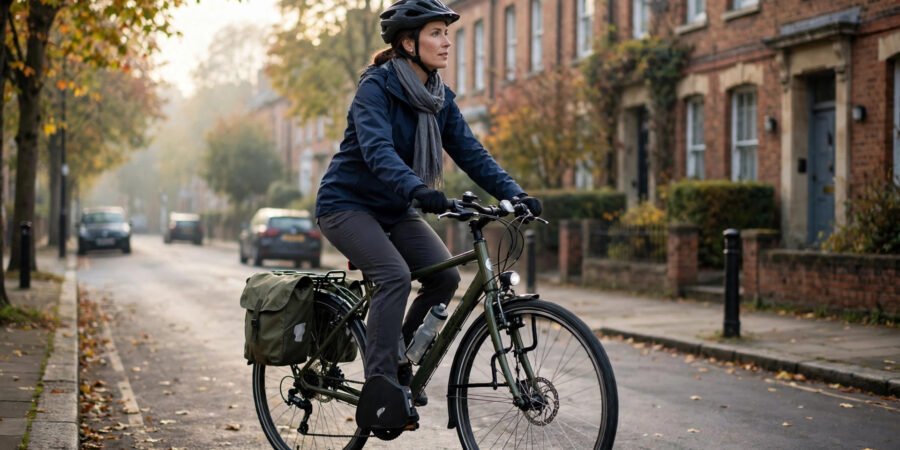
Every spring, bike shops fill with commuters buying entirely the wrong bike: the mountain bike with knobbly tyres that makes a five-mile commute feel like ten, the featherweight road bike with no mudguards that soaks its rider by October, the “bargain” online that needs £120 of assembly and adjustment. Choosing a city commuter bike is not complicated — but the mistakes are so consistent that shops could print this guide on the receipt.
Here are the biggest mistakes people make, and what to do instead.
Mistake 1: Buying a Mountain Bike for Tarmac
The most common error in Britain: buying a full-suspension mountain bike for a commute that is 100% roads and cycle paths. Knobbly tyres, heavy suspension, and an aggressive riding position make every mile harder work — suspension bobs away your pedalling energy, and knobblies howl on tarmac while wearing fast. What to buy instead: a hybrid (flat bars, 700c wheels, light tread tyres) is the default right answer for most UK commutes — comfortable, efficient, and able to handle the occasional towpath. If your route is smooth and you want speed, a flat-bar road bike or gravel bike with mudguard mounts works beautifully.
Mistake 2: Ignoring Mudguards, Racks, and Lights
The bike is half the purchase; the commuting kit is the other half, and skipping it ruins the experience. Full-length mudguards are non-negotiable in Britain — without them, a wet road soaks you from wheels to spine, and you arrive at work looking drowned. A rear rack and panniers beat a sweaty rucksack for anything over two miles — your back will thank you daily. Lights: legally required after dark (white front, red rear), and USB-rechargeable sets cost £20–£40 — buy brighter than you think you need for unlit paths. A good lock (£40–£80, Sold Secure rated) costs less than the insurance excess on a stolen bike. Budget £100–£150 for these essentials on top of the bike. Cycling UK’s commuting guides cover the kit in depth.
Mistake 3: Wrong Size (the Silent Killer)
More commutes are abandoned over poor fit than poor bikes. A bike two sizes too big causes knee pain, back ache, and numb hands within weeks — and most buyers never connect the symptoms to the size. Get sized properly: stand over the frame with 2–5cm clearance, and when seated you should reach the bars with a slight elbow bend, not stretched flat or bolt upright. Test ride before buying — any decent shop insists on it; online bargains that skip this step are false economy. Women-specific and step-through frames are about fit and practicality, not marketing — a step-through is genuinely easier for commuting in work clothes.
Mistake 4: Buying Too Cheap (or Too Expensive)
Too cheap (£150 supermarket bike): heavy, poorly assembled, components that fail within months — the bike that puts people off cycling for a decade. The minimum for a reliable new commuter is around £350–£500 (Decathlon, for instance, is consistently strong value). Too expensive (£1,500+ carbon superbike): theft magnet, overkill for commuting, and you will be afraid to lock it outside Tesco. The sweet spot for most: £400–£800, where you get reliable gears, hydraulic or good mechanical disc brakes (worth it for British rain), and a frame that lasts a decade.
Second-hand is excellent value — £200–£400 buys a £600 bike — but inspect the frame for cracks, check wheels run true, and budget £50–£80 for a shop service. And check the Cycle to Work scheme: most employers offer it, saving 25–40% through salary sacrifice — often the cheapest way to buy new. Our guide to making commutes enjoyable applies whatever you ride, and commute audiobooks pair well with longer rides.
Mistake 5: No Maintenance Plan and No Wet-Weather Strategy
A commuter bike is a daily tool — it needs basic maintenance: weekly tyre-pressure checks (soft tyres puncture more and ride slower), monthly chain lube and brake checks, and an annual full service (£50–£80). Learn to fix a puncture before you get one at 7am in the rain — it takes 15 minutes to learn and saves a miserable walk. Wet-weather strategy: waterproof jacket and overtrousers live in the pannier permanently from October to April; merino or synthetic layers (never cotton) manage sweat; and mudguards — mentioned twice because they matter twice.
Route planning is the final piece: Sustrans’ National Cycle Network maps and apps like Komoot find quieter routes that often add only minutes while removing most traffic stress. A slightly longer pleasant route beats a shorter horrible one — the commute you enjoy is the commute you keep.
E-Bikes for Commuting: The Honest Assessment
No commuter-bike guide is complete without addressing e-bikes — now around a third of UK bike sales and arguably the best commuting tool ever invented. The case for: hills flatten, headwinds vanish, sweat drops dramatically (arrive fresh in work clothes), and range extends — a 10-mile commute becomes trivial. Studies show e-bike commuters ride further and more often than conventional cyclists, and many replace car journeys entirely. The case against: cost (£1,200–£2,500 for a reliable commuter e-bike), weight (20–25kg — no carrying up station stairs lightly), and theft risk (never leave an expensive e-bike on street racks all day; workplace secure storage is near-essential).
The maths: through Cycle to Work salary sacrifice, a £1,800 e-bike costs roughly £1,100–£1,300 net — and if it replaces even a £1,500/year car commute or rail season ticket, payback is under a year. Legal notes: UK e-bikes are limited to 250W with assistance cutting out at 15.5mph — anything faster or more powerful is legally a moped requiring licence, insurance, and helmet. Buy from reputable brands with UK service networks; battery replacements (£300–£500) are the long-term cost to budget. For hilly cities, longer commutes, or anyone who wants the sweat-free guarantee, the e-bike is not cheating — it is the rational choice.
Conclusion
The biggest mistakes in choosing a commuter bike — mountain bike for tarmac, skipping mudguards and locks, wrong size, too cheap or too flash, no maintenance plan — all share one root: buying a bike instead of buying a commuting system. Get a sensibly priced hybrid in the right size, add the £150 of kit that makes British weather survivable, learn the puncture fix, and plan a pleasant route. Do that, and the bike becomes what it should be: the best part of your working day.
Frequently Asked Questions
What type of bike is best for commuting in the UK?
A hybrid bike suits most UK commutes — efficient on roads, comfortable, and capable on paths. Add full mudguards, a rack with panniers, lights, and a good lock for the complete commuting setup.
How much should I spend on a commuter bike?
£400–£800 new buys a reliable commuter with decent brakes and gears. Below £350, quality drops sharply; above £1,000 brings theft anxiety and diminishing returns for commuting. Budget £100–£150 extra for essential kit.
Are disc brakes worth it for commuting?
Yes, especially in Britain — disc brakes (even mechanical) outperform rim brakes dramatically in wet conditions, which is most of the commuting year. Hydraulic discs are the gold standard if budget allows.
Should I buy a second-hand commuter bike?
Yes — excellent value, with £200–£400 buying what cost £600 new. Check the frame for cracks, wheels for trueness, and budget £50–£80 for a professional service after purchase.
How do I stop getting soaked cycling to work?
Full-length mudguards (essential), a waterproof jacket and overtrousers kept in your pannier, and quick-dry layers instead of cotton. Most “soaked commutes” are failures of kit, not weather.