Cover Dark Circles Without Cakey Makeup: A Beginner’s Guide (UK)
Dark circles are the most complained-about cosmetic concern and the most over-corrected: beginners pile on thick concealer, which settles into fine lines within the hour, looking worse than the circles. The secret professionals know is that covering dark circles is 70% skincare and colour theory, 30% product — and the whole routine takes three minutes once learned.
This guide gives complete beginners the easiest way to cover dark circles without cakey makeup: why circles happen, the colour-correction trick, choosing the right concealer, the application technique, and the mistakes that cause caking.
Why You Have Dark Circles (It Matters)
The cause determines the fix. Blue/purple circles: thin under-eye skin showing blood vessels — the commonest type, worse with fatigue, dehydration and genetics. Brown circles: hyperpigmentation, more common in deeper skin tones, often hereditary. Puffy shadows: fluid retention or fat pads casting actual shadows — makeup cannot fix structure, only camouflage. And general dullness: dehydration and lack of sleep amplifying everything.
The NHS on dark circles under eyes covers the medical side: persistent, worsening or one-sided circles merit a GP check (anaemia, thyroid and allergies are common culprits). No concealer outperforms eight hours of sleep, hydration and allergy management — the makeup is the finishing touch, not the foundation.
The Colour-Correction Trick
Colour theory is the beginner's superpower: opposite colours neutralise. Blue/purple circles need peach or orange corrector (peach for fair skin, deeper orange for deeper skin tones); brown circles need the same peach family; redness needs green (rare under eyes). Apply a tiny amount of corrector only where the discolouration is darkest — usually the inner corner — before concealer, not instead of it.
This single step is what lets you use less concealer, and less concealer is what prevents caking. Beginners who skip correction compensate with thickness; beginners who correct need a whisper of product. Corrector palettes cost £5–£10 on the high street, and one lasts a year — the highest-value purchase in this entire routine.
Choosing the Right Concealer
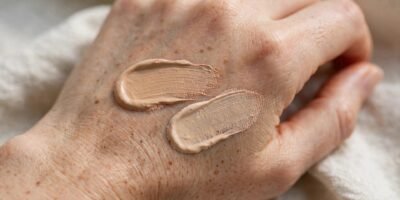
For beginners: a lightweight, hydrating liquid concealer one shade lighter than your foundation (not two — the panda-reverse look), with a doe-foot applicator. Avoid full-coverage matte formulas initially — they demand expert blending and punish dry under-eyes. Drugstore heroes (Maybelline Instant Age Rewind, Collection Lasting Perfection, Revolution Conceal & Define) outperform many luxury options for beginners and cost under £10.
Match undertone, not just depth: pink undertones suit cool skin, yellow/olive suit warm — what colours suit pale skin tones best covers the wider colour-matching skill. Test in daylight on the jaw, not the hand. And buy for your actual skin: dry under-eyes need hydrating formulas; oily lids need setting. One concealer cannot do everything — but one well-chosen one does this job.
The No-Cake Application Technique
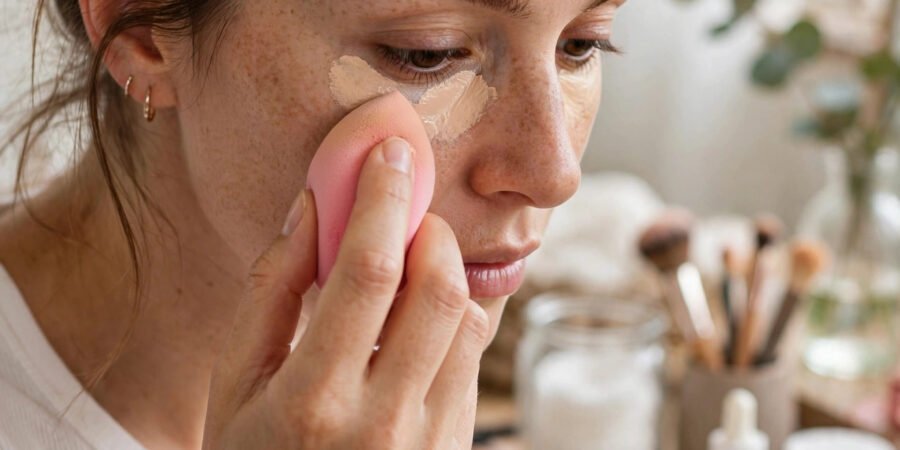
The method: skincare first (eye cream, allowed to absorb 2 minutes — makeup on wet eye cream slides), then tiny dots of corrector on the darkest areas, patted (not rubbed) with a ring finger or damp sponge. Then concealer in an inverted triangle (inner corner down to mid-cheek and back up to outer corner) — this lifts the whole face, not just the circle. Blend the edges, not the centre — the coverage stays where the discolouration is.
Set minimally: a tiny amount of translucent powder pressed (not swept) only where you crease, or skip powder if your skin is dry — powder is the top caking culprit. Less product, patted not dragged, blended edges: that is the entire anti-cake formula. The whole routine: eye cream, corrector dots, concealer triangle, blend, optional powder — three minutes with practice.
Beginner Mistakes That Cause Caking
The five caking sins: too much product (build in thin layers — you can add, you cannot subtract); wrong shade (too light accentuates texture); skipping eye cream (concealer on dry skin creases within the hour); rubbing instead of patting (dragging moves product into lines); and setting with heavy powder (powder + dry under-eyes = instant ageing). Fix these and caking largely disappears regardless of product.
And the lifestyle half: cold spoons or chilled eye masks constrict vessels and reduce puffiness before makeup; sleeping slightly elevated helps fluid drainage; and managing the underlying causes beats all cosmetics. A self-care subscription box can make the skincare half feel indulgent rather than clinical. Which? beauty product reviews independently test the concealer claims — trust the testing over the advertising.
Covering dark circles without cakey makeup is a technique, not a product hunt: address causes (sleep, hydration, allergies), colour-correct with peach tones, use a thin layer of hydrating concealer one shade up, pat don't rub, and powder minimally. Three minutes, once learned, for a lifetime.
The beginners who look flawless are not using more makeup — they are using less, better placed. Start with the corrector, trust the patting, and let your actual skin do most of the talking.
The Lifestyle Fixes That Outperform Concealer
The most effective dark-circle treatment is not in a tube. Sleep: the single biggest factor — 7–9 hours reduces the vascular show-through and fluid retention behind most circles; consistently sleeping less than six hours makes concealer a losing battle. Elevation: sleeping with the head slightly raised drains the fluid that pools as morning puffiness. Allergies: undiagnosed allergic rhinitis ('allergic shiners') causes venous congestion under the eyes — if circles come with itching, sneezing or a crease across the nose, treat the allergy and watch the circles fade.
Then the daily habits: hydration (dehydrated skin is thinner-looking and duller), salt moderation in the evening (reduces morning fluid retention), cold therapy (chilled spoons, refrigerated eye masks or even cold flannels constrict vessels and visibly reduce puffiness in minutes), and sun protection (UV worsens pigmentation-type circles — SPF around the eyes daily, sunglasses as backup). None of these replaces concealer entirely, but together they reduce what the concealer must do — and less concealer is the entire anti-cake strategy. Fix the canvas, and the paint barely matters.
One more underrated factor: screen habits. Hours of close screen work with poor blinking dries the eyes, increases rubbing (which worsens pigmentation over time), and the forward-head posture impairs venous drainage from the face. The 20-20-20 rule (every 20 minutes, look 20 feet away for 20 seconds), conscious blinking, and an eye-level monitor cost nothing and help measurably. Combined with sleep, allergy management and cold therapy, these unglamorous fixes do what no corrector can: reduce the circles themselves rather than hiding them. The beginner's real secret is that the best concealer routine is the one you barely need.
Frequently Asked Questions
How do beginners cover dark circles without looking cakey?
Use less product: colour-correct the darkest areas first (peach for blue/purple tones), then a thin layer of hydrating concealer patted on, blended at the edges, with minimal powder. Skincare underneath prevents creasing.
What colour corrector for dark circles?
Peach or orange for blue/purple circles (deeper orange for deeper skin); the same peach family for brown pigmentation circles. Apply only where discolouration is darkest, under concealer.
Should concealer be lighter than foundation?
One shade lighter, maximum — two shades creates the reverse-panda effect and accentuates texture. Match undertone as well as depth.
Why does my concealer look cakey?
Too much product, dry under-eyes without eye cream, rubbing instead of patting, wrong shade, or heavy powder setting. Thin layers, patting, and hydration fix most caking.