The Best Way to Reheat Pizza Without It Going Soggy
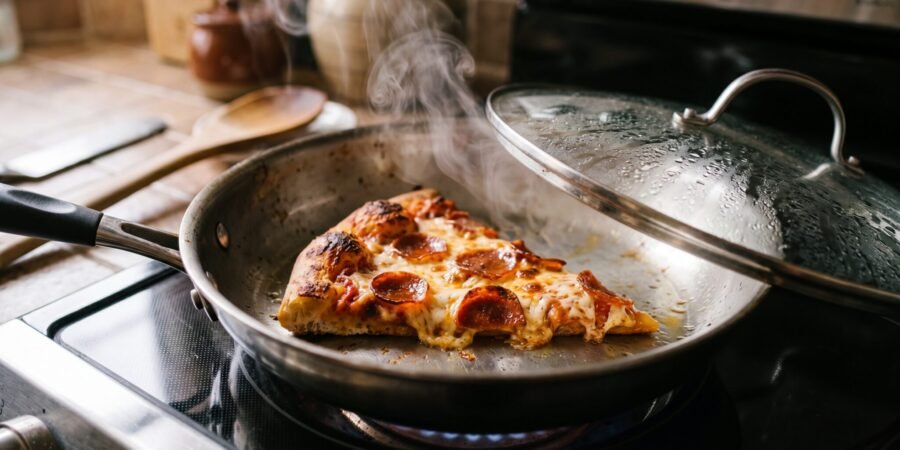
The best way to reheat pizza without it going soggy is a hot dry frying pan with a lid — not the microwave, which is where leftover pizza goes to die. The microwave steams the crust from the inside out, which is exactly why yesterday’s perfect slice turns into a floppy, chewy tragedy. The pan method takes five minutes and gives you a crisp base with properly melted cheese. It’s not even close.
What Is The Best Way To Reheat Pizza Without It Going Soggy: The Pan Method
- Heat a dry frying pan (non-stick or cast iron) over medium heat for a couple of minutes. No oil needed.
- Lay the cold slices in a single layer and cook for 2–3 minutes until the base is crisp. Lift a corner to check — you want golden and firm.
- Add a few drops of water to the pan away from the pizza, then immediately clamp a lid on. The steam melts the cheese in about a minute without touching the crisp base.
- Lid off, 30 seconds more to let any surface moisture evaporate. Eat immediately.
Why this works: you’re reheating the base and the top separately, in effect. Direct heat crisps the crust from below while trapped steam gently melts the cheese from above. The microwave does the opposite — it heats water molecules throughout, turning the crust to rubber.
The oven method (for several slices)
If you’re reheating half a pizza, the oven is more practical. Preheat to 190°C (170°C fan) with a baking tray inside. Put slices directly on the hot tray for 8–10 minutes. The preheated tray crisps the base like a pizza stone. An air fryer at 180°C for 3–4 minutes also works brilliantly — arguably even better for 1–2 slices.
Reheating Pizza: What Not to Do
- Don’t microwave it naked: if you absolutely must use the microwave, put a mug of water alongside the slice — it absorbs some microwave energy and reduces sogginess. It’s damage limitation, not a solution.
- Don’t reheat cold more than once: reheat only what you’ll eat. Repeated cooling and reheating is a food safety issue as well as a texture one.
- Don’t forget food safety: pizza with meat toppings shouldn’t sit at room temperature for more than 2 hours. Refrigerate leftovers promptly, and reheat until steaming hot throughout.
Cold pizza, eaten standing at the fridge at midnight, is of course a legitimate lifestyle choice that needs no reheating at all. But when you want it hot, the pan method is the answer. If you’re making pizza from scratch in the first place, my one-hour pizza dough recipe means leftovers are a regular occurrence — which is frankly the goal.
For the food safety side, the GOV.UK food safety guide covers reheating rules, and BBC Good Food has plenty of leftover-makeover ideas if your pizza has truly passed the point of no return.
Five minutes, one pan, one lid. Crispy base, molten cheese, zero sogginess. Your leftover pizza deserves better than the microwave — and now it gets it.
Reheating Pizza FAQs
Can I reheat pizza in the microwave without it going soggy?
Mostly no — microwaves heat water molecules, which steams the crust. The mug-of-water trick (a mug of water alongside the slice absorbs some energy) helps slightly, but it’s damage limitation. The pan method takes only 3 minutes longer and the result isn’t comparable.
How long does leftover pizza keep?
3–4 days refrigerated in an airtight container or wrapped tightly. Beyond that the quality drops and the food safety risk rises — particularly with meat toppings. Freeze slices for longer storage (up to 2 months); reheat from frozen in the oven.
Should I reheat pizza with the toppings on?
Yes — the pan-steam method handles toppings fine. Just avoid adding extra wet toppings before reheating (fresh tomato slices, for instance, release water). Add fresh basil or rocket after reheating, not before.
Does reheating pizza kill bacteria?
Reheating to steaming hot throughout (75°C) kills most bacteria, yes — which is why prompt refrigeration matters more than the reheating method. Pizza left out overnight is a risk no reheating fully fixes, because some bacteria leave heat-stable toxins.
The Leftover Pizza Upgrade
Crispy reheated pizza is also a starting point, not just a revival. Fold a reheated slice around fresh mozzarella and basil for an instant calzone-ish creation. Chop cold slices into crouton-sized pieces, crisp them in the pan, and scatter over soup or salad — pizza croutons are absurdly good. Or go full breakfast: reheated slice topped with a fried egg. The Italians might object; your taste buds won’t.
The deeper lesson: leftovers aren’t failed fresh food — they’re ingredients with a head start. A fridge containing yesterday’s pizza, half a roast chicken and some roasted veg is a fridge containing three future meals. The pan method just makes sure the pizza’s second act is as good as its first.
The Bottom Line on Reheating Pizza
The pan method takes five minutes and produces pizza that’s arguably better than fresh — the base goes extra-crisp, the cheese re-melts perfectly, and there’s zero sogginess. Compare that to the microwave’s floppy tragedy, and it’s not even a decision. Hot pan, lid, a few drops of water: that’s the whole technique.
But the bigger lesson is about leftovers generally: they’re not degraded fresh food, they’re ingredients with potential. The same thinking that rescues pizza — right heat, right method, a little care — applies to everything in the fridge. So order the large next time without guilt. Tomorrow’s lunch is already handled, and now you know exactly how to bring it back to life. Crispy base, molten cheese, five minutes. Perfection.
The method generalises, too: the same hot-pan-plus-lid technique revives croissants, refreshes naan, and crisps up leftover roast potatoes. It’s really a lesson in what each food needs — base heat for crispness, trapped steam for the top — applied with whatever pan you own. Learn the principle once and a dozen leftovers improve. The microwave will still have its uses, but reheating will never be one of them.