What Is the Best Travel Card for Spending Abroad From the UK?
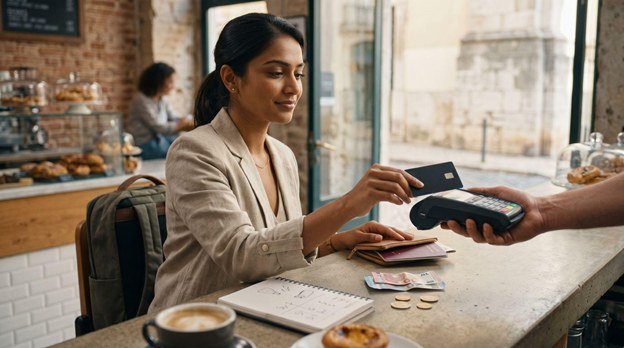
So what is the best travel card for spending abroad from the UK? The short answer: any card that charges zero foreign transaction fees and uses the real exchange rate. The longer answer depends on whether you want a debit card, a credit card, or both — because the smartest travellers carry one of each.
Using your normal high-street debit card abroad typically costs you around 3% on every single transaction, plus a chunky fee at ATMs. On a two-week holiday spending £2,000, that’s £60+ vanishing into fees. Here’s how the best options compare in 2026.
What Is the Best Travel Card for Spending Abroad From the UK? The Shortlist
- Chase (debit): fee-free spending and ATM withdrawals worldwide, uses the Mastercard rate with no markup, plus 1% cashback on spending. The standout debit option right now — the only real catch is there’s no branch network.
- Starling Bank (debit): fee-free spending abroad and fee-free ATM withdrawals with no monthly cap games. Simple, reliable, excellent app. A long-standing favourite for good reason.
- Monzo (debit): fee-free spending abroad, but ATM withdrawals are capped at £200/month fee-free outside the UK before a 3% fee kicks in. Fine if you mostly pay by card.
- Revolut (debit/prepaid): interbank exchange rates on weekdays with a monthly fee-free allowance (£1,000 on the free plan), but weekend markups and allowance caps make it fiddlier than Chase or Starling.
- Halifax Clarity (credit): the classic travel credit card — no foreign transaction fees, uses the Mastercard rate. Credit cards also give you Section 75 protection on purchases over £100, which debit cards don’t.
Debit vs Credit: Which Do You Actually Need?
For most trips, a fee-free debit card (Chase or Starling) covers daily spending and cash withdrawals. But a fee-free credit card earns its place for three reasons: car hire and hotel deposits (holds on a debit card lock up your actual money), purchases over £100 (Section 75 makes the card company jointly liable if something goes wrong), and emergencies (a credit limit is a safety net).
My setup: Chase debit for everyday spending, Halifax Clarity for hotels, car hire and anything over £100. Two cards, two networks, zero foreign fees. Check MoneySavingExpert’s travel money guides for the latest fee tables before you commit — card terms do change.
The Traps That Still Catch People Out
- Dynamic currency conversion: when a card machine or ATM asks “pay in pounds or local currency?” — always choose local. Paying in pounds lets the merchant set the rate, and it’s always worse.
- ATM operator fees: your card may be fee-free, but the ATM itself can charge. In Thailand, most ATMs add ~220 baht; in the US, $3–5 is common. Withdraw larger amounts less often.
- Prepaid travel cards: the old Travelex-style cards have largely been outclassed by Chase and Starling — worse rates, loading fees, and inactivity charges. I’d skip them now.
- Airport exchange desks: consistently the worst rates available. Even a fee-charging debit card beats them.
What About Cash? How Much Do You Need?
The honest answer in 2026: less than you think. Most of Europe, North America, Australia and much of Asia are overwhelmingly card-friendly now. I take the equivalent of £100–£150 in local currency for markets, tips, small vendors and taxi backup — withdrawn from an ATM on arrival with my fee-free debit card, never bought at the airport.
Exceptions: Japan (still cash-heavy outside cities), parts of Southeast Asia, Morocco, and rural areas anywhere. Research your specific destination — the GOV.UK foreign travel advice pages include a money section for each country.
Setting Up Before You Fly: A Checklist
- Order your travel debit card at least two weeks before departure — delivery can take 7–10 days.
- Tell no one: modern banks don’t need travel notifications, but do make sure your phone number is current for fraud texts.
- Save your bank’s lost-card number in your phone (not just in the banking app, which you can’t open without the phone).
- Take two cards on different networks (one Visa, one Mastercard) in case one is declined or lost.
- Screenshot or note your card limits so a big hotel deposit doesn’t get blocked mid-trip.
Travel Money Mistakes That Cost You
- Using your regular debit card abroad. At ~3% per transaction plus ATM fees, a two-week trip can cost £60–80 in invisible charges. A fee-free card pays for itself on the first holiday.
- Choosing “pay in pounds”. When a terminal offers pounds or local currency, always pick local. The merchant’s exchange rate is never in your favour — this one mistake costs travellers millions collectively.
- Buying currency at the airport. Airport exchange desks offer the worst rates on the planet. Even a fee-charging card beats them; a fee-free card destroys them.
- Carrying only one card. Cards get lost, blocked, or eaten by ATMs. Two cards on different networks (Visa + Mastercard), kept separately, is basic travel insurance.
- Withdrawing small amounts often. Where ATMs charge flat fees (£3–5 per withdrawal is common), fewer larger withdrawals beat many small ones.
- Not checking your card’s terms before you go. “Fee-free” sometimes excludes ATM withdrawals or has monthly caps. Read the fine print once, benefit forever.
A Final Tip
Order your travel cards at least two weeks before you fly — physical cards take 7–10 days to arrive, and you don’t want to be chasing delivery the day before departure. Digital wallets work as backup, but a physical card is essential for car-hire deposits and older terminals.
- Screenshot your card’s emergency lost/stolen number — if your phone is lost too, you’ll need it from another device.
- Notify no one, but do check your daily ATM and spending limits before big purchases like hotel deposits.
- Keep a small emergency stash of cash (£50–£100 in local currency) separate from your wallet — hotel safe or hidden pouch.
You Might Also Like
- What Are the Best Autumn Breaks in the UK Countryside?
- How to Avoid Jet Lag on Flights to the US East Coast
- What to Pack for a Walking Holiday in the Lake District
The One-Minute Answer
The best travel card for spending abroad from the UK in 2026 is the Chase debit card for everyday use, paired with a Halifax Clarity credit card for big purchases and deposits. Always pay in local currency, withdraw cash at ATMs on arrival, and never touch an airport exchange desk. Set it up once and you’ll save on every trip for years.


[…] What Is the Best Travel Card for Spending Abroad From the UK? […]