Passing the Driving Test First Time in 2026: Mistakes to Avoid
What most people get wrong when passing the driving test first time in 2026: the five fault categories behind most failures, marking explained, and a pass plan.
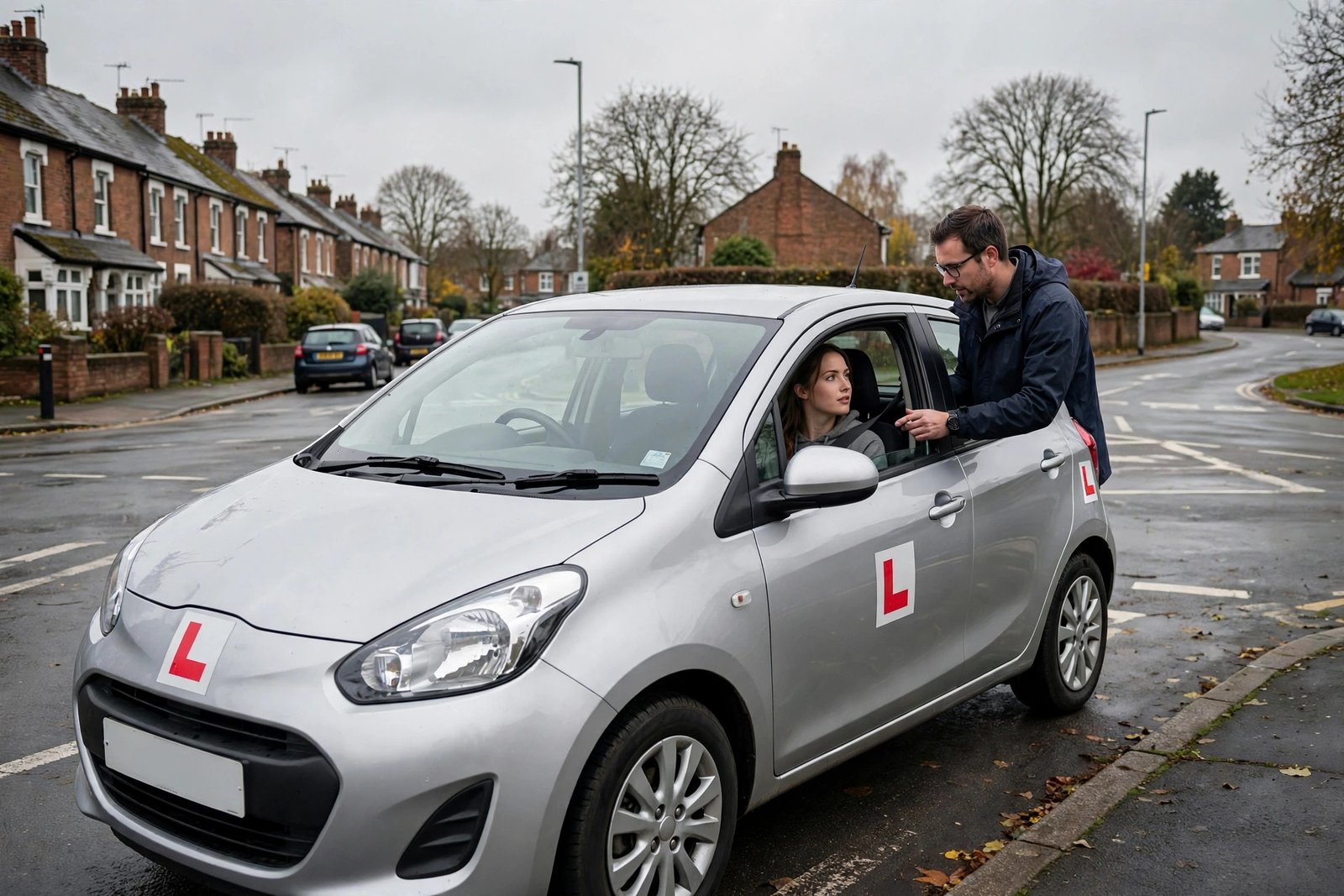
Almost half of UK driving tests end in failure — the national pass rate has hovered around 47–49% for years. Yet most failures have nothing to do with being a bad driver. Examiners fail candidates for a small set of repeatable, avoidable mistakes: the same junction errors, the same mirror lapses, the same test-day psychology traps. Learn what most people get wrong, and your odds of passing the driving test first time in 2026 improve dramatically.
This guide covers the mistakes that fail UK driving tests, how the test is actually marked, and the preparation strategy that gives first-time passers their edge.
How the Test Is Marked (Know the Rules of the Game)
The practical test lasts about 40 minutes and you can make up to 15 minor faults (small errors like slightly late signalling) and still pass. But a single serious fault — anything that creates actual or potential danger — or a dangerous fault (requiring the examiner to intervene) means instant failure. This distinction shapes everything: the test does not demand perfection, it demands safety.
The top reasons for failure, published annually by the DVSA, barely change year to year: not checking mirrors before changing direction, poor junction observations, incorrect positioning at roundabouts, failing to respond to traffic signs and signals, and loss of control during manoeuvres. Notice the pattern — none of these are about advanced car control. They are about observation and awareness. The official guide to the driving test details exactly what examiners assess.
Mistake 1: Mirror–Signal–Manoeuvre in the Wrong Order (or Not at All)
The single biggest failure category is observation at junctions — and its root cause is rushing the MSM routine. Learners either check mirrors as an afterthought (glancing mid-manoeuvre, which counts for nothing) or signal before checking (telling everyone where you are going before confirming it is safe). The correct sequence is non-negotiable: mirrors first (interior, then the relevant door mirror), signal second, manoeuvre third — with a final blind-spot check before moving off or changing lanes.
Examiners watch your eyes. Develop an exaggerated but natural mirror-checking habit in lessons: a slight head turn, not just an eye flick. It feels theatrical at first; it reads as “observant driver” to the person marking you.
Mistake 2: Junction Panic — Rushing or Freezing
Junctions fail more tests than any other feature. Two opposite errors cause it: rushing (emerging into gaps that are not there, the classic serious fault) and freezing (waiting so long at a clear junction that you become a hazard yourself — undue hesitation is a real fault category). The fix is a repeatable decision routine: on approach, assess early; at the line, look right–left–right; decide once; commit smoothly.
Practice the hard junctions deliberately — unmarked crossroads, mini-roundabouts, and right turns across traffic — rather than driving your instructor’s favourite easy routes on loop. Ask your instructor to take you to the actual test centre area: familiarity with the local tricky junctions is one of the strongest predictors of first-time passes. If you are learning later in life, our guide to learning to drive as an adult in the UK addresses the specific challenges mature learners face.
Mistake 3: Manoeuvre Meltdown
You will be asked to do one reversing manoeuvre (parallel park, bay park, or pulling up on the right and reversing), plus possibly an emergency stop and forward bay parking. The mistake is treating manoeuvres as precision performances rather than observation exercises. Examiners care far more about your all-round checks during the manoeuvre than about parking perfectly straight — a slightly crooked park with excellent observation passes; a perfect park with no mirror checks fails.
The technique: go slowly (clutch control is your friend), check mirrors and blind spots continuously, and stop if something approaches. There is no time limit. Calm, slow and observant beats fast and flustered every time.
Mistake 4: Test-Day Psychology
Nerves fail tests that skill would pass. The 48 hours before matter: sleep properly (tired drivers make observation errors), eat normally, and avoid cramming a lesson right before the test — a light warm-up drive is fine, an intense new-skills session is not. Arrive 10 minutes early, not 40 (waiting breeds anxiety).
During the test, two mental tricks help. First, narrate silently: “mirror, signal, manoeuvre” in your head keeps the routine running when nerves try to blank it. Second, recover instantly from mistakes: one bad junction does not fail you unless it was dangerous — but driving the next ten minutes while replaying it will. Examiners expect minor faults; they are judging your overall safety, not hunting perfection. The RAC’s driving test tips include practical calm-down techniques used by instructors nationwide.
Mistake 5: “Show Me, Tell Me” Complacency
The test opens with a “tell me” question (explain how you would check something, e.g. tyre tread) and includes a “show me” question while driving (e.g. operate the rear demister). One wrong answer is just a minor fault — but candidates who have never practised them waste mental energy and start the test rattled. Learn all 14 combinations; it takes an evening. Free official practice materials are on the theory test booking service pages.
The First-Time Passer’s Preparation Plan
Beyond the 40–50 hours of lessons most learners need, first-time passers tend to share three habits: they take at least one mock test under real conditions (instructor silent, full 40 minutes, marked properly) — and treat a mock fail as gold dust, because it reveals faults while they are still fixable; they practise the test-centre area until its junctions feel boring; and they book the test only when mock-ready, not when the instructor’s diary has a gap. In 2026, waiting times for tests remain long in many areas — book early, but keep taking lessons until test week so skills stay sharp.
Once you have passed, the learning continues: motorways, night driving and your first long trip (see what you need for a driving holiday and claiming mileage for business travel) are all post-test frontiers worth preparing for properly.
Conclusion
What most people get wrong about passing the driving test first time is treating it as a driving exam when it is really an observation exam with a car attached. Mirrors before signals, deliberate junction routines, slow observant manoeuvres, managed nerves, and the show-me-tell-me questions learned cold — master those five areas and you have addressed the faults behind the vast majority of failures. The test rewards safe, calm, aware drivers. Become one in your lessons, and the pass certificate follows.
Frequently Asked Questions
What is the driving test pass rate in the UK?
Around 47–49% nationally in recent years. First-time pass rates are lower than the overall average, which includes retakes.
What is the most common reason for failing the driving test?
Junction observations — failing to check mirrors and blind spots properly before emerging or changing direction — consistently tops the DVSA’s failure statistics.
How many minor faults can I get and still pass?
Up to 15 minor faults. But one serious or dangerous fault — anything creating actual or potential danger — means an instant fail.
Should I take a mock driving test?
Yes. A full mock under real test conditions is the single best predictor of readiness, and failing a mock is valuable — it shows what to fix before the real thing.
How long is the UK practical driving test?
About 40 minutes, including an eyesight check, show-me-tell-me questions, general driving, one reversing manoeuvre, and around 20 minutes of independent driving.