How to Support Local Artists and Musicians in Your Area
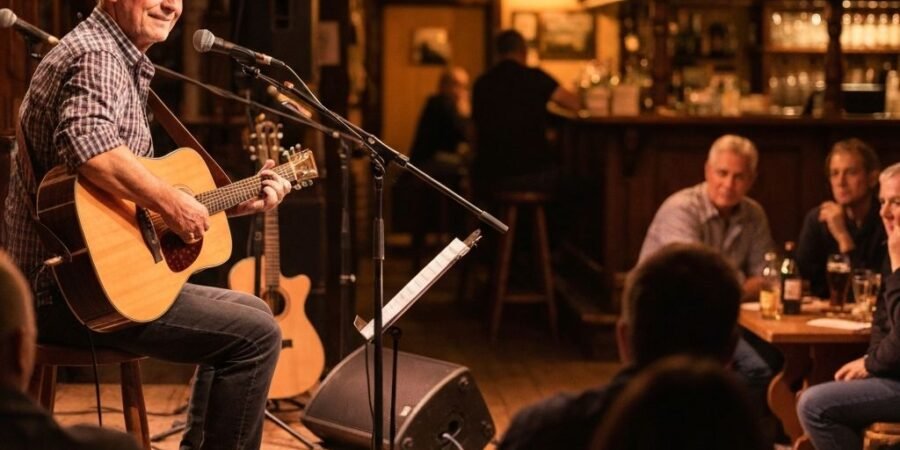
The musicians playing your local pub, the artists exhibiting in the café, the busker you walk past every day — they’re the grassroots of culture, and they survive on community support. If you’re wondering how you can support local artists and musicians in your area, the good news is that small actions genuinely matter at this level. Here’s what actually helps.
How Can I Support Local Artists And Musicians In My Area: 10 Things That Actually Help
- Go to the gigs. The single most important thing. A £10 ticket to a local band’s show matters infinitely more than streaming their songs 1,000 times (which earns them about £3). See my [[how-do-i-find-free-gigs-and-concerts-in-my-uk-city|free gigs guide]] and [[how-can-i-find-live-music-gigs-in-my-area-on-a-budget|budget gigs guide]] to find them.
- Buy the merch. That £20 t-shirt is often the difference between a tour happening or not. Merch has the highest profit margin of anything an artist sells — it’s direct support, not filtered through labels and platforms.
- Buy music directly: Bandcamp (especially on Bandcamp Fridays, when artists get 100% of sales), artist websites, and physical copies at gigs. Streaming pays fractions of pennies; a direct sale pays pounds.
- Follow, share, playlist: free and genuinely useful — algorithmic visibility matters. Add local artists to your playlists, share their posts, tell friends. Word of mouth is still the most powerful promotion.
- Go to exhibitions and buy art: local galleries, open studios events, art trails — and if you love a piece, buy it. Emerging artists’ work is affordable (£50–£500), and you’re buying before they’re famous.
- Commission work: need a portrait, a logo, a mural, wedding stationery? Commission a local artist instead of using a stock site. You get something unique; they get paid properly.
- Tip the buskers: street performers are working musicians. A couple of pounds in the case, or even just stopping to listen and applaud, matters more than you’d think.
- Support the venues: grassroots venues operate on terrifying margins — buy drinks there, go to the quiet Tuesday shows, join as a member. When venues close, the scene dies with them. The Music Venue Trust campaigns to protect them.
- Vote in local funding: councils fund arts programmes — respond to consultations, support arts funding publicly. The unglamorous civic stuff keeps the ecosystem alive.
- Take kids: family shows, daytime gigs, workshops — the next generation of artists and audiences starts with exposure. Many grassroots events welcome (or target) families.
Finding Your Local Scene
Every area has one — it just takes a little digging: local listings and Facebook groups (‘[town] live music’, ‘[town] artists’), venue mailing lists, open mic nights (the grassroots talent pipeline), art trails and open studios weekends (usually annual — search ‘[county] open studios’), and your local Arts Council-funded organisations. Once you’re in, the scene reveals itself — local culture is a network, and one gig leads to five more.
For more on this topic, see environment news.
The economics are stark: the average grassroots musician earns a pittance from streaming, and small venues close weekly. But the fix is beautifully simple — show up, buy the t-shirt, tell a friend. Culture isn’t something that happens elsewhere; it’s happening in your town, this weekend, for a tenner. Go and be part of it.
Supporting Local Artists FAQs
What’s the single most helpful thing I can do?
Show up. Go to the gig, visit the exhibition, attend the show. Attendance is the foundation everything else builds on — ticket sales keep venues open, audiences keep artists going, and your presence matters more than any amount of online support.
Is streaming really that bad for artists?
The economics are stark: ~1,000 streams earns about £3. A £10 gig ticket, a £20 t-shirt, a £10 Bandcamp purchase — each equals thousands of streams. Stream to discover, but buy directly to support. Bandcamp (especially Bandcamp Fridays) gives artists the best cut.
How do I find local artists in the first place?
Open mics, small venue listings, local Facebook groups, art trails and open studios weekends, record shop noticeboards. The scene reveals itself once you’re in it — one gig leads to five more. Follow local promoters and venues; they’re the connective tissue.
Can I help if I’m skint?
Absolutely — the free stuff matters: share their posts, add them to playlists, tell friends, leave reviews, show up to free shows. Word of mouth is still the most powerful promotion, and it costs nothing. Enthusiasm is a resource.
The Local Culture Compact
Here’s the deal your town offers: world-class culture at grassroots prices, in rooms where you can see the whites of the performers’ eyes — in exchange for simply showing up. It’s the best value proposition in entertainment, and most people ignore it while paying £80 for arena nosebleeds. The compact is simple: they make the art, you make the audience.
Sign it. Go to the £10 gig this Friday. Buy the print at the open studio. Tip the busker. Tell a friend. None of these are sacrifices — they’re among the most enjoyable things you can do with an evening. And the scene you support is the scene your town becomes. Culture isn’t imported; it’s homegrown, one ticket at a time.
The Bottom Line on Supporting Local Artists
Show up. That’s the whole compact: go to the £10 gig, visit the open studio, buy the t-shirt, tip the busker. Streaming pays fractions of pennies; your ticket, your merch purchase, your word of mouth — that’s the economy keeping culture alive in your town. The venues run on margins; the artists run on audiences. Be the audience.
And it’s not a sacrifice — it’s among the most enjoyable things you can do with an evening. The 200-cap room, the discovery, the stories: grassroots culture is the best value in entertainment, hiding in plain sight. Culture isn’t imported from elsewhere; it’s homegrown, one ticket at a time, in your town, this weekend. Sign the compact. Go and be part of it.