MOT Tests for Older Cars: The Complete Guide
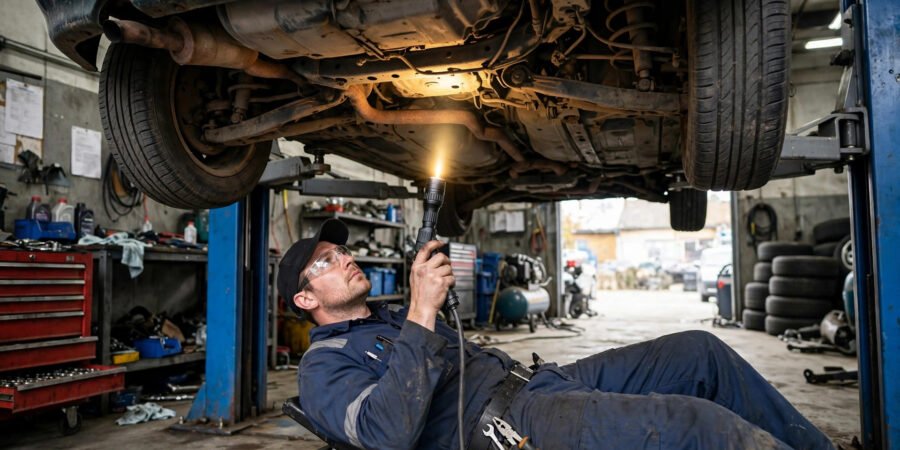
Your ten-year-old Focus just failed its MOT on corroded brake lines, worn suspension and an emissions reading the tester described with genuine sympathy. The repair quote is £900. The car’s worth £1,200. Welcome to the defining dilemma of older-car ownership — and to the MOT test, the annual examination that keeps Britain’s ageing car fleet honest.
Understanding MOT tests for older cars means knowing what testers actually check, why older cars fail, when to repair versus replace, and how to prepare so the test doesn’t become an annual ambush. Here’s the complete guide.
What the MOT Actually Tests (and What It Doesn’t)
The MOT is a safety and roadworthiness check, not a full mechanical inspection. Testers examine brakes, steering, suspension, lights, tyres, seatbelts, mirrors, windscreen, wipers, horn, exhaust emissions, and the vehicle’s structure for corrosion — around 150 individual checks. It does not assess engine condition, gearbox health, clutch wear or general reliability. A car can pass its MOT on Monday and throw a conrod on Tuesday; the certificate means “safe today”, not “reliable tomorrow”.
For older cars (10+ years), the failure points cluster predictably: corrosion (especially sills, subframes and brake lines — Britain’s salted winter roads are brutal), suspension wear (bushes, ball joints, shock absorbers), brakes (discs, pads, handbrake cables), emissions (catalytic converter degradation, sensor faults), and lights/electrics (the cheap failures that annoy everyone). The government’s MOT guidance lists exactly what’s tested — worth reading before your appointment.
The Repair-vs-Replace Maths
The core question for every older car: at what repair bill do you walk away? The rule of thumb — don’t spend more than the car’s value on a single repair, and don’t spend more than half its value annually on maintenance — is crude but effective. A £900 repair on a £1,200 car fails the first test; but context matters: if the car is otherwise sound, that £900 buys another year or two of motoring for far less than any replacement.
Do the real comparison: (repair cost + expected next-12-months maintenance + insurance + tax) versus (replacement car’s cost + its unknown maintenance + higher insurance). Older cars you know often beat newer cars you don’t — the devil you know has a documented history; the £3,000 replacement has someone else’s deferred maintenance. If you use the car for business travel, factor the reliability risk into the maths — a breakdown en route to a client costs more than parts.
Preparing an Older Car for Its MOT
A pre-MOT check (many garages offer them, some free) catches the cheap failures: all lights working, wipers clearing properly, tyres above 1.6mm with no damage, horn working, mirrors intact, number plates clean and legible, warning lights not illuminated on the dashboard. Top up screenwash, check fluid levels, and — the classic — take it for a 20-minute run before the test, especially for diesels: a hot engine and cleared DPF dramatically improve emissions results.
Know the advisories system: “advisories” are items that passed but are wearing — they’re a forecast of next year’s failures. Budget for them now rather than being surprised later. And keep every MOT certificate and advisory sheet: a folder of clean passes with addressed advisories is worth real money when you sell, and a dash cam won’t help your MOT, but it does protect the car you’re working to keep on the road.
Finding an Honest MOT Garage
The MOT’s conflict of interest is structural: the garage that fails your car gets the repair work. Protect yourself: use the same garage annually (they learn your car’s history and spot genuine deterioration versus invented problems), be wary of failure lists that grow suspiciously at quiet garages, and know that you can take a failed car elsewhere for repairs — you’re never obliged to have the testing garage do the work. Council-run MOT centres (which don’t do repairs) offer the most impartial tests, though they’re increasingly rare. And remember: you can appeal an MOT result to the DVSA if you believe the failure was wrong — keep the car as-tested and act within 14 days.
Classic Cars and MOT Exemptions: A Warning
Cars over 40 years old are MOT-exempt in the UK — but “exempt” doesn’t mean “safe”, and it certainly doesn’t mean “roadworthy”. Owners of classics are still legally required to keep their vehicles in roadworthy condition, and driving a dangerous classic carries the same penalties as any other dangerous vehicle. The exemption exists because enthusiasts maintain their cars meticulously, not because old cars are magically safe.
If you’re considering a classic as a second car or project, budget for professional safety inspections annually even without the legal requirement — brake lines, structural corrosion and perished rubber don’t respect exemptions. And check insurance carefully: classic policies are cheap but often come with mileage limits and garaging requirements. The romance of a 1970s MG is real; so is the reality of 1970s braking distances. Enjoy classics with open eyes and a good specialist garage.
When to Let Go
Some cars are done: structural corrosion that makes welding uneconomical, emissions failures requiring four-figure exhaust/cat replacement on a £800 car, or the dreaded cascade — where fixing one thing reveals three more. The emotional trap is sunk cost: “I’ve already spent £600, so £400 more makes sense.” It doesn’t, unless the £400 genuinely buys reliable motoring. Set a yearly maintenance budget for the car; when reality persistently exceeds it, it’s time. Sell honestly (declare the MOT status), scrap responsibly (use an Authorised Treatment Facility), and put the repair money toward the replacement.
Conclusion
MOT tests for older cars are manageable once you understand the system: know what testers check, do the repair-vs-replace maths honestly, prepare with a pre-MOT check and a hot engine, build a relationship with a trustworthy garage, and recognise when the car’s time is up. An older car with a disciplined owner is among the cheapest motoring available in Britain; an older car with a hopeful owner is among the most expensive. Be the disciplined one — your wallet will notice the difference within a year. Start with this year’s test: book the pre-MOT check today, and keep the advisory sheet as next year’s to-do list. The RAC’s motoring advice section includes a pre-MOT checklist that catches the easy fails — bulbs, wipers and tyre tread — before test day.
Frequently Asked Questions
Can I drive my car if it fails its MOT?
Only to a pre-booked repair appointment or retest — and not at all if the failure is classed as “dangerous”. Driving a dangerous-failure car risks prosecution, invalid insurance and penalty points.
How early can I MOT my car?
Up to a month before expiry while preserving the anniversary date (the new certificate runs 13 months). Earlier than that resets the date. Booking early gives you repair time without losing road legality.
What are the most common MOT failures for older cars?
Lights, brakes, tyres, suspension wear and emissions — in roughly that order of frequency. Corrosion-related structural failures rise sharply after year twelve, especially on cars used on salted winter roads.
Is it worth repairing a car that fails badly?
Apply the rule: repair cost versus car value and versus replacement cost. A £900 bill on a sound £1,200 car is usually worth it; a £900 bill on a rotting £600 car with three advisories pending is not.