Ozzy Osbourne in Profile: The $220 Million Fortune He Left, His Family and His Houses
Ozzy Osbourne in Profile: The $220 Million Fortune He Left, His Family and His Houses The Life in Outline Ozzy Osbourne rose from a Birmingham factory…
Ozzy Osbourne in Profile: The $220 Million Fortune He Left, His Family and His Houses
The Life in Outline
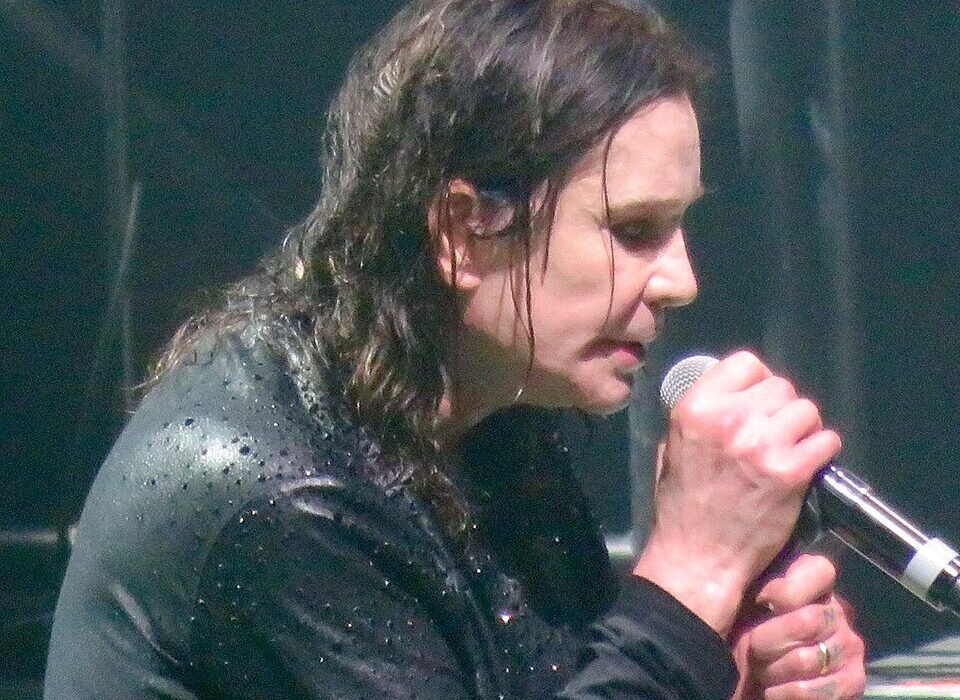
Ozzy Osbourne rose from a Birmingham factory district to a position nobody else in music holds: he helped invent heavy metal, he survived the excess that killed many of his peers, and he then reinvented himself in his fifties as a television star in his own front room. He fronted Black Sabbath from 1969, he built a solo career that outsold the band in several markets, and he sold more than 100 million albums across both careers. His family announced his death on 22 July 2025; he died at his home in Jordans, Buckinghamshire, at the age of 76, seventeen days after he played his final concert at Villa Park in Birmingham.
Celebrity Net Worth puts Ozzy Osbourne’s net worth at $220 million at the time of his death, and this profile treats that number throughout as an estimate of his fortune, never as a probate valuation of his estate. He left his widow, Sharon Osbourne, six children, a catalogue that still earns every day, and a house in a Buckinghamshire village that now holds his resting place. The sections below follow the working-class boy from Aston who turned a frightening voice and an unlikely charisma into one of the great fortunes in British music.
Early Days
John Michael Osbourne entered the world on 3 December 1948 in Marston Green, Warwickshire, and he grew up in Aston, Birmingham. His father, John Thomas “Jack” Osbourne, worked as a toolmaker, and his mother, Lilian Osbourne, née Unitt, worked in a factory. Money ran short in the household, and Osbourne left school at fifteen with few qualifications and a reading difficulty that schools of the era handled badly. He worked a string of manual jobs — construction labourer, plumber’s mate, toolmaker, and a spell in a slaughterhouse — and he served a short prison sentence for burglary as a teenager, an episode he later described as the shock that straightened him out.
Music offered the exit. The Beatles showed working-class boys from industrial cities that a band could change a life, and Osbourne placed a small advertisement in a Birmingham music shop: “Ozzy Zig Needs Gig.” The advert brought him together with guitarist Tony Iommi, bassist Geezer Butler and drummer Bill Ward, men he knew from the same streets and schools. The four formed a blues band, renamed it Black Sabbath in 1969 after a Boris Karloff horror film, and began writing the slow, heavy, doom-laden songs that would define a genre. His father died in 1977, before the solo triumphs, and his mother lived until 2001, long enough to watch her son conquer America twice over.
The Career Years
1969–1979: Black Sabbath Invent Heavy Metal
Black Sabbath released their self-titled debut album in 1970, and Paranoid followed the same year with the title track, Iron Man and War Pigs — songs that still anchor metal playlists half a century later. Master of Reality, Vol. 4 and Sabbath Bloody Sabbath extended the run through the 1970s, and the band toured relentlessly. Osbourne’s voice, a keening wail that cut through the heaviest backing in rock, gave the music its human terror. Drink and drugs corroded the band from inside, however, and the others dismissed him in April 1979. He retreated to a hotel room and, by his own account, nearly drank himself into oblivion before Sharon Arden, his manager’s daughter, took charge of his career and his life.
1980–1991: The Solo Resurrection
Blizzard of Ozz arrived in 1980 and it outsold every expectation. Crazy Train and Mr Crowley introduced guitarist Randy Rhoads, a classical-trained virtuoso whose playing lifted Osbourne’s music to a new level, and Diary of a Madman followed in 1981. Rhoads died in a plane crash in 1982, a loss Osbourne carried for the rest of his life. He recorded through the grief: Bark at the Moon in 1983, The Ultimate Sin in 1986 and No Rest for the Wicked in 1988 kept him in arenas, and No More Tears in 1991 delivered Mama, I’m Coming Home, his biggest solo ballad. His concerts courted outrage — the bat incident of 1982 entered rock folklore — and the outrage sold tickets in quantities his critics never understood.
The solo albums continued through the new century and they held his arena status intact. Down to Earth arrived in 2001, Black Rain followed in 2007 and Scream completed the run in 2010, each one touring the world behind it. Ordinary Man in 2020 and Patient Number 9 in 2022 closed the studio story thirteen albums deep, and Patient Number 9 won him fresh critical respect at an age when most rock singers guard a legacy rather than extend it. Across the solo years he placed songs — Crazy Train above all — into the permanent furniture of American sport, film and advertising, and every placement pays the writer and the performer again.
1996–2017: Ozzfest, The Osbournes and the Sabbath Reunion
Sharon founded the Ozzfest touring festival in 1996, and it ran almost annually until 2010, launching dozens of younger metal bands and turning the Osbourne name into an institution. Then television changed everything again. The Osbournes, the MTV reality series filmed inside the family home, ran from 2002 to 2005, drew enormous audiences, and revealed the frazzled, funny, foul-mouthed domestic Ozzy behind the Prince of Darkness stage image. Black Sabbath reunited in full, the Rock and Roll Hall of Fame inducted the band in 2006, and the original line-up recorded the album 13 in 2013, which topped charts on both sides of the Atlantic. The End tour closed the band’s live story in 2017, in Birmingham, where it started.
2020–2025: Final Albums and the Villa Park Farewell
Osbourne announced a Parkinson’s diagnosis in 2020, and he still recorded. Ordinary Man arrived in 2020 and Patient Number 9 followed in 2022, with guests including Post Malone, whose own net worth profile covers the younger star who recorded Take What You Want with Osbourne in 2019. The Rock and Roll Hall of Fame inducted him a second time, as a solo artist, in 2024. On 5 July 2025 he returned to Villa Park in Birmingham for Back to the Beginning, a farewell concert that reunited Black Sabbath one final time in their home city. He performed seated, he sang with undiminished power, and the night raised a fortune for charity. It stands as his final performance.
The Money, Explained
Celebrity Net Worth estimates Ozzy Osbourne’s net worth at $220 million at the time of his death, and the site updated that assessment in April 2026. No probate figure has entered the public record in this profile’s sources, and readers must hold the distinction firmly: a net-worth estimate totals a person’s likely assets, while an estate passes through legal processes, taxes, trusts and family arrangements that no website sees. The $220 million describes the scale of the fortune he built. It does not describe a sum that any single heir receives.
The fortune rests on four pillars. Record sales supply the first: more than 100 million albums across Black Sabbath and his solo catalogue, with songwriting royalties flowing from songs he co-wrote in 1970. Touring supplies the second, and Ozzfest added a promoter’s income on top of his performer’s fees for over a decade. Television supplies the third: The Osbournes paid the family handsomely and multiplied his value to advertisers. Merchandising supplies the fourth, because few images in rock sell like his. Sharon Osbourne managed the whole structure for over forty years, and her discipline with contracts and rights explains why this fortune survived habits that bankrupted lesser stars.
The House
Property anchors the tangible side of the estate. The Osbournes bought Welders House in Jordans, Buckinghamshire, in 1993, and the house served as their English home for the rest of his life; he died there, and the grounds now hold his resting place. In America, the family bought a Beverly Hills house in November 1999 for $4 million, and that house formed the setting for The Osbournes on MTV; the family sold it in 2013. They bought a Hancock Park house in Los Angeles in 2015 for $12 million. This profile prints those figures strictly as period transaction prices from the years of purchase, and it draws no current valuation from them.
Family and Private Life
Osbourne married Thelma Riley in 1971, and the marriage ended in 1982. The couple had two children, Jessica and Louis, and Osbourne adopted Elliot, Thelma’s son from an earlier relationship. He married Sharon Arden on 4 July 1982 in Hawaii, and the marriage endured for forty-three years, through his addictions, his illnesses and several public crises, until his death left her his widow. Sharon managed his career, ran his festival, produced his television series and, by the family’s own telling, saved his life more than once. Their three children — Aimee, born in 1983, Kelly, born in 1984, and Jack, born in 1985 — grew up partly on camera, and Kelly and Jack built media careers of their own while Aimee chose privacy and music outside the family spotlight.
His parents’ story closes the family account. Jack Osbourne worked nights as a toolmaker and died in 1977, two years before the solo career began; Lilian Osbourne lived until 2001 and watched the whole improbable arc, from Aston to Ozzfest. Osbourne spoke about both of them with pride throughout his life, and he never disguised the poverty of the Aston childhood that his fortune eventually answered.
The Profile File
| The Profile File | Details |
|---|---|
| Born | 3 December 1948, Marston Green, Warwickshire, England (died 22 July 2025) |
| Age | 76 (at his death) |
| Height | 5 ft 10 in (1.78 m) |
| Weight | No reliable published figure exists |
| Wife | Sharon Osbourne (married 4 July 1982), his widow; first marriage Thelma Riley (1971–1982) |
| Children | Six — Jessica and Louis, and Elliot (adopted), from his first marriage; Aimee (1983), Kelly (1984) and Jack (1985) with Sharon Osbourne |
| Parents | John Thomas “Jack” Osbourne (died 1977) and Lilian Osbourne, née Unitt (died 2001) |
| House | Welders House, Jordans, Buckinghamshire (bought 1993); Beverly Hills house (bought 1999 for $4 million, sold 2013); Hancock Park house (bought 2015 for $12 million) |
| Net Worth | $220 million at the time of his death — Celebrity Net Worth (estimate, not a probate valuation) |
The Last Word
Ozzy Osbourne leaves a legacy that splits neatly into two halves and somehow joins in the middle. The first half changed music permanently: Black Sabbath’s early albums still supply the grammar of heavy metal, and his solo catalogue keeps Crazy Train in every sporting arena in America. The second half changed television, because The Osbournes invented the celebrity family reality format that hundreds of imitators still copy. Very few entertainers reshape two industries. He did it while battling addiction and illness in public, and he never lost the Aston accent or the Aston humour that carried him through.
His estate now passes into the care of the family that built it with him, and Sharon Osbourne’s four decades of careful management suggest order rather than dispute. The $220 million figure that Celebrity Net Worth attaches to his name marks the fortune; the farewell at Villa Park, seventeen days before his death, marks the man. Birmingham gave him a send-off in the stadium streets from his childhood, and no fortune buys a farewell like that.