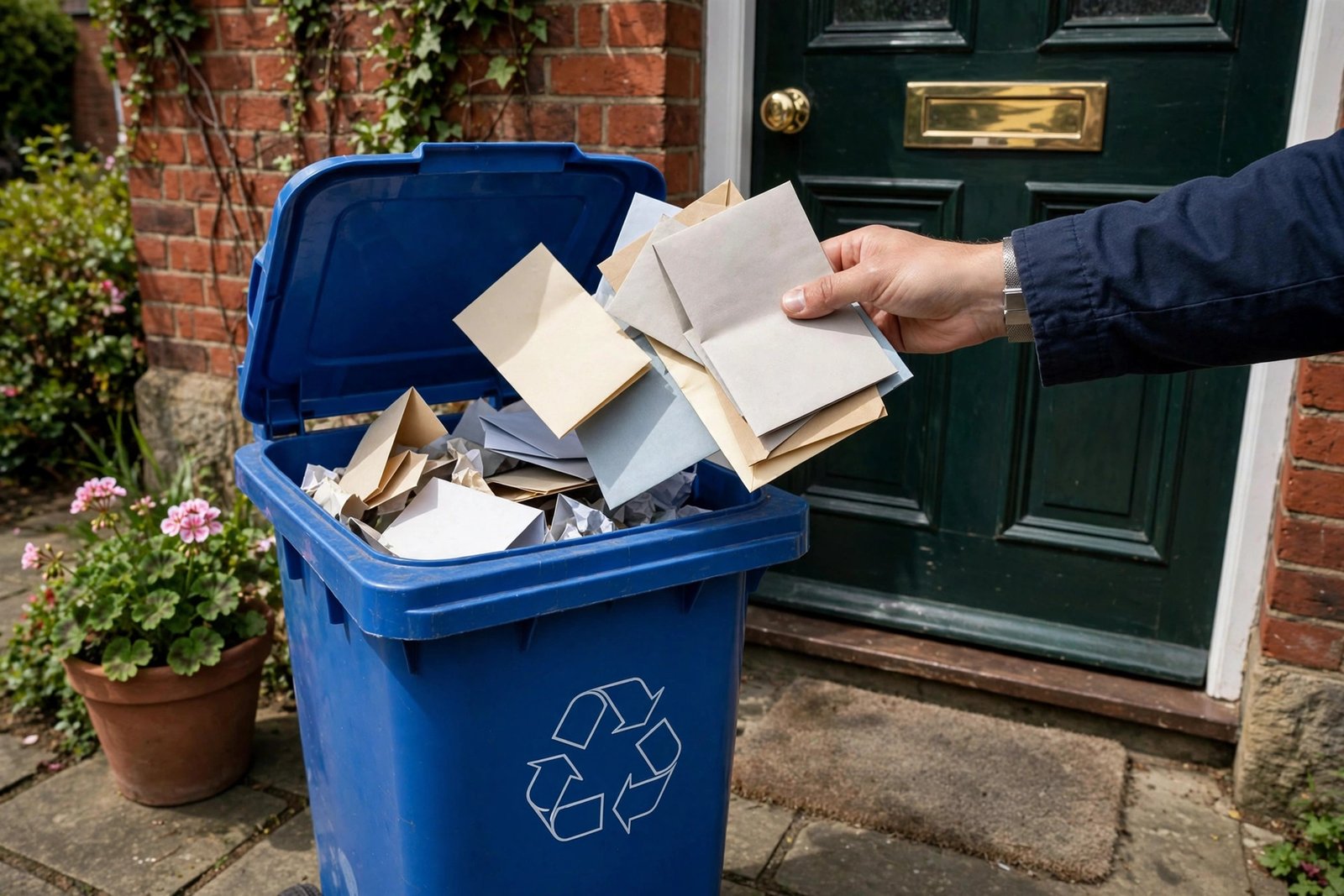
UK Recycling Rules Explained: What Goes Where (2026 Guide)
How long does it take to understand recycling rules in your area? About an hour. Learn your council's system, the universal principles, and tricky items settled.
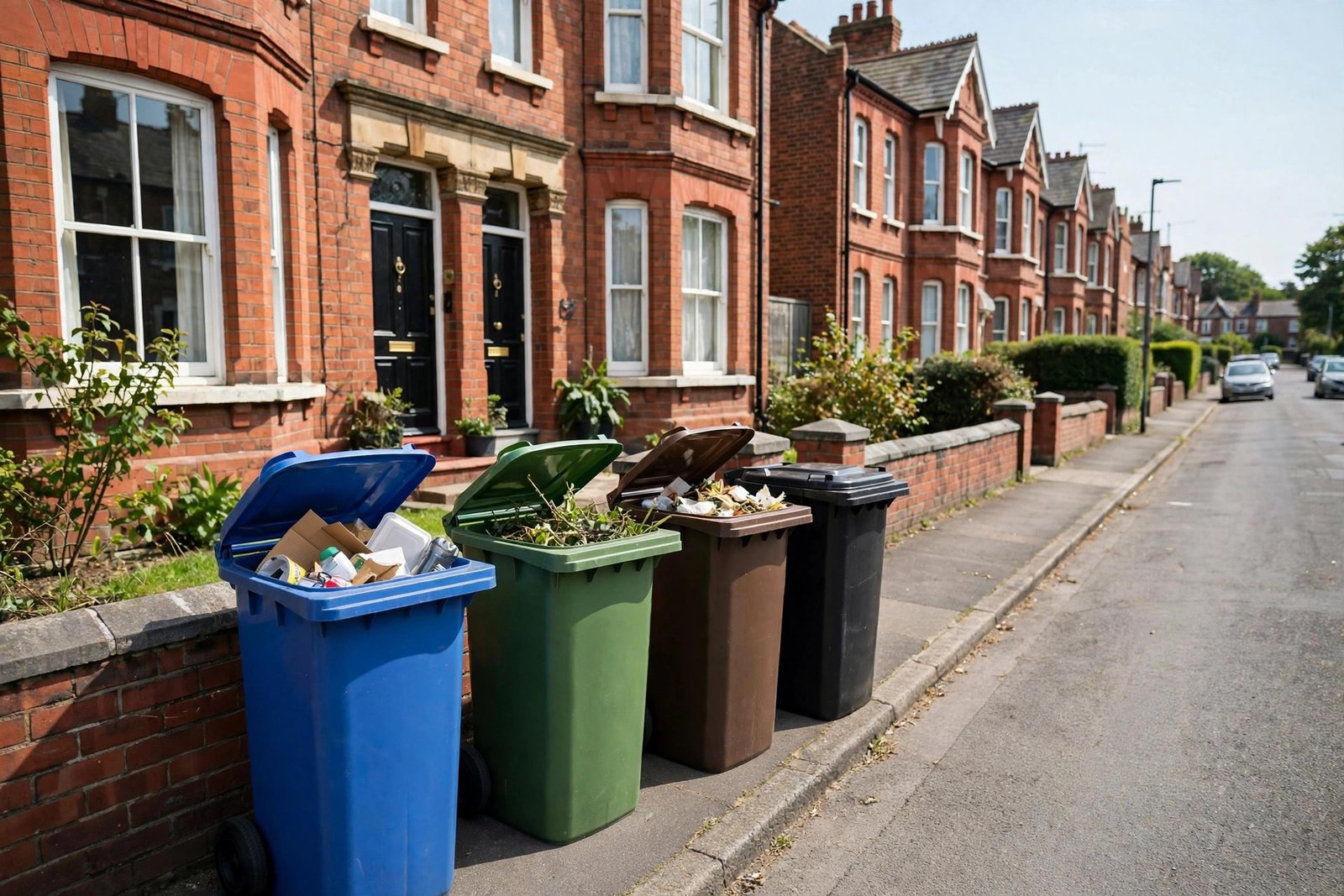
Does the yoghurt pot go in? What about the pizza box with the grease stain? Why does your sister in Leeds recycle glass kerbside while you have to drive yours to a bottle bank? British recycling rules are a postcode lottery — over 300 local authorities, each with its own system — and the confusion has a measurable cost: around a fifth of what goes into UK recycling bins should not be there, contaminating whole lorry-loads.
The good news: truly understanding your local rules takes less time than you think — about one focused hour — and this guide shows you exactly how to spend it, plus the national principles that apply everywhere.
Why the Rules Differ (It Is Not Random)
The postcode lottery frustrates everyone, but it has causes. Councils contract with different materials recovery facilities (MRFs), and each facility’s sorting technology dictates what it can handle — one MRF’s optical sorters read black plastic, another’s cannot. Collection logistics differ too: dense terraced streets suit different vehicles than rural lanes. Funding varies: some councils run three-weekly residual collections to force recycling; others collect weekly.
Change is coming. The UK government’s Simpler Recycling reforms in England will standardise the core list — plastic, metal, glass, paper, card, and food waste collected separately — with full rollout by 2027. Wales is already ahead: it leads the UK (and ranks among the world’s best) with recycling rates above 65%, thanks to consistent collections and the Welsh Government’s Beyond Recycling strategy. Scotland has its own Scottish Government circular-economy plans. Until standardisation lands, though, your council’s website is the only authority that matters — national guidance cannot override local rules.
The One-Hour Method: Learn Your Local System Properly
Set a timer and do this once — it permanently ends the bin-day guessing.
Minutes 0–20: read your council’s A–Z
Nearly every UK council publishes a searchable recycling A–Z (“what goes where”). Search “[your council] recycling A-Z” and work through your ten most common confusions: yoghurt pots, Tetra Pak, foil, pizza boxes, black plastic, coffee cups, crisp packets, polystyrene, batteries, textiles. Bookmark the page on your phone — you will reference it for a month, then know it cold.
Minutes 20–40: learn the universal principles
Five rules apply almost everywhere: 1. Clean-ish and dry — rinse containers; one dirty nappy or food-caked tray can condemn a whole batch. 2. Keep it loose — never bag recyclables in plastic bags (they jam sorting machinery); put items in the bin loose. 3. Lids on, labels on — modern MRFs handle both. 4. When in doubt, leave it out — “wish-cycling” (hoping something is recyclable) contaminates loads; if unsure, general waste is the safer error. 5. Flatten and fold — cardboard flat, cans crushed — to fit more in and help sorting.
Minutes 40–60: handle the special streams
Some items never go kerbside: batteries and vapes (fire risk — take to supermarkets or recycling centres; battery fires in bin lorries are rising fast), soft plastics (bread bags, crisp packets — most large supermarkets now have front-of-store collection points), textiles (charity shops or textile banks, even worn-out ones for rags), small electricals (kerbside in some areas, otherwise recycling centres), and coffee cups (the plastic lining defeats most MRFs — a few high-street chains collect them in-store). Map your nearest drop-off points once; the Recycle Now locator from WRAP finds them by postcode.
The Trickiest Items, Settled
Pizza boxes: the clean lid can be recycled; the greasy base cannot — tear and split them. Black plastic trays: increasingly recyclable as MRFs upgrade, but still rejected in many areas — check your A–Z. Tetra Pak / cartons: collected kerbside by most councils now; where not, bring-bank points exist. Foil: scrunch into a tennis-ball-sized lump (small scraps fall through sorters) — recyclable nearly everywhere. Shredded paper: usually not kerbside (fragments contaminate) — compost it or bag for the recycling centre. Broken glass: wrap safely and put in general waste, not recycling — it endangers sorters. Nappies, wipes, and “compostable” plastics: none go in recycling; compostable plastic needs industrial composting most councils do not offer — treat as general waste.
Electronics deserve emphasis: our guide to recycling old electronics safely covers the fastest-growing waste stream in detail, including data wiping.
Beyond the Bins: Reducing What Needs Sorting
The waste hierarchy ranks reduce and reuse above recycling — recycling is the third-best option, not the first. The highest-impact household moves: food waste (a third of UK food is wasted; meal planning and proper storage beat any bin) — see our guide to planning a low-waste lifestyle; refills for cleaning and toiletries where available; buying durable over disposable; and saying no to the freebies, fast fashion, and packaging that become waste within days. A household that recycles perfectly but buys wastefully still loses to one that simply buys less.
Teaching the Household: Getting Everyone on Board
The best recycling system fails if only one person understands it. Getting the whole household — partners, teenagers, lodgers — sorting correctly takes deliberate effort, not nagging. Make it visual: print your council’s A–Z summary (or the key confusions) and stick it inside a kitchen cupboard door at eye level — the two-second reference beats the five-minute website search that nobody does. Label the bins: a label maker or even masking tape with “PLASTIC/METAL”, “PAPER/CARD”, “FOOD”, “GENERAL” ends the “which bin?” question permanently.
Run a one-week audit together: for seven days, check the bins each evening and note the mistakes — it is usually revelatory (the crisp packets in recycling, the recyclable cardboard in general waste). Make it a game for kids: who can spot the most wish-cycling? Assign a “bin captain” rotation for shared houses — one person checks before bin day, rotating monthly, so responsibility does not silently default to one resentful housemate. And when someone gets it wrong, correct the system (better labels, a caddy for the confusing item) rather than the person — most recycling errors are design failures, not moral ones.
Conclusion
Really understanding recycling rules in your area takes about an hour: twenty minutes on your council’s A–Z, twenty on the universal principles, twenty mapping the special streams. After that, bin day stops being a quiz and the “when in doubt, leave it out” rule handles the rest. Do the hour once — ideally with the whole household — and you will recycle more, contaminate less, and never argue about the yoghurt pot again.
Frequently Asked Questions
Why do recycling rules differ between councils?
Councils use different sorting facilities with different technology, plus varying collection logistics and funding. England’s Simpler Recycling reforms aim to standardise core collections by 2027; Wales already has highly consistent high-performing systems.
Can I recycle black plastic in the UK?
It depends on your council — newer sorting technology can detect black plastic, but many facilities still cannot. Check your council’s recycling A–Z rather than guessing.
Should I put recyclables in plastic bags?
No — never bag recyclables. Plastic bags jam sorting machinery. Put items loose in the bin, and return soft plastics like bread bags to supermarket collection points instead.
Where do I recycle batteries and vapes?
Never in household bins — they cause fires in collection lorries. Take them to supermarket battery bins, vape retailers, or your local household recycling centre.
What is “wish-cycling”?
Putting non-recyclable items in the recycling bin hoping they will be recycled. It contaminates whole loads and can send them to landfill or incineration. When in doubt, leave it out.