Stop Doomscrolling Before Bed: A Calmer Night’s Guide
How to stop doomscrolling before bed in Wales: why your brain can't quit bad news at midnight, the sleep science, and a 60-minute wind-down system that sticks.
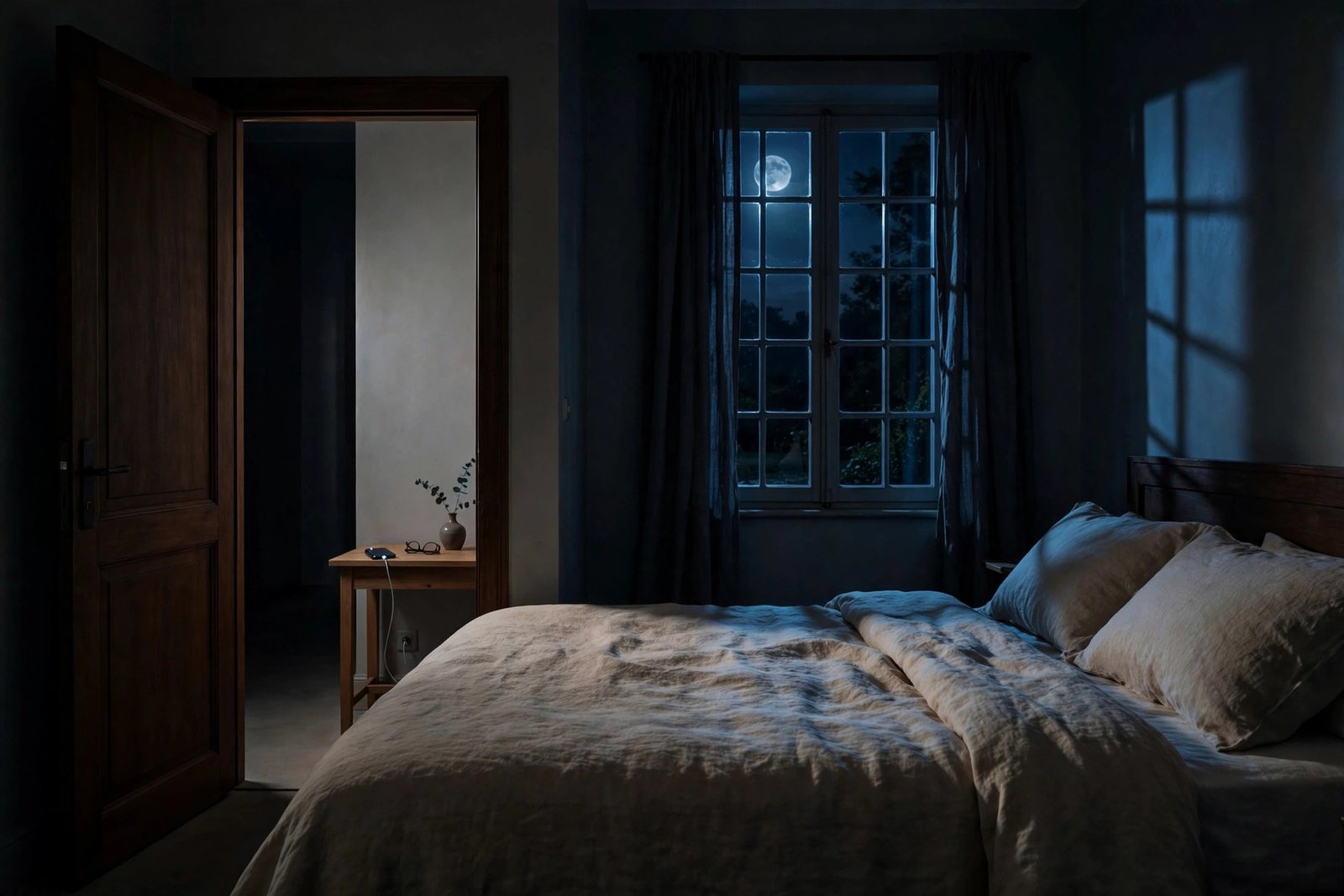
It is 11:40pm in a dark bedroom in Cardiff. You picked up your phone for “five minutes” at 10:30 — to check one message — and have since absorbed a war, three political outrages, a housing-market panic, and seventeen videos of people you will never meet. Your eyes burn, your mind races, and sleep now feels hours away. This is doomscrolling: the compulsive consumption of bad news, and it is quietly wrecking the nation’s sleep.
The bedtime slot is the worst possible time for it — the blue light, the cortisol, the racing thoughts all directly sabotage sleep onset. This guide explains why your brain cannot stop, and gives you a practical, Wales-friendly wind-down system that actually sticks.
Why Your Brain Loves Bad News at Midnight
Doomscrolling is not a character flaw; it is ancient survival wiring hijacked by modern design. Humans have negativity bias: the brain prioritises threatening information because, evolutionarily, the ancestor who noticed the predator survived. News apps exploit this — outrage and fear drive engagement, so algorithms serve more of whatever alarms you.
At night, three things make it worse. Depleted willpower: self-control is a finite daily resource, and by 11pm yours is spent. Lowered defences: tired brains are more emotionally reactive and less rational — everything feels more catastrophic at midnight than at noon. Variable rewards: the infinite scroll is a slot machine; the next swipe might bring relief (it never does), so you keep pulling the lever. Understanding this is liberating: you are not weak, you are up against a billion-pound attention industry at your weakest hour. The Mind charity recognises compulsive news consumption as a genuine driver of anxiety.
The Sleep Science: Why It Costs You Hours
Doomscrolling attacks sleep on three fronts. Light: phone screens suppress melatonin, the hormone that signals bedtime — even “night mode” only partially helps, because it is the engagement as much as the light. Arousal: outrage and anxiety spike cortisol and adrenaline, the chemical opposites of drowsiness; your body cannot be both alarmed and asleep. Cognitive looping: the content seeds rumination — you put the phone down but the arguments continue in your head, the classic 2am stare-at-the-ceiling.
The result, measured in sleep studies: later sleep onset (often 45–90 minutes), more fragmented sleep, and worse next-day mood and focus — which drives more anxious scrolling the next night. It is a perfect vicious circle, and breaking it requires redesigning the hour before bed, not relying on willpower at midnight. Our guide to how much sleep adults really need sets the stakes: most of us are already running a deficit.
The Wind-Down System: Replace, Don’t Just Remove
Willpower fails because it leaves a vacuum. The system that works replaces the scroll with something genuinely satisfying. Here is the 60-minute wind-down:
T-60: the phone goes to exile
At a fixed time (say 10:30pm), the phone goes on charge outside the bedroom — hallway, kitchen, anywhere but the bedside. Buy a £10 alarm clock; it is the highest-ROI sleep purchase in existence. If you need the phone for emergencies, enable Do Not Disturb with only key contacts allowed through. The first three nights feel strange; by night seven, most people describe relief.
T-45: dim the lights, lower the stimulation
Bright overhead lights signal daytime to the brain. Switch to lamps, have a warm (caffeine-free) drink, and do something low-stimulation but absorbing: a physical book, a jigsaw, stretching, a bath. Screens are not banned entirely — a calm TV episode is far less harmful than the scroll — but nothing with a feed, comments, or autoplay.
T-15: the worry download
Keep a notepad by the bed. Spend five minutes writing tomorrow’s worries and tasks — the “worry download” empties the mental loop that doomscrolling feeds on. Anything actionable gets a next step; anything not gets parked. Then lights out, with a boring audiobook or sleep story if silence invites rumination.
Daytime Fixes That Protect the Night
Bedtime doomscrolling is often daytime anxiety deferred. Schedule news windows: two fixed check-ins (say 8am and 6pm, 15 minutes each) instead of continuous grazing — you will miss nothing important and gain hours. Curate ruthlessly: mute outrage accounts, leave the argumentative groups, follow one reliable summary source instead of forty hot takes. Process the day’s stress before evening: exercise, a walk, or journaling in the late afternoon discharges the tension that otherwise seeks an outlet at midnight. And if the urge to check “just in case” strikes, ask: has any midnight scroll ever actually helped? The honest answer breaks the spell.
For households, make it social: a family phone parking station by the front door, with everyone — parents included — docking at 10pm. Teenagers adopt what they see modelled. Our article on sleeping better on hot nights covers the environmental side of bedroom sleep quality.
When Doomscrolling Signals Something Deeper
For most people, doomscrolling is a habit — but sometimes it is a symptom. If you find yourself unable to stop despite genuine distress, checking news compulsively through the night, or feeling panic rather than just unease, the behaviour may be feeding (or fed by) an anxiety disorder. The test: does the scrolling relieve anxiety briefly (habit) or does it generate spiralling dread you cannot switch off (something more)? Be honest about which one you are experiencing.
Other red flags: sleep disruption persisting for weeks despite the wind-down system, intrusive thoughts about news events affecting daily functioning, or using the scroll to avoid confronting something in your own life (the news becomes a displacement activity for personal worries). None of this is a diagnosis — but all of it is worth discussing with your GP or a mental-health professional. The NHS Every Mind Matters platform offers free, evidence-based tools for anxiety and sleep, and our guide to accessing mental health support lists routes that bypass long waiting lists. Fixing the habit is good; treating the cause is better.
Conclusion
Stopping doomscrolling before bed is not about discipline — it is about recognising a rigged game and refusing to play it at your weakest hour. Exile the phone, build a wind-down you actually enjoy, contain the news to daytime windows, and give the worry a notepad instead of a feed. Within a week, most people fall asleep faster, wake clearer, and wonder why they ever traded sleep for strangers’ outrage. The news will still be there in the morning. It always is.
Frequently Asked Questions
Why can’t I stop scrolling bad news before bed?
Negativity bias makes threatening information feel urgent, infinite scroll provides variable rewards like a slot machine, and depleted evening willpower lowers your defences — a combination engineered to keep you swiping.
Does doomscrolling really affect sleep?
Yes, significantly. Screen light suppresses melatonin, alarming content raises cortisol, and rumination delays sleep onset — studies show 45–90 minutes of lost sleep is common among heavy bedtime scrollers.
What should I do instead of scrolling before bed?
Build a wind-down routine: phone charging outside the bedroom, dim lights, a physical book or bath, and a five-minute “worry download” notepad session. Replace the habit rather than relying on willpower.
Is night mode enough to protect sleep?
No. Night mode reduces blue light but does not address the main problems: mental arousal from alarming content and the engagement loop itself. Physical separation from the phone matters far more.
How do I limit news without missing important events?
Schedule two short daily news windows (morning and early evening) with one or two trusted sources. Truly major events will reach you; everything else can wait until your next window.