How to Host an Afternoon Tea at Home on a Budget
If you’re wondering how you can host an afternoon tea at home on a budget, here’s the reassuring truth: afternoon tea is one of the cheapest impressive things you can serve. The whole tradition is built on sandwiches, scones and cake — humble ingredients dressed up with good presentation. You can do a genuinely lovely spread for £4–£5 per person, and your guests will think you spent three times that.
How Can I Host An Afternoon Tea At Home On A Budget: The Plan
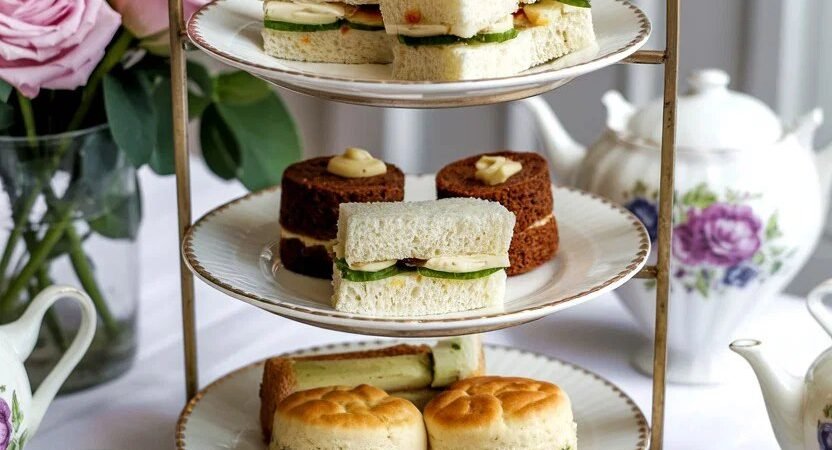
The classic structure is three tiers: savouries (sandwiches) on the bottom, scones in the middle, sweet things on top. You don’t need a tiered stand — a cake stand, a couple of nice plates at different heights, or even a chopping board and a plate will do. Presentation is 80% of afternoon tea; mismatched vintage-style crockery from a charity shop actually looks more authentic than matching sets.
The menu (keep it simple)
- Sandwiches: the traditional fillings are cheap — egg and cress, cucumber and cream cheese, ham and mustard, tuna mayo. Cut the crusts off, cut into fingers or triangles, and cover with a damp tea towel until serving so they don’t dry out. Allow 4–6 fingers per person.
- Scones: dead easy and pennies to make — flour, butter, milk, sugar, baking powder. Serve with jam and clotted cream if the budget stretches (a small tub split between everyone goes further than you’d think), or just jam and butter. Warm them for 5 minutes before serving.
- Cake: one homemade cake is plenty — a Victoria sponge, lemon drizzle, or banana bread. Or buy a decent supermarket cake; nobody will mind.
- Tea: a proper pot of tea matters more than fancy blends. English Breakfast or Earl Grey, brewed properly (freshly boiled water, 3–4 minutes), served with milk on the side. Offer one herbal option for non-tea drinkers.
Budget Afternoon Tea Tips That Make It Feel Fancy
- Bake, don’t buy: homemade scones and one cake cost under £3 total and taste better than shop-bought. Sandwiches are always homemade anyway.
- Cloth napkins: a pack from a charity shop or pound shop instantly makes the table look smarter.
- Fresh flowers: a £3 supermarket bunch in a jam jar beats no flowers at all.
- Serve in courses: bring out sandwiches first, then scones, then cake. It feels like an event rather than a buffet, and it paces the afternoon.
- Timing: 3–4pm is traditional. It means guests arrive hungry but it doesn’t replace a meal, so you don’t need to provide mountains of food.
What to skip: champagne (lovely, not budget), macarons (fiddly and expensive to buy), and more than one type of cake (one good cake beats three mediocre ones). Afternoon tea is about abundance of small things, not expensive things.
If you want to go deeper on the baking, my trifle guide covers another classic British crowd-pleaser, and Wikipedia’s afternoon tea article has the history if you want to impress guests with the story (Anna, Duchess of Bedford, 1840s, hungry at 4pm — you’re welcome).
Honestly, the guests remember the atmosphere, not the spend. Good tea, warm scones, and someone who’s clearly made an effort — that’s afternoon tea. The budget version, done with care, beats the expensive hotel version done without it. Well, nearly.
Afternoon Tea FAQs
How much food do I need per person?
Plan for 4–6 sandwich fingers, 2 scones, and 2–3 small cake portions per person, plus as much tea as they want. It sounds modest, but afternoon tea is deceptively filling — the combination of bread, scone and cake adds up fast. Better slightly too much than a bare table.
What’s the correct order for jam and cream on scones?
The great Devon vs Cornwall debate: Devon puts cream first then jam; Cornwall puts jam first then cream. There is no correct answer, only regional loyalty and strong opinions. Serve both and let guests choose — then watch the debate ignite.
Can I do afternoon tea for dietary requirements?
Easily. Gluten-free scones (with GF flour) work well; dairy-free cream alternatives exist; egg-free sandwich fillings are plentiful (hummus, roasted veg). Just ask guests in advance and label everything — afternoon tea adapts gracefully.
How far ahead can I prepare?
Cake: 1–2 days ahead. Scones: bake the morning of (or freeze unbaked and bake from frozen). Sandwiches: a few hours ahead, covered with a damp tea towel in the fridge. Table: set the night before. On the day itself, you should only be brewing tea and warming scones.
Afternoon Tea Through the Year
The format adapts beautifully to seasons and occasions. Summer: add Pimm’s, fresh berries, and lighter sandwiches (cucumber, smoked salmon). Christmas: mince pies join the cake tier, mulled wine alongside the tea, spiced scones. Baby showers, birthdays, Mother’s Day — afternoon tea is the universal celebration format because it’s inherently special without being expensive or stressful.
And it scales: an intimate tea for two needs only a pot, four scones and a small cake. A party for twenty needs the same things, just more of them, plus a second teapot. The effort-to-impress ratio of afternoon tea is unmatched in home entertaining — which is exactly why the Victorians invented it and why we’re still doing it.
The Bottom Line on Budget Afternoon Tea
Afternoon tea proves something lovely: impressing people has almost nothing to do with spending money. A £4-per-head spread of homemade scones, simple sandwiches and one good cake — served with care, on a nice table, with proper tea — creates more delight than most expensive outings. The effort is the luxury.
So pick a date, invite the people you like, and do it. Bake the scones that morning (the smell alone is worth it), cut the sandwiches neatly, put flowers in a jam jar. Your guests will remember the afternoon far longer than they’d remember a restaurant bill three times the price. That’s the magic of afternoon tea: humble ingredients, transformed by intention into an occasion.