How to Make a Proper Sunday Roast With All the Trimmings
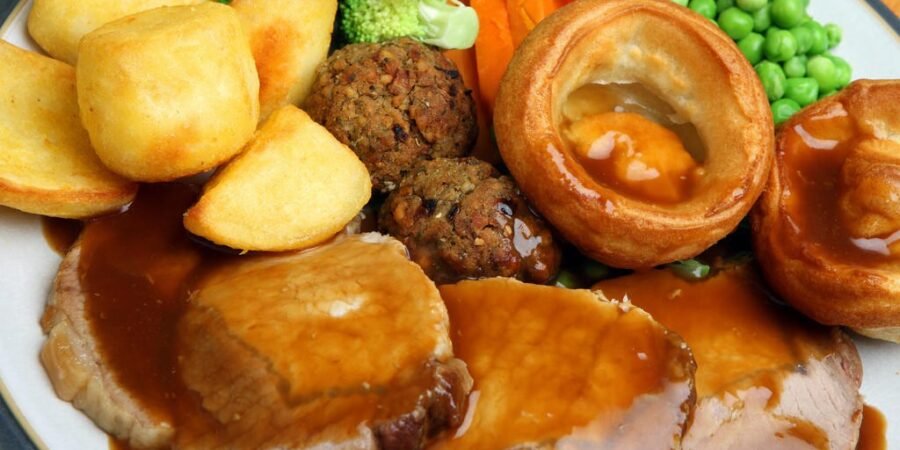
The Sunday roast is Britain’s greatest culinary institution — and if you’re asking how do I make a proper Sunday roast with all the trimmings, you’re signing up for the most rewarding (and most stressful) meal in the home cook’s repertoire.
Here’s the thing nobody tells beginners: a great roast isn’t about skill, it’s about timing. Get the schedule right and everything lands hot, crisp and perfect together. Here’s the full battle plan, including the timings that make it work.
How Do I Make a Proper Sunday Roast With All the Trimmings? The Master Timeline
Work backwards from serving time. For a 2pm lunch with a 2kg chicken (serves 4–6):
- 10:30 — Prep veg, make stuffing, parboil potatoes. Put the kettle on (for you, not the roast).
- 11:00 — Chicken in the oven (200°C/fan 180°C, ~20 mins per 500g + 20 mins = ~1hr 40 for 2kg).
- 12:00 — Potatoes into hot fat in the oven. Pigs in blankets in.
- 12:30 — Yorkshire pudding batter into screaming-hot tins. Roast parsnips and carrots in.
- 12:40 — Chicken out to rest (tented in foil — resting is non-negotiable, 20–30 mins).
- 12:45 — Greens on (boil/steam). Cauliflower cheese in if you’re doing it.
- 13:00 — Make gravy from the roasting tin juices. Carve. Plate. Serve at 13:15–14:00.
Write your own timeline for your meat and oven — the principle is sacred: everything timed backwards from the table.
The Meat: Choosing and Cooking
- Chicken: the classic. 20 mins per 500g + 20 mins at 200°C. Butter under the skin, lemon and herbs in the cavity. Rest 20–30 mins.
- Beef (rib or sirloin): 20 mins per 500g for medium-rare at 200°C. Sear first for crust. Rest 30 mins minimum — this is what keeps it juicy.
- Lamb (leg or shoulder): shoulder slow-roasted (160°C, 4 hours) is foolproof and falls apart; leg roasted hot (200°C, 25 mins per 500g) for pink slices. Stud with garlic and rosemary.
- Pork (belly or loin): dry the skin overnight in the fridge, salt heavily, blast at 240°C for 30 mins then 180°C. Crackling is non-negotiable.
- The thermometer rule: a £15 meat thermometer removes all guesswork — 75°C for poultry/pork, 55–60°C for beef/lamb (it rises 3–5°C while resting).
Crispy Roast Potatoes (The Make-or-Break)
Roasties separate good roasts from great ones. The method:
- Use Maris Piper or King Edward — floury potatoes crisp best.
- Parboil 8–10 mins, drain, then rough up the edges by shaking in the pan. Those fluffy edges become the crunch.
- Heat goose fat, beef dripping or vegetable oil in the roasting tin until smoking (200°C+). The fat must be screaming hot before potatoes go in — this is the critical step.
- Turn every 20 mins, roast 60–80 mins total until deeply golden.
- Salt immediately. Serve immediately — roasties wait for no one.
Common failures: oven not hot enough, overcrowded tin (steam instead of roast — use two tins), potatoes not dried properly after parboiling.
Yorkshire Puddings and Gravy
Yorkshires: equal volumes egg, plain flour and milk/water (the cup method never fails), whisked smooth and rested 30 mins. Beef dripping or oil in the tin, heated until smoking — pour batter in, don’t open the oven for 20 mins. They’ll rise gloriously. (And yes, serve them with any roast — the Yorkshire-only-with-beef rule is for purists.)
Gravy: proper gravy starts in the roasting tin. Pour off excess fat, deglaze with a glass of wine or stock, scraping up every browned bit (that’s flavour). Add stock, simmer, thicken lightly with cornflour if needed. Taste and season aggressively — gravy should taste of something. Granules are fine for weeknights; Sunday deserves the real thing. The BBC Good Food roast guides have excellent video tutorials if you’re visual.
The Trimmings Checklist
- Vegetables: honey-glazed parsnips and carrots (roasted in the meat’s oven), steamed greens (cabbage, broccoli, green beans — don’t overcook), peas.
- Pigs in blankets: chipolatas wrapped in streaky bacon, roasted until crisp. Make double — they vanish.
- Stuffing: sage and onion (homemade or good Paxo — no shame), baked separately for crispy edges.
- Cauliflower cheese: the luxury extra. Proper cheese sauce, grilled top. Worth it.
- Sauces: horseradish with beef, apple sauce with pork, mint sauce with lamb, cranberry at Christmas, bread sauce for the traditionalists.
- The rule: 3–4 veg + 2–3 extras is plenty. More becomes a logistics nightmare.
Sunday Roast: Troubleshooting
- Dry meat: almost always overcooking or skipping the rest. Buy a £15 thermometer and rest properly — the two fixes for 90% of dry roasts.
- Soggy roast potatoes: oven not hot enough, fat not hot enough, or overcrowded tin. Screaming-hot fat, single layer, 200°C+ — no shortcuts.
- Flat Yorkshire puddings: fat wasn’t smoking hot, or someone opened the oven door. Both are fatal. Hot fat, closed door, 20 minutes minimum.
- Lumpy gravy: mix cornflour to a smooth paste with cold water before adding, or strain the gravy. Lumps are a technique issue, not an ingredient one.
- Everything ready at different times: you didn’t work backwards from serving time. Write the timeline, stick to it — and remember most things rest happily under foil.
- Too much food, too much stress: 3–4 veg plus 2–3 extras is plenty. The 12-dish Christmas-style spread is for Christmas, not every Sunday.
Quick Tips
Work backwards from serving time — write the timeline, stick to it. A great roast is about scheduling, not skill. Everything timed from the table backwards lands hot, crisp and together.
- Rest the meat, always — 20–30 minutes tented in foil. Juices redistribute; slice too soon and they run out.
- Screaming-hot fat for roasties and Yorkshires — 200°C+, smoking. Lukewarm fat is the number one roast killer.
- Buy a meat thermometer — £15 that removes all guesswork. 75°C poultry/pork, 55–60°C beef/lamb.
You Might Also Like
- How to Meal Prep Healthy Lunches for the Whole Week
- Cheapest Cuts of Meat for Slow Cooking in the UK
- How to Make Yorkshire Puddings Rise Every Time
Timing Is Everything
A proper Sunday roast with all the trimmings comes down to: a written backwards timeline, rested meat (always), screaming-hot fat for roasties and Yorkshires, and gravy made from the tin juices. Buy a meat thermometer, don’t overcrowd the oven, and accept that the first one won’t be perfect — the second one will be legendary.


[…] How to Make a Proper Sunday Roast With All the Trimmings […]