How Much Does It Cost to Build a Garden Shed Base in the UK?
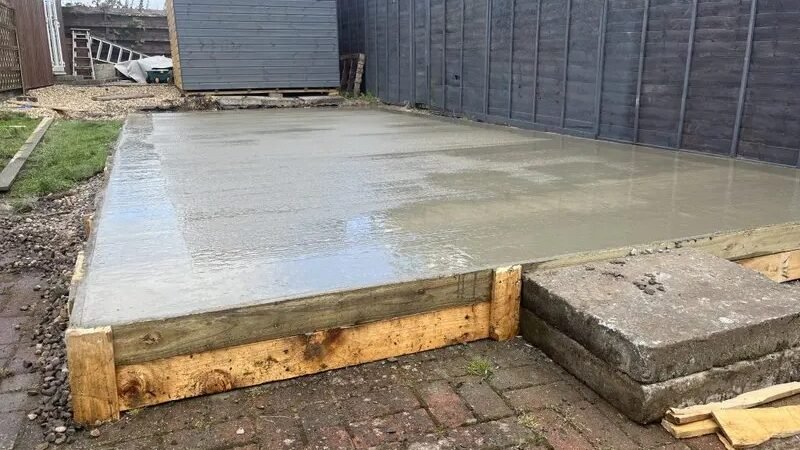
So how much does it cost to build a garden shed base in the UK? For a standard 8x6ft shed: £150–£300 DIY or £400–£800 professionally built, depending on the base type. Skimp on the base and even the best shed will twist, leak and rot — the base is the foundation everything depends on.
Three main options: concrete slab, paving slabs, or timber bearers. Here’s what each costs and which suits your garden.
How Much Does It Cost to Build a Garden Shed Base in the UK? Three Options
- Concrete slab base: £250–500 DIY (£500–800 professional). The gold standard — permanent, perfectly level, rot-proof. For an 8×6 shed you need ~2m³ of concrete (£200–300 delivered ready-mix, or ~£150 in bags if you enjoy suffering).
- Paving slabs on hardcore: £150–300 DIY (£400–600 professional). The most popular choice — solid, level, and removable if you change your mind. 450mm or 600mm slabs on 50mm of compacted hardcore with sharp sand bedding.
- Timber bearers / deck frame: £100–200 DIY. Pressure-treated 4×2 bearers on levelled ground or concrete pads. Cheapest and quickest, but least durable — expect 5–8 years before the bearers need attention.
- Plastic shed base grids: £80–150 for an 8×6 area, filled with gravel. The modern easy option — lightweight, quick, surprisingly sturdy. Excellent on reasonably level ground.
The DIY Concrete Base: Step by Step
- Mark out the area: shed footprint plus 10cm all round. Remove turf and topsoil to ~15cm depth.
- Build a timber shuttering frame to contain the concrete, levelled carefully — the base can only be as level as the shuttering.
- Add 75mm of compacted hardcore (MOT Type 1, ~£40 a bulk bag). Whack it flat with a hired plate compactor (£40–50/day) or a lot of stamping.
- Pour 100mm of concrete (4:2:1 ballast:cement:water roughly, or ready-mix). Level with a straight timber, tamping to remove air.
- Cure for 3–7 days before building the shed on it. Cover with plastic in hot weather to stop it drying too fast and cracking.
Total DIY cost for 8×6: ~£250–350. A weekend’s hard work, but you’ll never think about it again.
The Paving Slab Base: Most People’s Best Bet
- Excavate ~12cm, removing turf and soft soil.
- Lay weed membrane (optional but wise).
- Add 75mm compacted hardcore, levelled.
- Bed 50mm of sharp sand, screeded level — use a straight edge and a spirit level obsessively.
- Lay slabs with 10mm gaps, tapping level with a rubber mallet. Check level in all directions constantly.
Cost for 8×6: ~£150–250 DIY. The critical bit is the levelling — a shed on an unlevel base twists, doors won’t close, and felt roofs pool water. Spend twice as long levelling as you think necessary.
Mistakes That Ruin Shed Bases
- Building straight onto soil or grass: the shed sinks unevenly within a year. Always excavate and prepare properly.
- No damp-proof membrane: on concrete bases, a DPM sheet stops ground moisture wicking into the shed floor. £15 that saves the shed.
- Base exactly shed-sized: make it slightly larger (10cm each side) so rain drips off the shed onto the base, not into the gap behind.
- Ignoring drainage: the base should sit slightly proud of surrounding ground, with water draining away — not pooling against the shed.
- Not checking level diagonally: level side-to-side but twisted corner-to-corner is the classic error. Check both diagonals.
Should You Just Pay Someone?
A professional base (£400–800) makes sense if: the ground is badly sloped (needs retaining work), access is awful, you need it done fast, or you physically can’t do the digging. Get the shed company to quote the base too — many offer packages, though they’re rarely the cheapest.
Find groundworkers or landscapers via Which? Trusted Traders. And time it right: have the base fully cured before the shed delivery date — the number one shed-installation delay is a base that isn’t ready.
Shed Base: Pro Tips
- Bigger than the shed. Extend the base 10cm beyond the shed on all sides — rain drips off the eaves onto the base, not into the gap behind the shed where it rots the bearers.
- Level is everything. Check with a long spirit level in all directions, including diagonally. A twisted base means doors that won’t close and roofs that pool water — forever.
- Damp-proof membrane. £15 of DPM sheet between base and shed stops ground moisture wicking into the timber floor. The cheapest shed-life-extender there is.
- Consider drainage. The base should sit slightly proud of surrounding ground with water draining away. A shed in a puddle rots from below regardless of treatment.
- Pressure-treated bearers. Even on a perfect base, sit the shed on pressure-treated bearers (£30–50) to create an air gap. Air circulation under the floor prevents rot.
- Plan the door swing. Position the shed so the door opens usefully — not into a fence, not into the prevailing rain. Obvious, yet constantly got wrong.
Keep in Mind
Level obsessively — check in all directions including diagonally. A twisted base means doors that never close and roofs that pool water, permanently. Spend twice as long levelling as you think necessary.
- Make it bigger than the shed — 10cm all round, so rain drips onto the base not into the gap behind.
- Add a damp-proof membrane — £15 of DPM stops ground moisture wicking into the timber floor. Cheapest shed-life-extender there is.
- Let concrete cure — 3–7 days before building on it. Rushing the cure weakens the slab permanently.
You Might Also Like
- Best Way to Organise a Garage in a UK Home
- How to Stop Your uPVC Door From Sticking in Summer
- How Much Does It Cost to Rewire a Two Bedroom Flat in the UK?
Base It Right, Forget About It
A garden shed base in the UK costs £150–300 DIY or £400–800 professional for a standard 8×6 shed. Paving slabs on hardcore are the best balance for most people; concrete is the permanent premium option. Whatever you choose, level obsessively, add a damp-proof membrane, and make it slightly bigger than the shed. The base is boring — that’s the point.

