How to Unblock a Sink Without Harsh Chemicals
A slow-draining sink is miserable, and if you’re asking how do I unblock a sink without harsh chemicals — good. Caustic drain cleaners are nasty stuff: they burn skin, damage pipes (especially older ones), kill septic tanks, and they’re terrible for waterways.
The truth is that mechanical methods clear blockages better than chemicals anyway. Chemicals try to dissolve the blockage in place; mechanical methods actually remove it. Here are six chemical-free methods in order of effort.
How Do I Unblock a Sink Without Harsh Chemicals? Start Simple
Method 1: Boiling water. For grease-based kitchen blockages, a full kettle of boiling water (poured slowly, in stages) melts the fat binding the blockage. Repeat 2–3 times. Don’t use boiling water on PVC pipes if they’re the thin push-fit type — very hot water can soften joints. For most UK sinks it’s fine, but let it cool a minute if unsure.
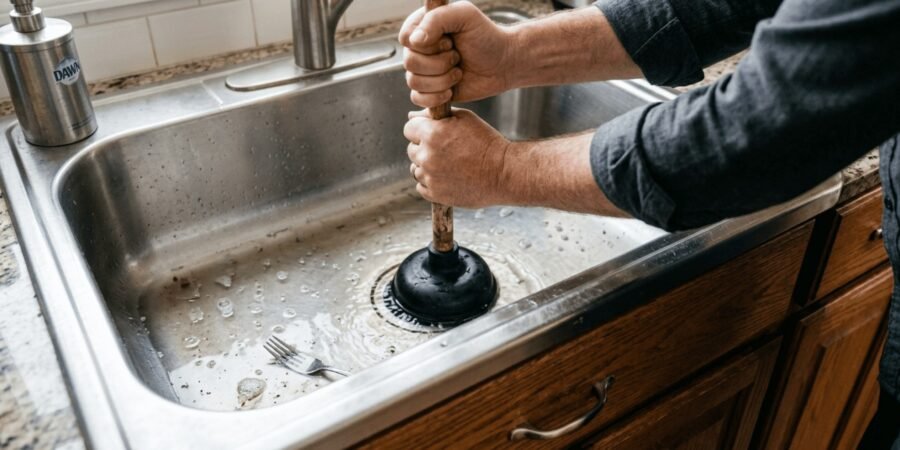
Method 2: The plunger. The most underrated tool in the house. Fill the sink with enough water to cover the plunger cup, seal the overflow with a damp cloth (critical — otherwise pressure escapes), and plunge vigorously 15–20 times. The push-pull action dislodges most blockages. A £8 plunger beats a £8 bottle of chemicals every time.
Baking Soda and Vinegar: Does It Actually Work?
The famous volcano method: half a cup of baking soda down the plughole, followed by half a cup of white vinegar, plug it, wait 15 minutes, then flush with boiling water. Honest assessment: it’s mildly effective on light grease build-up and great for freshening smells, but it won’t shift a serious blockage. The fizzing is mostly theatre — satisfying, but limited cleaning power.
Where it genuinely shines: monthly maintenance. A regular baking-soda flush keeps slow build-up at bay and your sink smelling fresh. Think of it as prevention, not cure.
The Drain Snake: The Real Problem-Solver
A drain snake (plumber’s auger), £10–£20 from any DIY shop, clears what plungers can’t. Feed it down the plughole, crank the handle, and it either breaks up the blockage or — more satisfyingly — screws into it so you can pull the whole revolting mass out.
Fair warning: what comes out will be disgusting. Hair, grease, food sludge — a congealed monument to everything that’s gone down that sink. Wear rubber gloves, have a bin bag ready, and try not to think about it too hard. This method clears ~90% of household sink blockages.
Cleaning the Trap (The Nuclear Option That Isn’t)
If the snake doesn’t reach it, the blockage is probably in the U-bend trap under the sink — and cleaning it is easier than it sounds:
- Put a bucket under the trap.
- Unscrew the trap by hand (most modern ones are hand-tight) or with gentle plier pressure.
- Empty the foul water into the bucket, then clean the trap thoroughly — an old toothbrush works brilliantly.
- Check the pipe beyond with a torch; clear any gunk with the snake.
- Reassemble hand-tight, run the tap, and check for leaks.
Twenty minutes, zero chemicals, and your sink will drain like new. Take a photo before disassembly so you remember the order of washers.
Prevention: Never Unblock Again
- Kitchen: never pour fat or oil down the sink — wipe pans with kitchen roll first, then wash. Use a sink strainer (£3) to catch food particles.
- Bathroom: a drain hair catcher (£5 for a pack) prevents 90% of bathroom blockages. Clean it weekly; it takes ten seconds.
- Monthly: boiling water flush for kitchen sinks, baking soda freshen for bathroom ones.
- Know when to stop: if multiple drains are slow (sink + bath + toilet), the blockage is in the main soil pipe — that’s beyond DIY. If water backs up into other fixtures, call a professional.
For persistent problems, a local independent plumber (find one via Which? Trusted Traders) will clear a drain for £60–£100 — far cheaper than the damage from repeated chemical attacks on old pipework.
Drain Maintenance: Keep Them Clear
- Sink strainers everywhere. £3 mesh strainers in kitchen and bathroom sinks catch 90% of blockage material. Empty them into the bin, not down the drain.
- Never pour fat down the sink. It solidifies in cold pipes and binds everything else into concrete-like blockages. Wipe pans with kitchen roll first; collect used oil in a bottle for recycling.
- Weekly boiling water flush. A kettle of boiling water down the kitchen sink weekly melts away fat build-up before it becomes a blockage. Free, 2 minutes.
- Hair catchers in showers and baths. £5 for a pack, 10 seconds to clean weekly. Prevents the vast majority of bathroom blockages.
- Monthly baking soda freshen. Half a cup of baking soda, followed by hot water — keeps drains fresh and discourages build-up. Prevention beats cure.
- Know your drain’s limits. “Flushable” wipes aren’t flushable (they cause fatbergs), coffee grounds clump, and paint should never go down drains. Bin it, don’t sink it.
Worth Knowing
Chemical drain cleaners don’t just risk your pipes — they’re a leading cause of plumber injuries. Engineers encountering caustic-treated drains wear full protective gear; the burns are real. Mechanical methods are safer for everyone involved.
- Keep a plunger in every bathroom — the £8 tool that prevents the £80 emergency callout.
- Know where your drain access points are — external drain covers and inspection chambers. When professionals come, showing them access saves time and money.
- Tree roots are the hidden drain killer — if you have recurring external drain blockages and nearby trees, get a CCTV survey before it becomes a £3,000 excavation.
You Might Also Like
- How to Soundproof a Bedroom Wall Cheaply
- Best Flooring for a Busy Family Kitchen
- How to Fix a Leaking Radiator Valve Yourself
Mechanical Beats Chemical
Unblocking a sink without harsh chemicals is straightforward: boiling water and a plunger for easy ones, a drain snake for stubborn ones, and a trap clean for the rest. Prevention — sink strainers, no fat down the drain, hair catchers — means you’ll rarely need any of them. Your pipes, your skin and your septic tank will all thank you.

