How to Make a Small Bathroom Look Bigger on a Budget
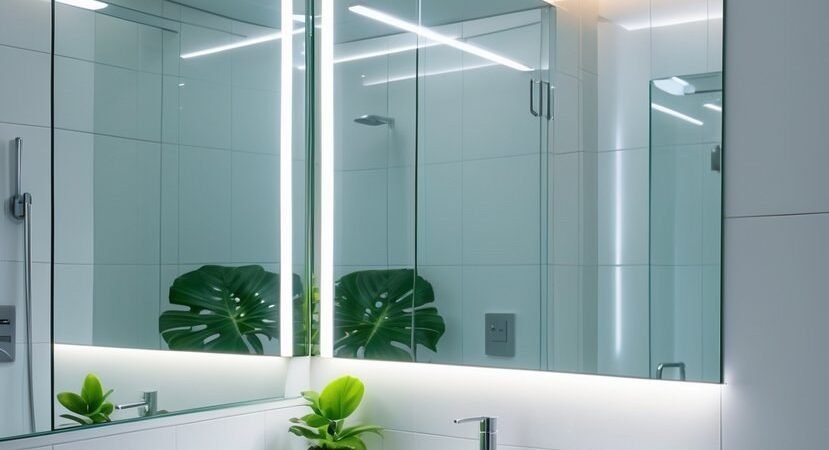
Wondering how can I make a small bathroom look bigger on a budget? Good news: bathrooms respond better to visual tricks than almost any other room, and most of the effective ones cost little or nothing. You don’t need to knock down walls — you need to manipulate light, colour and sightlines.
I’ve done this in two tiny bathrooms now (one a genuinely shoebox Victorian terrace bathroom), and the difference is dramatic. Here are the twelve tricks that actually work, roughly in order of impact per pound.
How Can I Make a Small Bathroom Look Bigger on a Budget? Start With the Mirror
The single highest-impact cheap change: a bigger mirror. A large mirror (or mirrored cabinet) opposite the light source visually doubles the room. Go as big as the wall allows — a £40–£60 large mirror from IKEA or Dunelm transforms a poky bathroom instantly.
Even better: a mirrored wall cabinet combines the visual expansion with hidden storage, solving two small-bathroom problems at once. Position it to reflect the brightest part of the room, ideally the window or main light.
Colour and Light: The Free Wins
- Paint it light. White, pale grey, soft sage — light colours reflect light and push walls back visually. One accent wall in a deeper colour is fine; four dark walls shrink the room.
- Paint the ceiling white (or the same light colour as walls). A dark or stained ceiling presses down on the room.
- Upgrade the lighting. One dim ceiling bulb makes any bathroom feel like a cave. Bright, layered lighting — ceiling spots plus mirror lighting — is transformative. LED mirror cabinets (£80–£150) are the best-value upgrade going.
- Same colour, walls and woodwork. Painting skirting and door frames the same colour as the walls removes visual boundaries and makes walls feel longer.
Fixtures: Small Changes, Big Difference
- Wall-hung toilet and basin: showing floor underneath creates the illusion of more space. A wall-hung basin unit costs from ~£150 and is a weekend DIY job if pipework allows.
- Clear the floor: pedestal basins beat bulky vanity units for spaciousness; if you need storage, go up (tall narrow cabinets) not out.
- Glass shower screen instead of curtain: a curtain visually cuts the room in half even when open. A clear glass panel (£80–£200) keeps sightlines open.
- Large-format tiles or panels: fewer grout lines = less visual clutter. If retiling, big tiles make small rooms feel bigger — counterintuitive but true.
Declutter Ruthlessly (It’s Free)
Nothing shrinks a bathroom faster than clutter. Every bottle on the bath edge, every towel draped over the radiator, every half-used product on the windowsill is visual noise that makes the room feel smaller.
Do a brutal cull: bin the expired, decant the daily essentials into matching dispensers, and hide everything else behind closed doors. Matching dispensers (£15–£25 for a set) are a weirdly powerful trick — five mismatched bottles scream clutter; three matching ones whisper spa. Add one plant (a fern or pothos loves bathroom humidity) and stop there. One deliberate object beats ten accidental ones.
The £200 Total Makeover Plan
Here’s a realistic budget makeover: large mirror (£50), two tins of quality bathroom paint (£60), LED mirror light or cabinet upgrade (£90)… that’s £200 and a weekend’s work for a bathroom that feels twice the size. Add matching dispensers and a proper declutter (free), and you’re done.
What not to waste money on: expensive “space-saving” gadgets that add clutter, dark feature tiles that shrink the room, or a bigger bath in a room that can’t take it. In small bathrooms, subtraction beats addition every time. The IKEA bathroom planners are genuinely useful for visualising small-space layouts before you spend anything.
Small Bathroom: More Space Tricks
- Recessed storage. Stud walls can take recessed niches and cabinets — storage that uses zero floor or air space. A recessed mirrored cabinet is the small-bathroom holy grail.
- Wall-hung everything. Toilet, basin, even the bath panel — visible floor underneath tricks the eye into seeing more space. It also makes cleaning dramatically easier.
- Curbless shower. A level-access shower with no tray lip makes the floor read as one continuous surface — the room feels 20% bigger instantly.
- Vertical lines. Vertical tiles, tall narrow cabinets, floor-to-ceiling shower screens — vertical emphasis makes ceilings feel higher.
- One statement, not ten. A single beautiful tap, one striking tile, one great mirror. Small rooms handle one focal point; clutter them and they feel chaotic.
- Door swing. A door that opens into the bathroom eats ~1m² of usable space. Sliding doors, pocket doors or even rehanging to open outward reclaims it.
Quick Tips
The cheapest transformation is free: declutter. Remove everything from the bathroom, clean thoroughly, then put back only what you use daily. Most small bathrooms instantly feel 30% bigger — before spending a penny.
- Decant into matching dispensers — five mismatched bottles scream clutter; three matching ones whisper boutique hotel.
- Fold towels instead of hanging them everywhere — folded stacks look intentional; draped towels look chaotic.
- One plant, one candle, done. Small bathrooms need restraint — every extra object shrinks the perceived space.
The Short Version
Small bathrooms respond to subtraction more than addition: big mirror, light paint, bright layered lighting, clear floors, ruthless decluttering. £200 and a weekend transforms how the room feels — no builder, no plumbing, no drama. Start with the free declutter; you’ll be amazed how far it goes.
- Wall-hung fixtures and glass shower screens keep sightlines open — the two highest-impact fixture changes.
- One deliberate accessory beats ten accidental ones. Restraint reads as luxury in small spaces.
You Might Also Like
- How to Unblock a Sink Without Harsh Chemicals
- How Much Does Double Glazing Cost Per Window in the UK?
- How to Soundproof a Bedroom Wall Cheaply
Think Light, Not Square Metres
Making a small bathroom look bigger on a budget is about light and sightlines: a huge mirror, light paint, bright layered lighting, clear floors, and ruthless decluttering. For around £200 and a weekend, you can transform how the room feels — no builder required.

